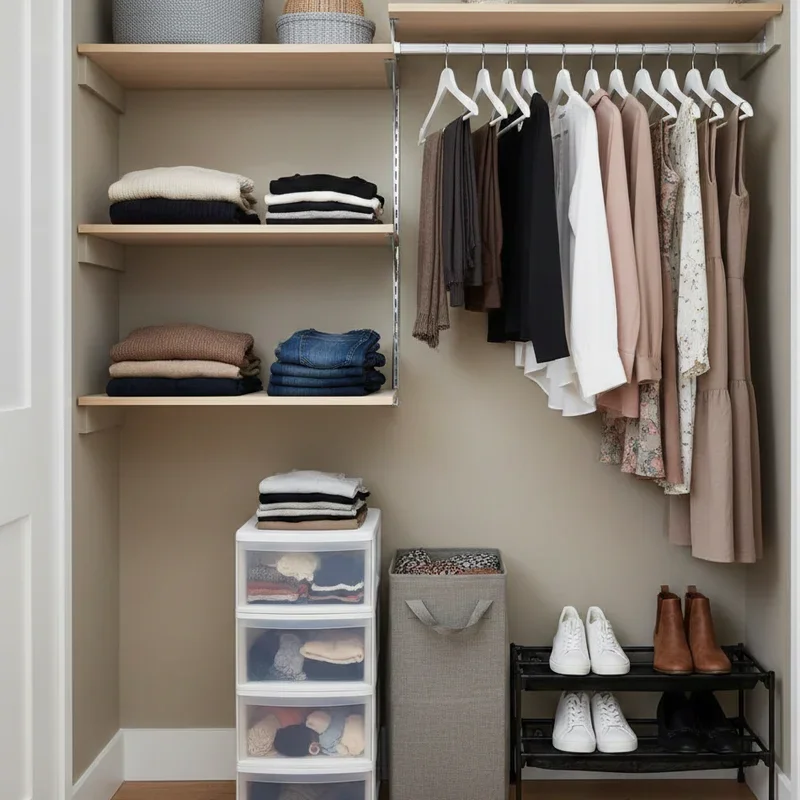
15 Small Primary Bedroom Ideas to Maximize Space and Style
Transform your tiny retreat with these 15 small primary bedroom ideas that blend smart storage, bold style, and space-saving design.
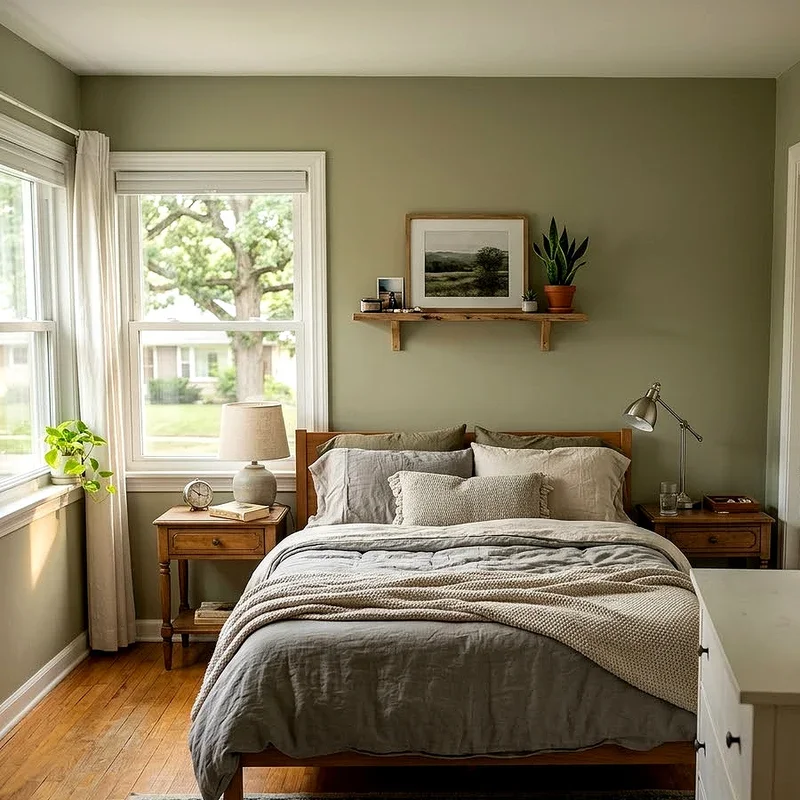
Does your primary bedroom feel more like a closet with a bed shoved in it? You are not alone. Millions of homeowners wrestle with compact sleeping spaces every single day, wondering how to squeeze comfort, personality, and function into what feels like a shoebox. The good news is that a small room does not have to mean small style. In fact, some of the most stunning bedrooms in the world clock in at under 200 square feet. The secret lies in working smarter, not harder. Think clever furniture placement, optical illusions through color, and storage solutions so sneaky your guests will never spot them. Ready to fall in love with your bedroom all over again? Let these 15 small primary bedroom ideas spark the transformation you have been dreaming about.
1. Choose a Light and Airy Color Palette
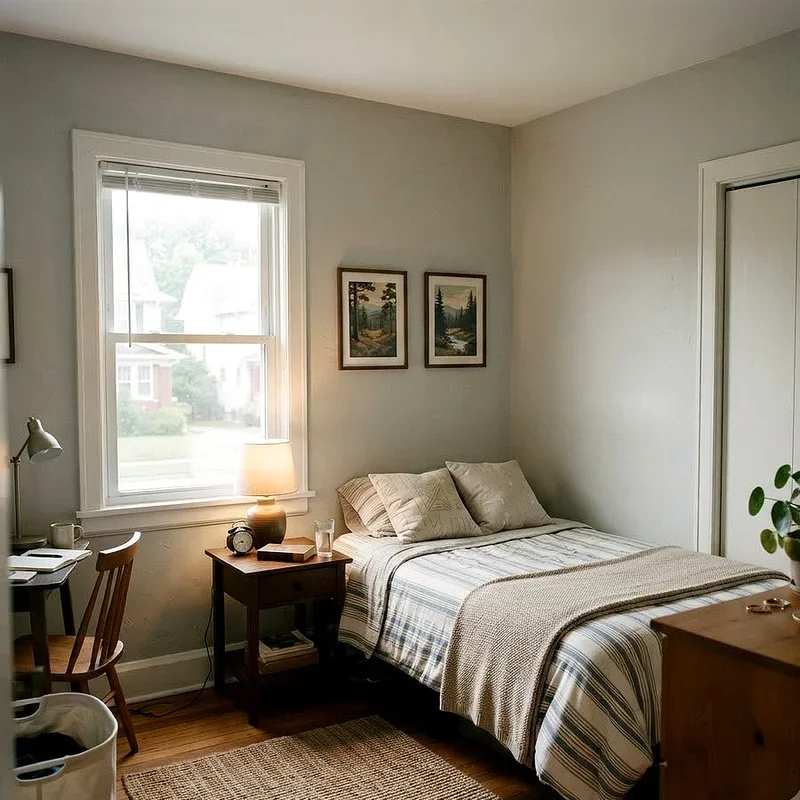
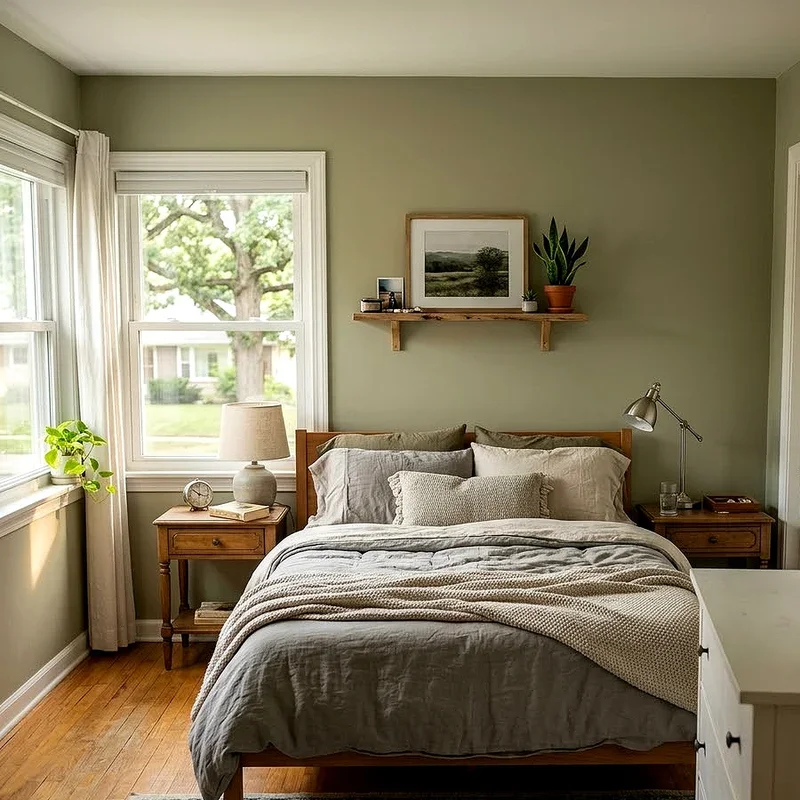
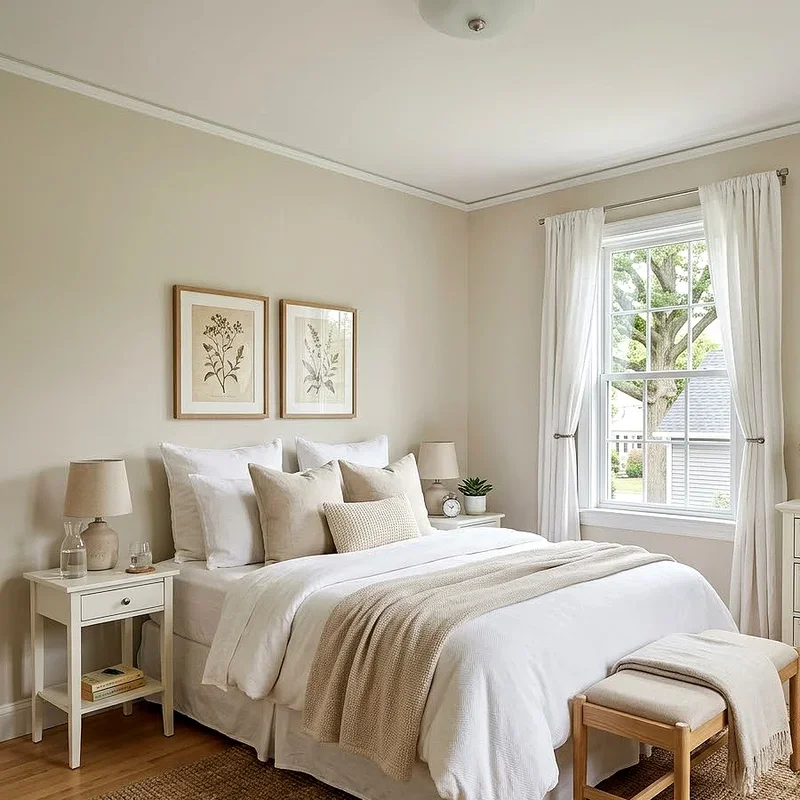
Color is the single most powerful tool in any small bedroom makeover, and it costs you nothing extra if you plan it right. Light shades like soft white, warm cream, pale sage, or blush pink push walls outward visually, making a tight room feel like it took a deep breath. Think of it as painting with light rather than just pigment. You want the eye to glide around the space effortlessly instead of crashing into dark corners. Try keeping your walls, ceiling, and even your bedding in a tonal family so everything flows together. This creates a serene cocoon effect that not only looks larger but also genuinely feels more restful. Add a single deeper accent through a throw or a plant to ground the palette without overwhelming it.
2. Invest in a Platform Bed with Built-In Storage
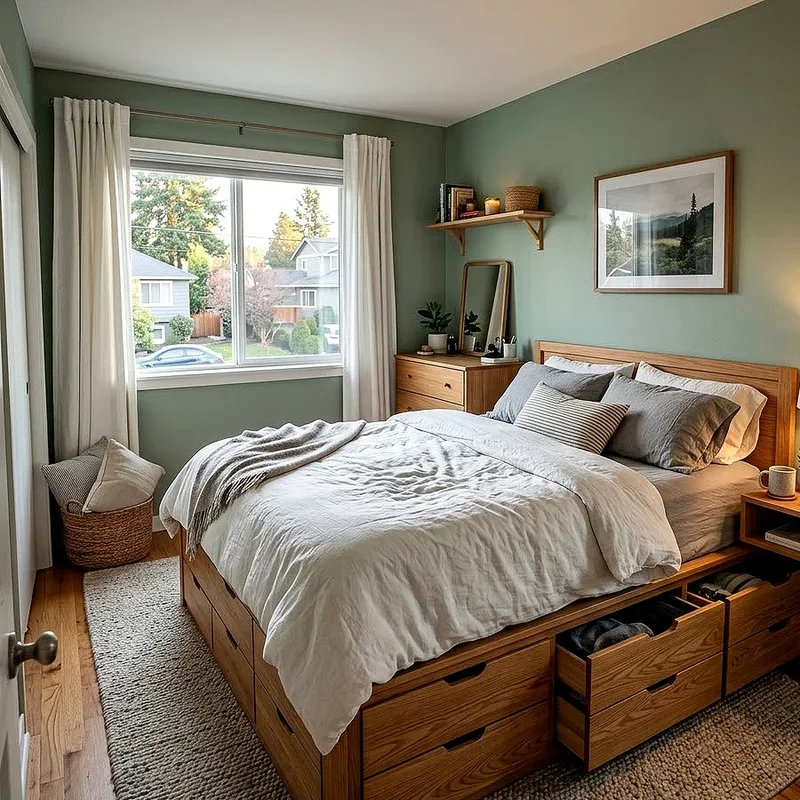
If you treat your bed as just a place to sleep, you are leaving a goldmine of storage potential untapped. A platform bed with built-in drawers underneath transforms your largest piece of furniture into a hard-working multitasker. You get a sleek, low-profile look that keeps the room feeling open while hiding away extra linens, off-season clothes, or anything else stealing precious closet space. Some platform beds even feature hydraulic lift systems that reveal a massive compartment beneath the mattress. It is a bit like discovering a secret basement under your bedroom floor. When you shop for one, look for solid drawer glides and soft-close mechanisms because those details matter when you use them every single morning.
3. Mount Floating Shelves to Free Up Floor Space
Floor space in a small primary bedroom is prime real estate, and every piece of furniture sitting on it competes for that precious square footage. Floating shelves change the game entirely by migrating your storage up the wall where floor space simply does not exist. Think bedside shelves instead of bulky nightstands, a floating media shelf instead of a TV console, or a row of open shelves replacing a dresser. The visual effect is dramatic too, because the floor remains visible all the way to the wall, which tricks the eye into reading the room as larger. Use matching baskets or bins on those shelves to keep things tidy and purposeful. A cluttered floating shelf defeats the whole purpose, so edit what you display ruthlessly.
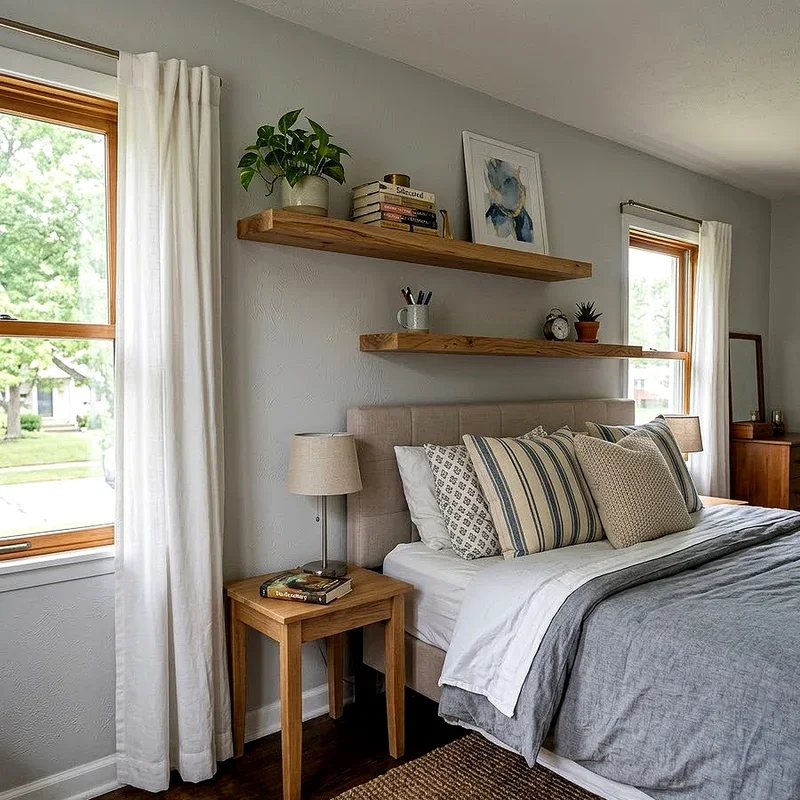
4. Use Mirrors Strategically to Expand Visual Space
Mirrors are the oldest trick in the interior design book, and they earn their reputation every single time. A large mirror bounces light around the room and essentially doubles whatever it reflects, creating the illusion of a second, identical space just beyond the glass. In a small primary bedroom, consider leaning an oversized floor mirror against one wall, installing a full-length mirror on the closet door, or creating a gallery of smaller mirrors above the headboard. Position them to catch natural light from a window and the effect multiplies beautifully. Mirrored furniture, like a dresser with mirrored drawer fronts, layers in even more reflection without requiring extra wall real estate. Just avoid placing mirrors where they reflect clutter.
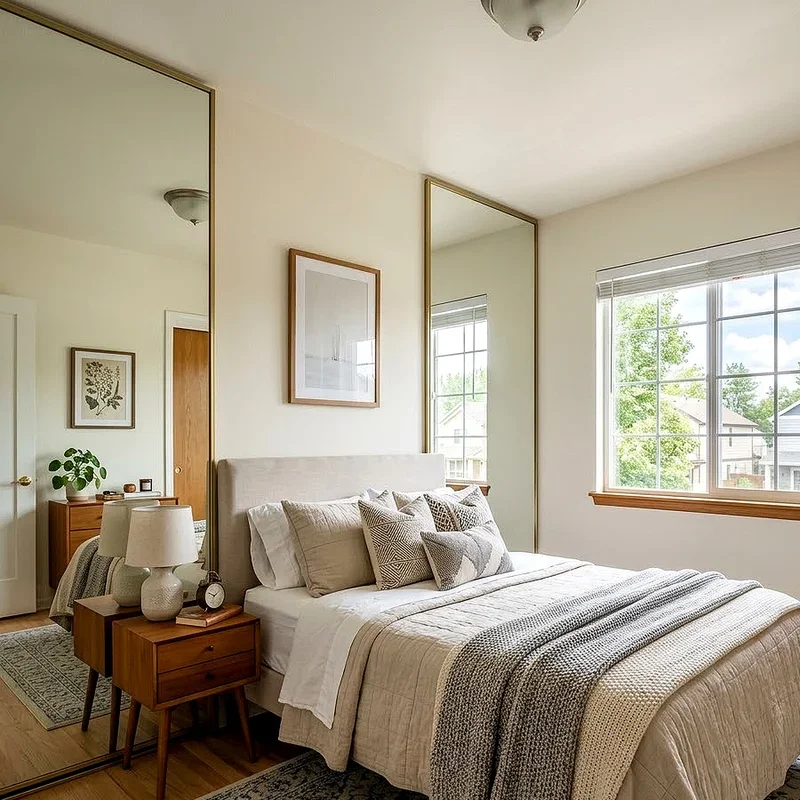
5. Opt for Multi-Functional Furniture Pieces
In a small bedroom, every single piece of furniture needs to pull double duty, or it simply does not deserve a spot in your space. A storage ottoman at the foot of the bed gives you seating, a surface for folding laundry, and a hidden compartment all in one compact package. A slim desk with fold-out extensions moonlights as both a workspace and a vanity table depending on your morning routine. A bench with shelves underneath handles seating and shoe storage simultaneously. You are essentially asking each furniture piece to wear multiple hats, and the right pieces are absolutely willing to do it. Shop with function-first eyes, meaning you fall in love with what a piece does before you fall in love with how it looks.
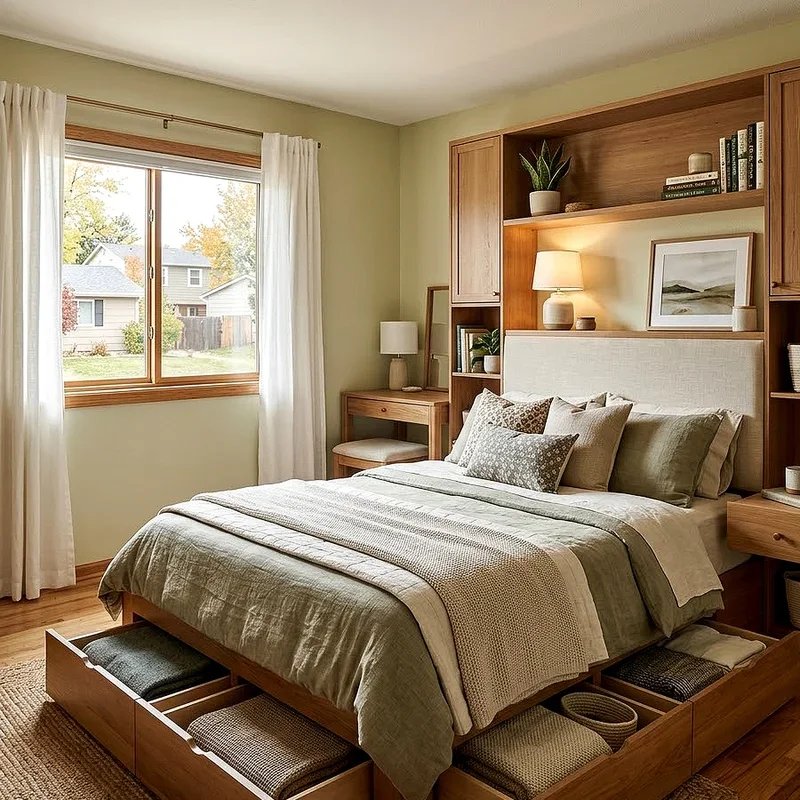
6. Hang Curtains High and Wide for the Illusion of Height
Window treatments are wildly underrated as a space-stretching tool, and most people hang them wrong. When you mount curtain rods close to the window frame, you reveal exactly how small the window is and, by extension, how low the ceiling feels. Flip that approach on its head by mounting the rod as close to the ceiling as possible and letting the curtains fall in a luxurious sweep all the way to the floor. Suddenly the eye reads vertical drama from ceiling to floor, and the room feels taller than it actually is. Extend the rod several inches beyond the window on each side so the curtains frame more wall than window when open, letting in maximum light. Light, airy fabrics in neutral tones keep the effect breezy rather than heavy.
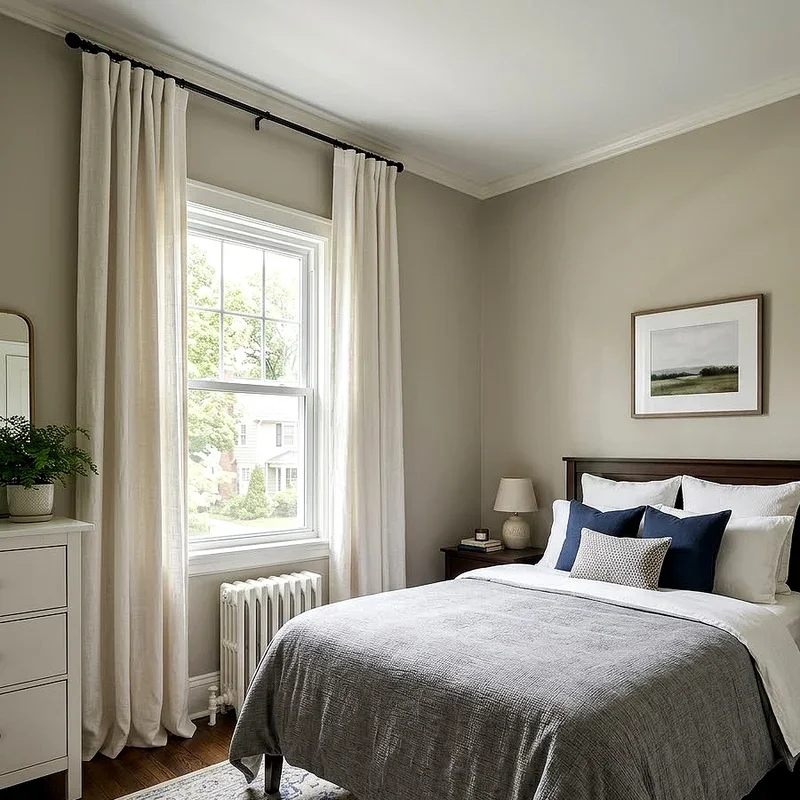
7. Declutter Ruthlessly and Organize Vertically
Clutter in a small room is like noise in a quiet space; it makes everything feel chaotic and compressed. Before you invest a single dollar in new furniture or decor, do the hard work of editing down what actually lives in your bedroom. Keep only what belongs in a sleeping space and find homes for everything else. Once you pare down, organize what remains vertically rather than spreading it horizontally. Stack books on tall, narrow shelves. Use over-door organizers on closet doors. Install hooks high on the wall for bags or robes. Vertical organization draws the eye upward and keeps the floor and lower wall space visually clear, which is the combination that makes a small room feel airy, calm, and intentional rather than cramped and chaotic.
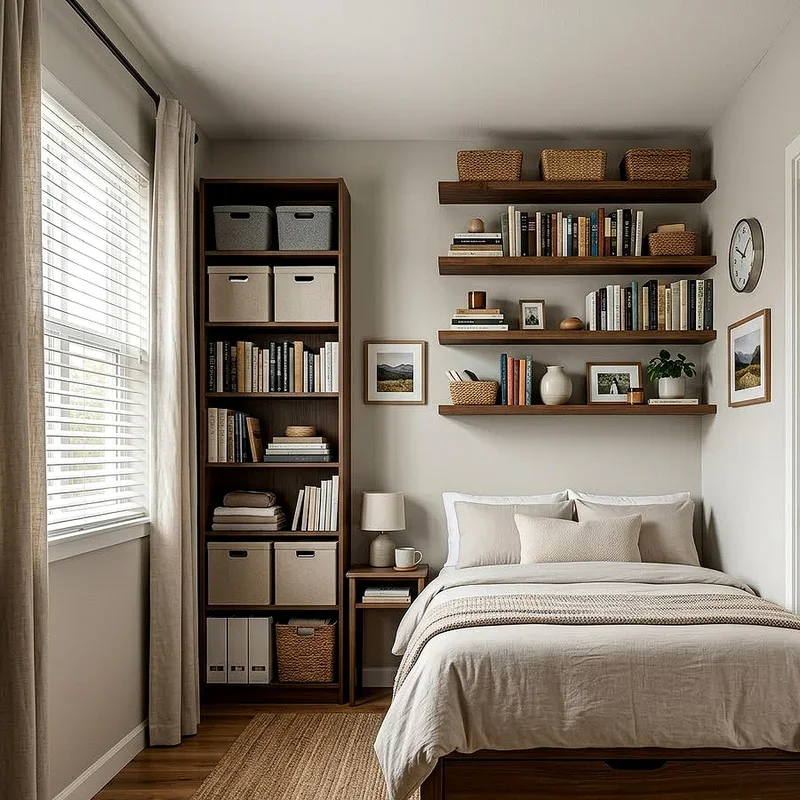
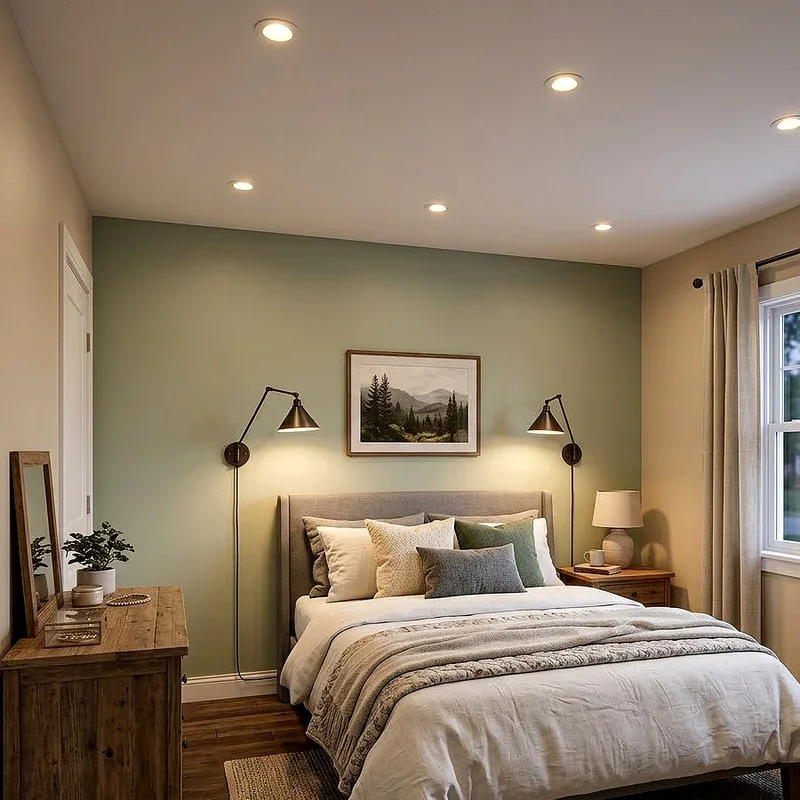
8. Install Recessed or Wall-Mounted Lighting
Table lamps sitting on nightstands eat up surface space that you desperately need in a small primary bedroom. The solution is to go vertical with your lighting by mounting sconces on the wall beside the bed or installing recessed lighting in the ceiling for a clean, uncluttered look. Wall-mounted reading lights with adjustable arms give you the directional light you want for bedtime reading without occupying any horizontal surface at all. Recessed lighting eliminates the pendant or chandelier that might otherwise hang too low in a room with modest ceiling height. A well-lit bedroom also feels bigger because light disperses shadows that can make corners feel cramped. Layer your lighting with a dimmer switch so you control the mood effortlessly without adding more fixtures.
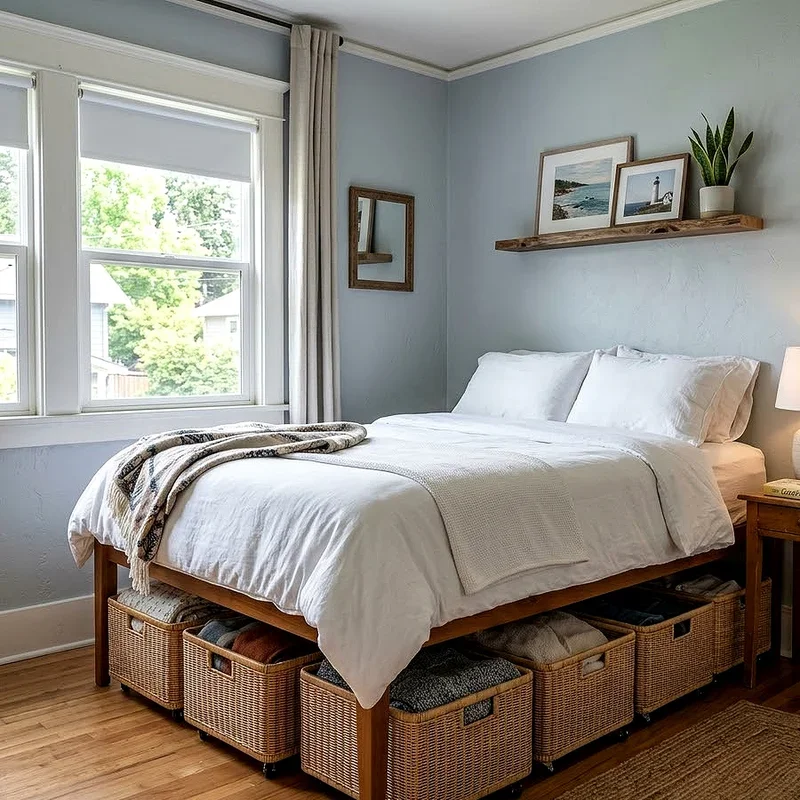
9. Use Under-Bed Storage Creatively
The space under your bed is essentially a free storage unit that most people ignore completely. In a small primary bedroom, you simply cannot afford that kind of waste. Flat rolling bins work beautifully for storing off-season clothing, extra bedding sets, or spare pillows. Vacuum-seal bags compress bulky items down to almost nothing and slide in neatly on their own. If your bed sits low to the ground, add a set of bed risers to create several extra inches of clearance that transform the under-bed zone into a genuinely useful space. Use matching containers to keep things tidy because a chaotic underbed situation defeats the purpose. A bed skirt hides it all with zero effort, maintaining the polished look you want while making your storage work invisibly in the background.
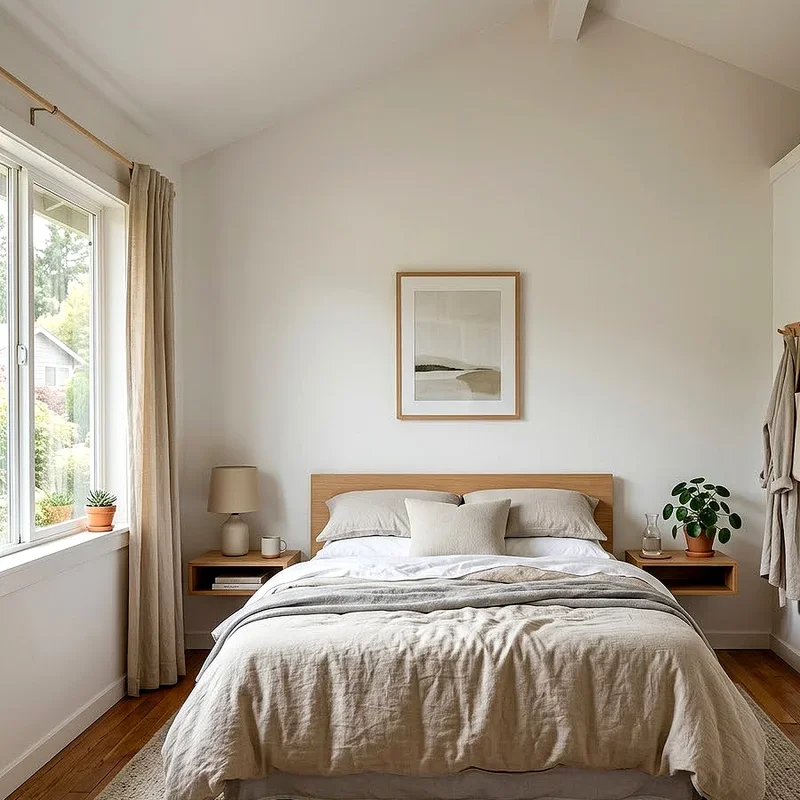
10. Embrace a Minimalist Aesthetic
Minimalism was practically invented for small spaces, and it feels tailor-made for a compact primary bedroom. The core idea is deceptively simple: keep only what serves a purpose or brings genuine joy, and let everything else go. In practice, this means a bed, one or two lighting sources, a small dresser or closet system, and a handful of carefully chosen decor pieces. No knick-knack collection on every surface, no six throw pillows you never rearrange, no artwork fighting for attention on every wall. When the room contains less, your eye moves through it more freely and the space reads as larger and more serene. You do not have to live like a monk to embrace minimalism; you just have to be intentional about what earns its place in your sanctuary.
11. Add a Statement Wall to Draw the Eye
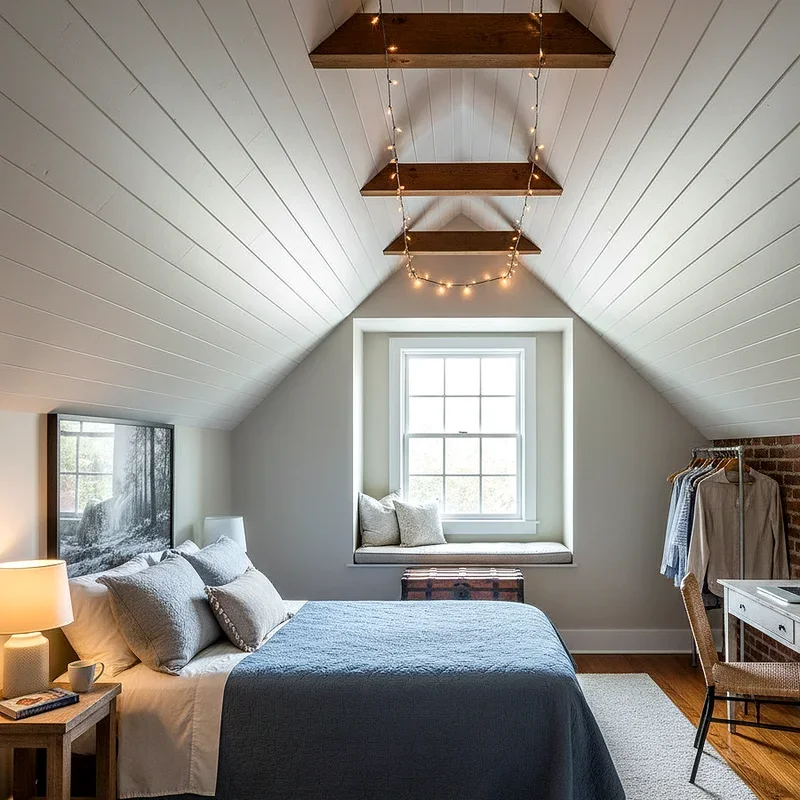
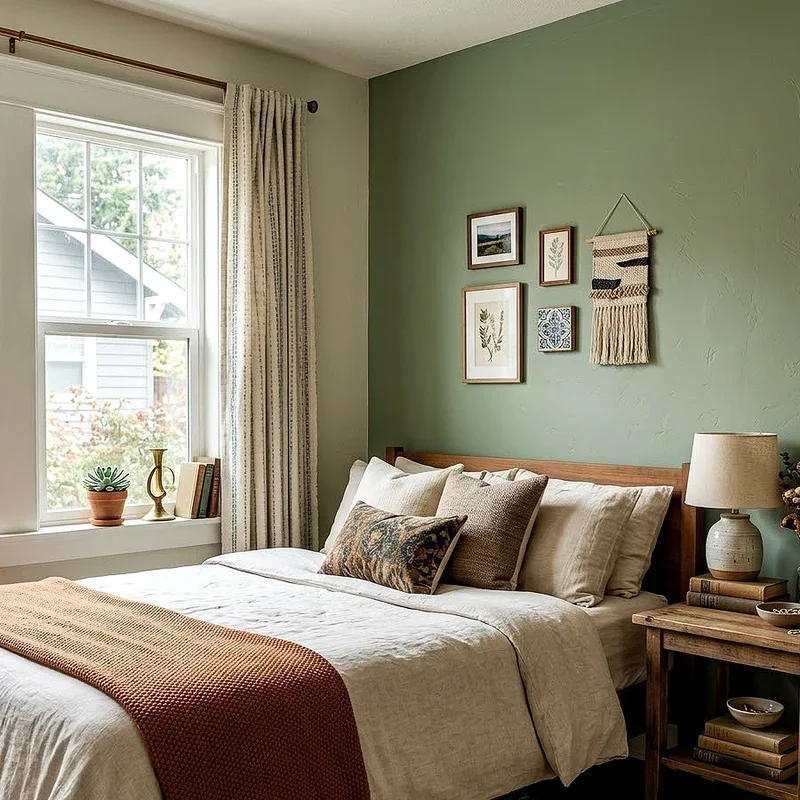
A statement wall is a surprisingly clever tool in a small bedroom because it creates a focal point that anchors the space and makes the room feel designed rather than default. Choose the wall behind your headboard and give it something special, whether that is a bold paint color, a dramatic wallpaper pattern, a gallery of framed prints, or even a textured panel installation. When the eye has somewhere intentional to travel, it spends less time registering the room's limited square footage and more time appreciating its personality. Keep the remaining three walls calm and neutral so the statement wall does all the heavy lifting visually. This approach delivers maximum visual impact for minimum investment, and it is one of the easiest upgrades you can make to a small primary bedroom this weekend.
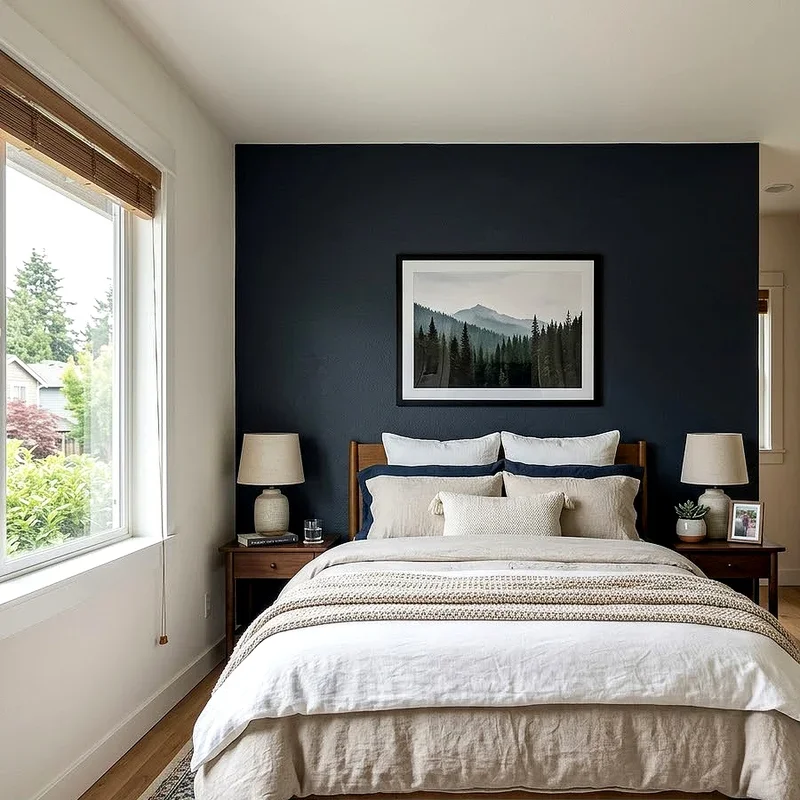
12. Choose Furniture with Exposed Legs
Here is a design trick that feels almost too simple to be true: furniture with exposed legs makes a room look bigger. When you can see the floor beneath a sofa, chair, bed frame, or dresser, the eye reads the continuous floor plane as one uninterrupted surface stretching across the room. That continuity signals space. Compare it to furniture that sits flat on the ground, which chops the room into segments and makes the floor feel smaller. In a small primary bedroom, a bed with slim legs, a floating nightstand, or a dresser elevated on tapered feet all contribute to that open, airy effect. The legs do not have to be tall; even a few inches of visible floor beneath a piece creates the visual breathing room that makes a difference.
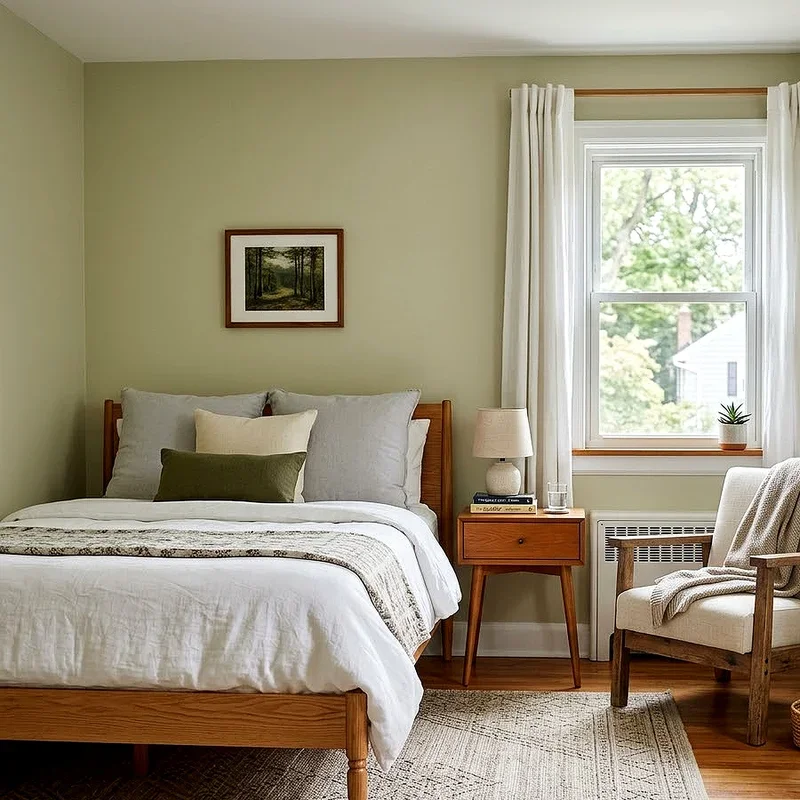
13. Maximize Closet Space with Smart Organizers
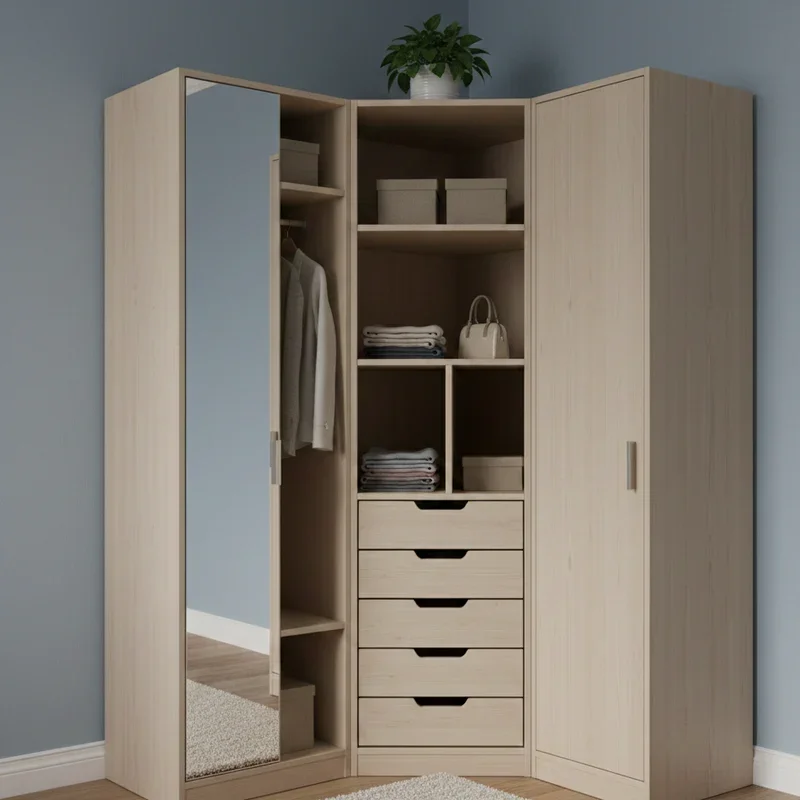
Your closet is your small bedroom's greatest ally, but only if you organize it properly. A chaotic closet overflows into the bedroom itself, cluttering the space you worked so hard to keep serene. Start by installing a double hanging rod to effectively double your hanging capacity for shorter items like shirts and jackets. Add shelf dividers, clear stackable bins, and a shoe rack that uses vertical space efficiently. Behind-the-door organizers on the closet door itself turn wasted space into storage for accessories, small bags, or shoes. A well-organized closet keeps the bedroom floor clear and your morning routine smoother. You may even discover you do not need that extra dresser once your closet is working at full capacity, which frees up even more precious floor space in the room.
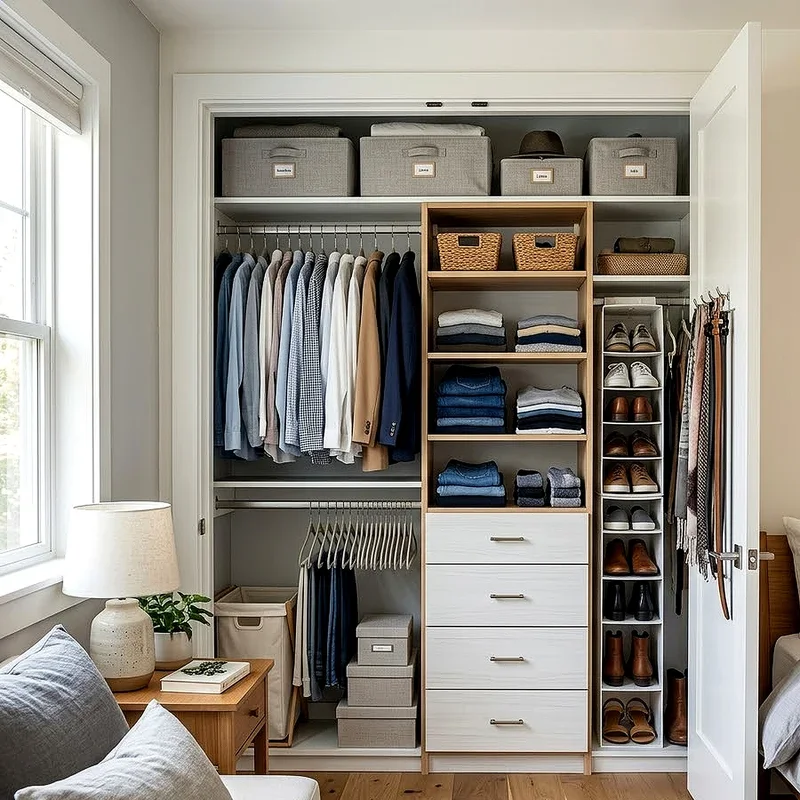
14. Incorporate Foldable or Stackable Elements
Flexibility is the ultimate luxury in a small primary bedroom, and foldable or stackable furniture delivers exactly that. A folding chair tucks behind the door when not in use but appears instantly when you need a place to drape tomorrow's outfit. A stackable set of side tables gives you one surface most nights and two surfaces when you need to set down that extra book and a glass of water. Nesting trays on a dresser top expand or collapse depending on what you need to display or store. Even a foldable exercise mat stashed in the closet lets you claim your bedroom floor as a yoga space on weekend mornings. The point is that your room adapts to your day rather than limiting it, which is the ultimate goal in any thoughtfully designed small space.
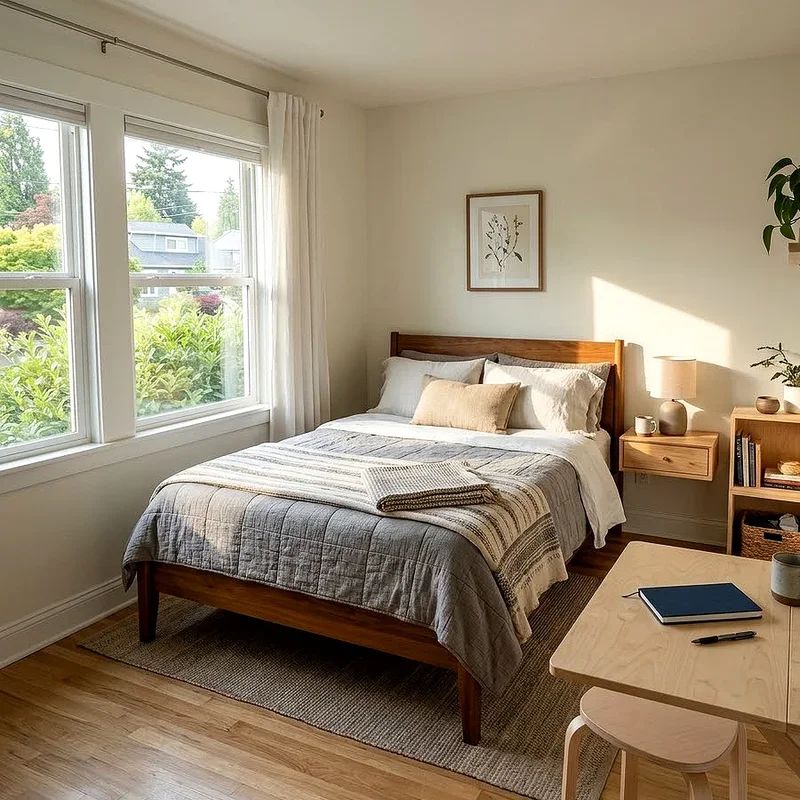
15. Personalize with Purposeful Decor Accents
Just because your bedroom is small does not mean it has to feel generic or stripped of personality. Purposeful decor accents are the finishing touches that transform a functional space into a space that actually feels like yours. The key word here is purposeful, meaning every decorative item has a reason for existing beyond pure aesthetics. A woven basket holds blankets while adding texture. A single large piece of artwork makes a stronger statement than a dozen smaller prints competing for attention. A trailing plant on a high shelf adds life and color without consuming floor space. Even your bedding choice is a decor decision that sets the tone for the entire room. Edit your accents down to a curated few and let each one breathe; your small bedroom will reward that restraint with a sense of calm, cohesive beauty.
Conclusion
A small primary bedroom is not a design problem to solve; it is a creative challenge to embrace. With the right combination of color, furniture, lighting, and storage strategies, even the most compact sleeping space can feel like a luxurious personal retreat. You do not need to knock down walls or spend a fortune on a renovation. You simply need to approach the space with intention, a willingness to edit ruthlessly, and an eye for solutions that do double or triple duty. Start with one or two of these ideas, see how they transform the room, and build from there.
Read next: 15 Bedroom Makeup Vanity Ideas for Stylish Beauty Spaces
Frequently Asked Questions
Q1. What is the best color for a small primary bedroom?
A: Soft whites, warm creams, and light pastels visually expand a small bedroom beautifully.
Q2. How do I add storage to a small bedroom without it feeling cluttered?
A: Use vertical storage, under-bed bins, and multi-functional furniture to maximize hidden space.
Q3. Can mirrors really make a small bedroom look bigger?
A: Yes, strategically placed mirrors reflect light and create an illusion of doubled space.
Q4. What size bed works best in a small primary bedroom?
A: A queen on a low platform bed balances comfort and space efficiency for most small rooms.
Q5. How do I make a small bedroom feel luxurious on a budget?
A: Focus on quality bedding, layered lighting, and a few purposeful decor pieces for impact.
Stay up to date with our latest ideas!