Discover 15 stylish desk next to bed ideas that save space, blend work with rest, and make your small bedroom feel calm and pulled together.
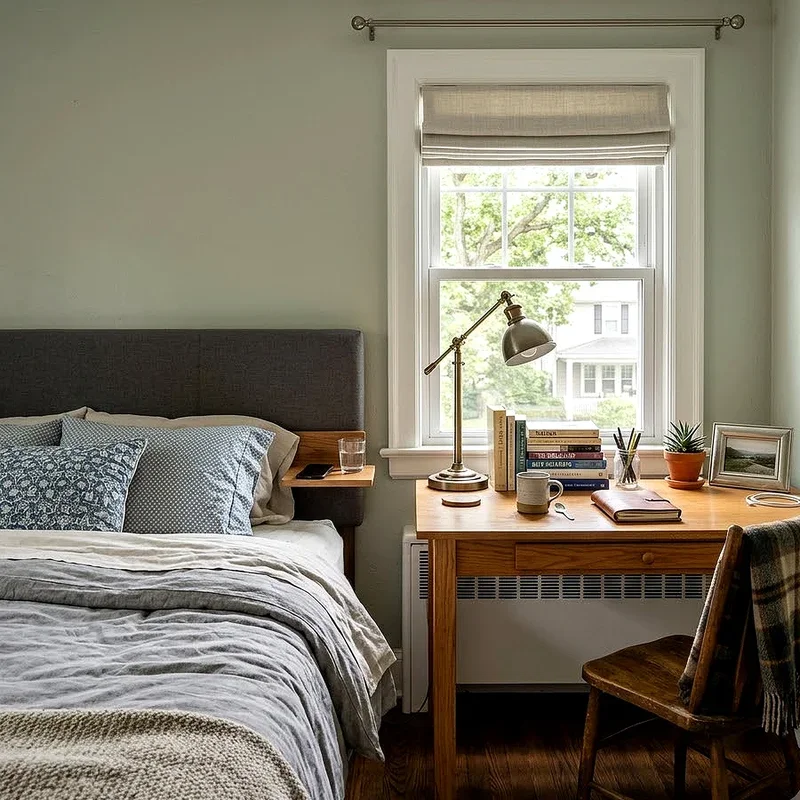
Picture this: you wake up, swing your legs over the side of the bed, and your laptop already sits there waiting. Sounds like a productivity dream or a sleep nightmare, depending on who you ask. The truth lands somewhere in the middle, and it mostly comes down to how you arrange things. Small apartments, shared houses, and student rooms rarely offer a spare corner for a proper office, so the space beside your bed becomes the obvious candidate. The good news? A desk next to your bed can look intentional, calm, and genuinely stylish instead of cramped and improvised. You just need a few smart rules about height, lighting, and edges. I pulled together fifteen ideas that tackle the real problems people run into, from bruised shins to tangled cords.
1. Float a Slim Writing Desk Right Beside Your Headboard
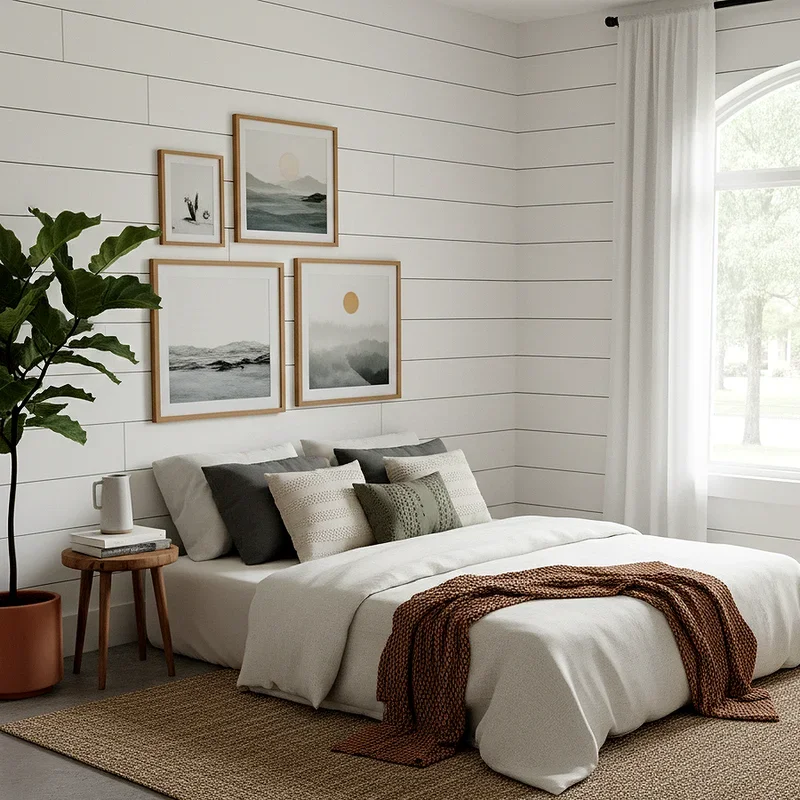
A slim writing desk sitting flush against your headboard wall works like a handshake between two pieces of furniture. You keep the walkway clear, and your room still reads as a bedroom first. Look for a depth around eighteen to twenty two inches, since anything deeper starts eating the floor you actually walk on. I like desks with tapered legs because they let light travel underneath, and that visual breathing room tricks your eye into seeing more space. Pair it with a lamp that matches your bedside finish so the two zones feel related rather than random. Does it need to match perfectly? No. It just needs to rhyme. Think of your bedroom as a song where the desk plays backup, never lead, and the whole arrangement suddenly feels calm instead of crowded.
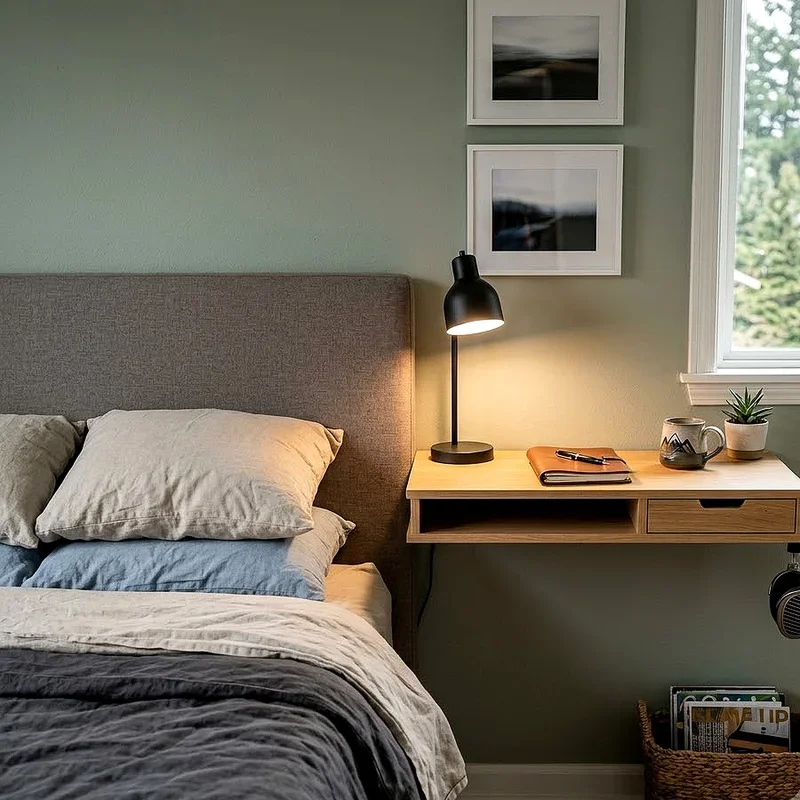
2. Turn a Wider Nightstand Into a Working Desk
Why buy two pieces when one can moonlight? A wider nightstand, say thirty inches across with a drawer underneath, handles your lamp, your book, and your laptop without complaint. I usually swap the tiny cube most people own for something closer to a small writing table, then tuck a low stool beneath it. The stool disappears at night and slides out when you need to answer emails. Keep the surface half empty so it never reads as clutter, because a desk that doubles as a nightstand fails the moment you cannot set down a glass of water. Add a shallow tray to corral chargers and pens, and the whole thing stays tidy. It is the furniture version of a Swiss Army knife, quietly useful and refreshingly cheap compared with buying separate pieces.
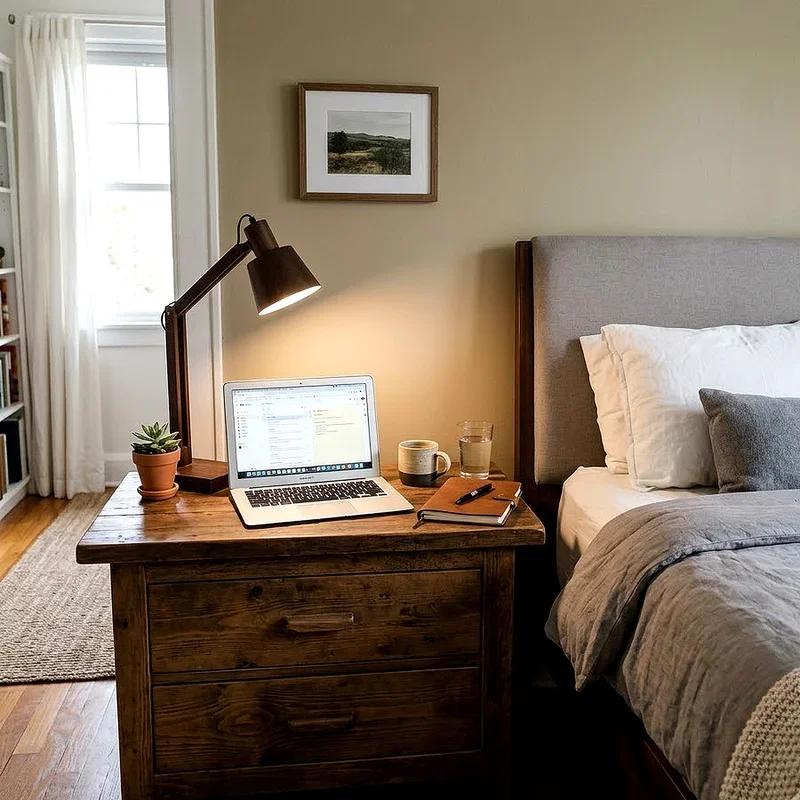
3. Go Wall Mounted With a Fold Down Desk
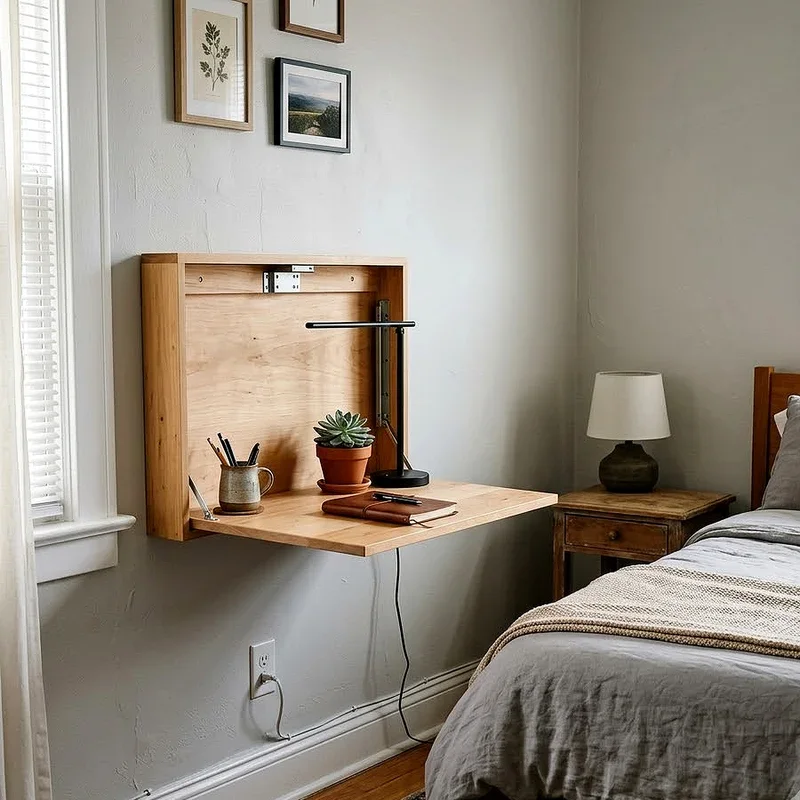
Small rooms punish anything that sticks out, so a fold down desk earns its keep. Mount it beside the bed at about twenty nine inches high, and you get a full work surface that vanishes when you fold it flat. Think of it as a drawbridge: down for business, up for peace. Studs matter here, so find them before you drill, because drywall anchors alone will sag under a laptop and your elbows. I like models with a shallow cubby inside for notebooks and cables, since that keeps the wall clean when closed. Paint it the same color as the wall and it practically disappears, or go bold and let it act as art. Either way, your floor stays open, and open floor is what makes a small bedroom feel generous.
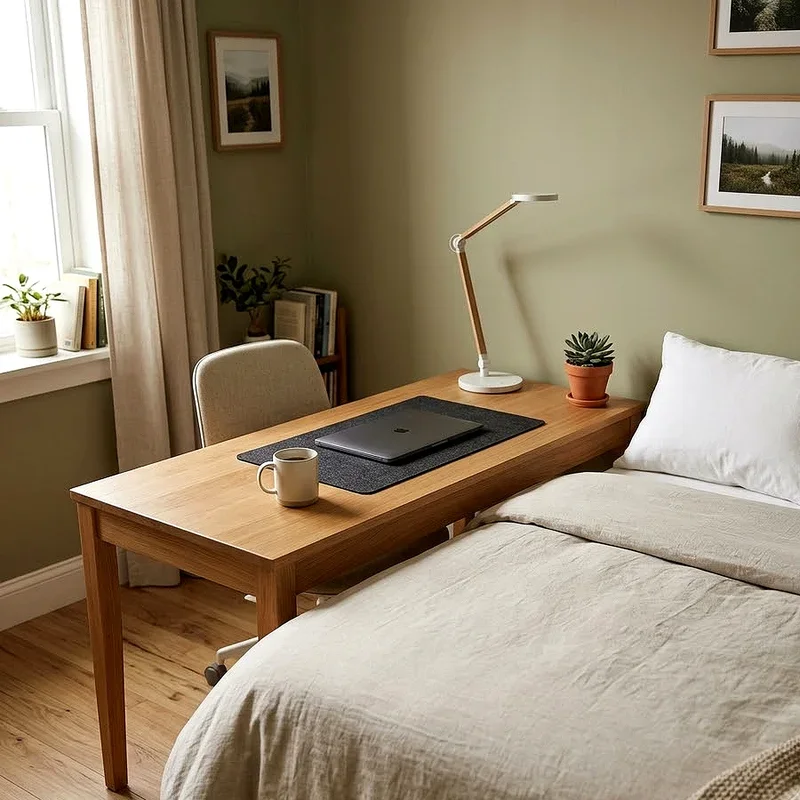
4. Match Your Desk Height to Your Mattress Line
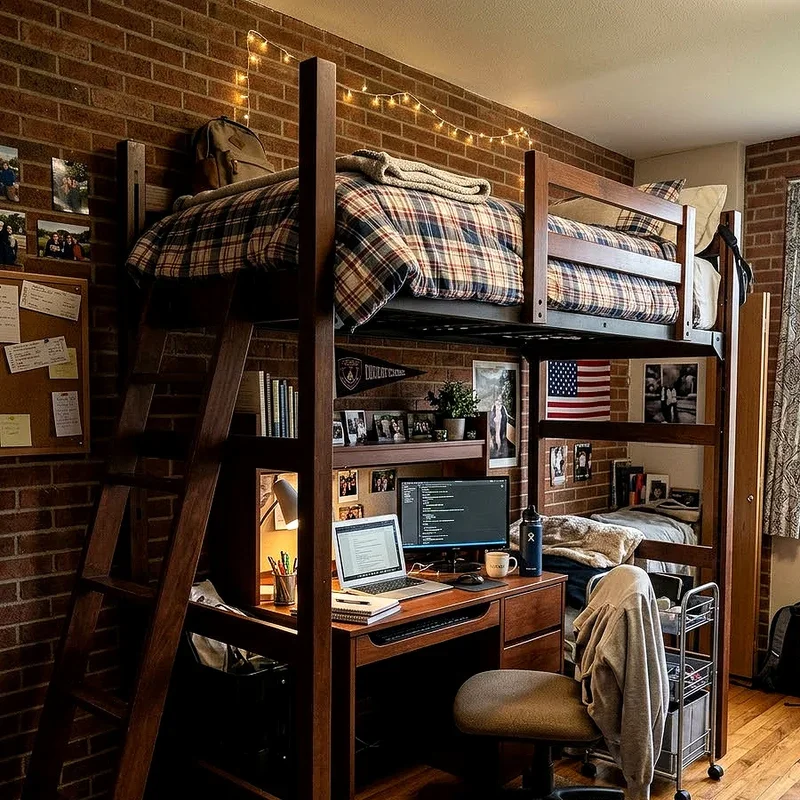
Here is the detail almost everyone skips: the relationship between your mattress top and your desk surface. When those two lines sit close, your eye reads one continuous plane instead of a jumble. Most mattresses land between twenty four and twenty eight inches off the floor, while standard desks hover near thirty. Close enough to feel deliberate, far enough to look sloppy if you ignore it. You can shave the gap with bed risers, a lower platform frame, or a desk with adjustable legs. Why does this matter so much? Because the human eye hunts for horizontal lines, and a stepped, jagged silhouette makes a room feel chaotic even when everything is clean. Line them up and your bedroom suddenly photographs well, which is usually the moment people say it finally looks designed.
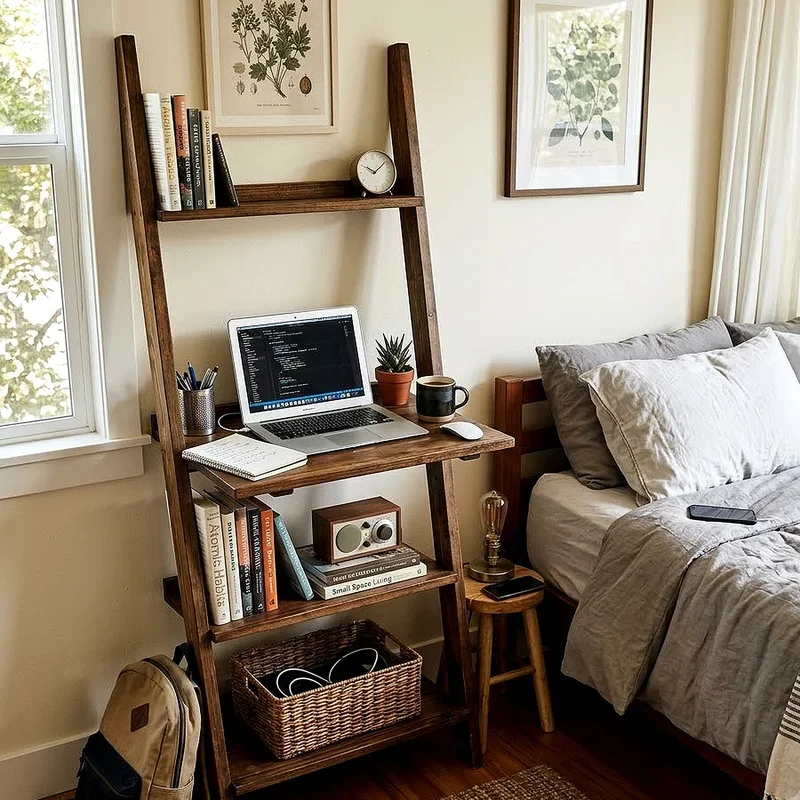
5. Use a Ladder Desk to Grab Vertical Space
A ladder desk leans against the wall and climbs upward, which is exactly what you want when floor space runs thin. The bottom shelf becomes your work surface, and the shelves above hold books, plants, and the small clutter that normally colonizes a nightstand. Because it tapers as it rises, it never feels heavy beside your bed, more like a leaning bookmark than a wall of furniture. I would anchor it to the wall with a simple bracket, especially if kids or pets share the room. Choose an open frame in light oak or matte black depending on your palette, and keep the top shelf styled with only two or three objects. Ever notice how a tall, narrow piece makes a ceiling feel higher? That is the whole trick working in your favor.
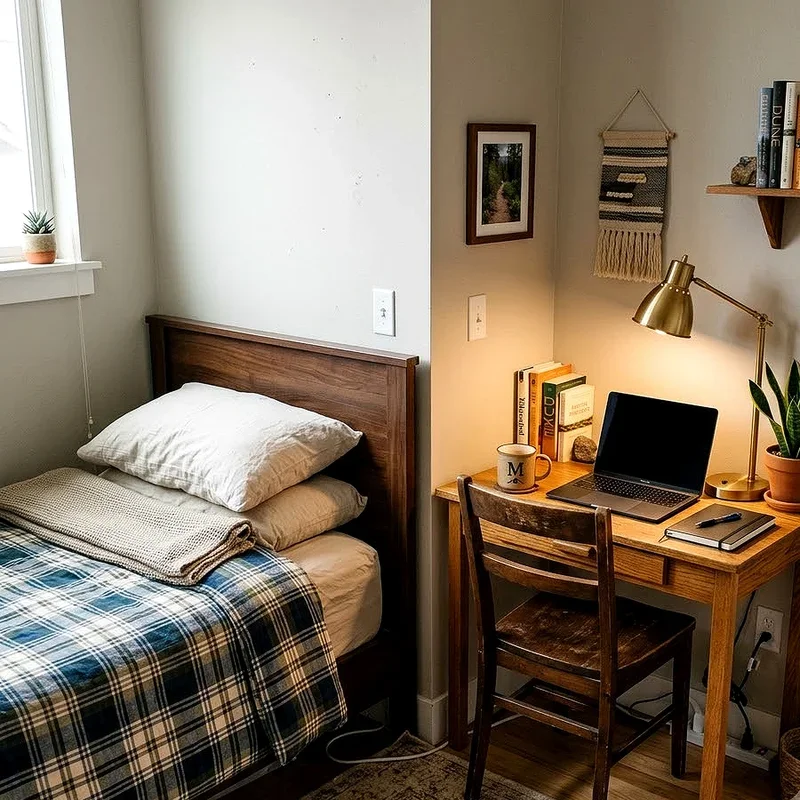
6. Create a Corner Nook Where Bed Meets Wall
Corners are the forgotten real estate of most bedrooms, and pushing your desk into the one nearest your bed solves two problems at once. You gain a defined pocket for work, and your bed keeps its breathing room on the open side. An L shaped or wedge desk fits snugly, though a plain rectangle turned at an angle also works if you like the softer geometry. Face the wall if you distract easily, or face outward if you crave the view. I usually hang a small pinboard or a pair of prints above the corner so the zone announces itself without shouting. The result feels like a nook carved out of the room, cozy in the way a window seat is cozy, and that coziness makes you actually want to sit down.
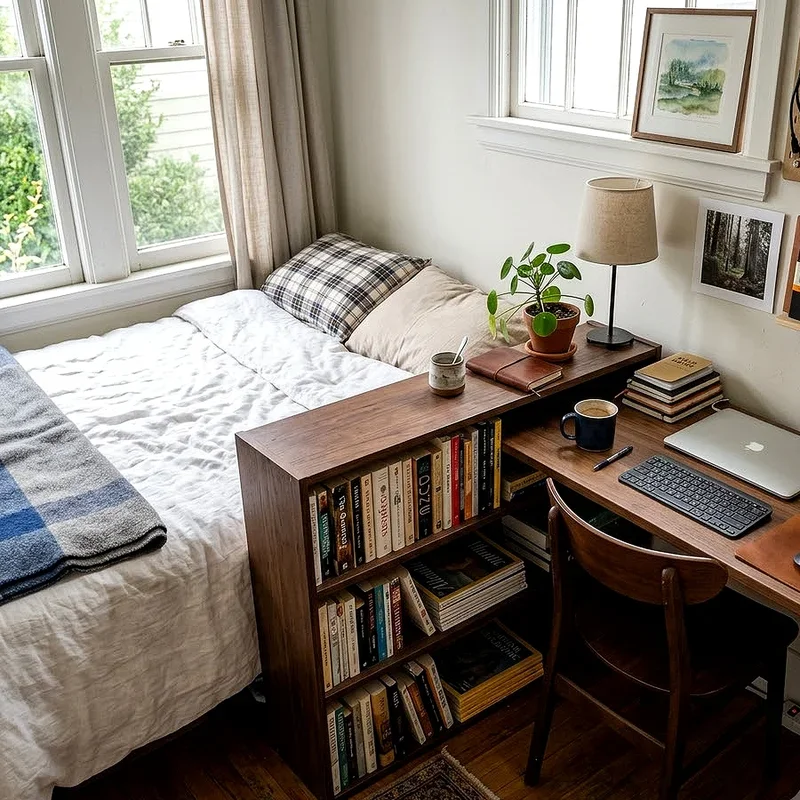
7. Let a Low Bookshelf Bridge Bed and Desk
Sometimes the smartest move is putting something between the bed and the desk that belongs to both. A low bookshelf, roughly waist height, does that job beautifully. It stores your work files on one side and your bedtime paperbacks on the other, acting as a translator between two languages. Keep it under thirty six inches so it never blocks light or makes the room feel chopped. I like running the shelf perpendicular to the wall, which creates a subtle threshold you cross when you move from resting to working. Style the bed facing shelves with soft objects such as candles and fabric boxes, and reserve the desk facing side for supplies. Same piece, two personalities. Your brain picks up the signal fast, and switching modes stops feeling like a struggle.
8. Slide a Console Behind a Floating Bed
Float your bed away from the wall and a whole new surface appears behind the headboard. A narrow console, twelve to sixteen inches deep, slides into that gap and becomes a genuine desk when you pull up a slim chair. This layout shines in studios and larger bedrooms where the bed can act as its own room divider. You walk around the headboard and you are somewhere else, mentally and physically. Run a power strip along the console back so cords never trail across the floor. Add a long, low lamp for even light. Is it unconventional? Absolutely. That is the point. The bed becomes architecture instead of just furniture, and the desk gains privacy without a single wall being built, which is a pretty good trade.
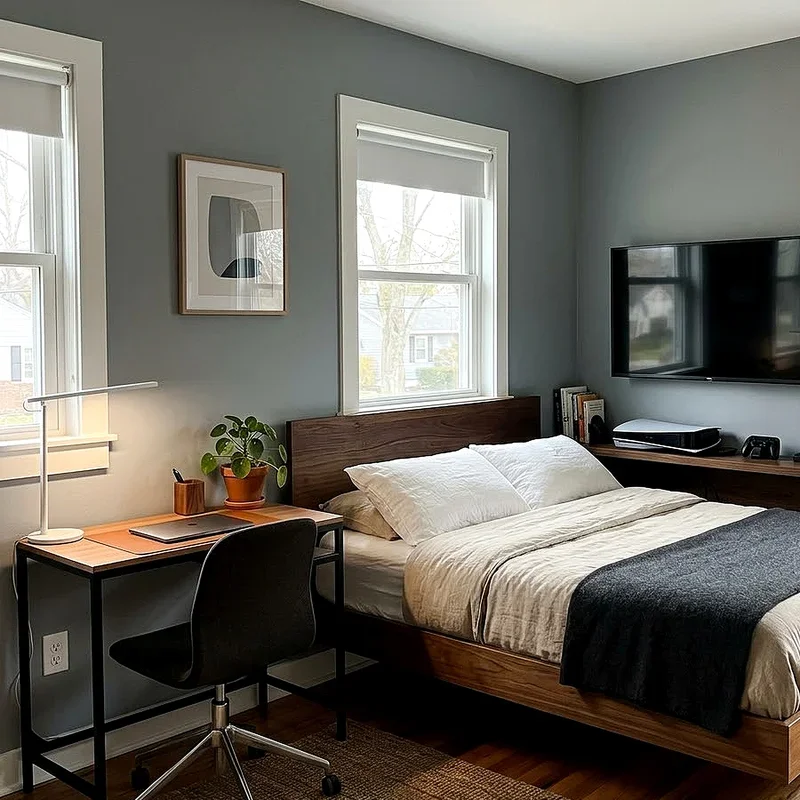
9. Layer Your Lighting So Work and Sleep Separate
Light does more heavy lifting here than any piece of furniture. Your desk wants cool, focused brightness around four thousand kelvin, while your bed wants something warm and dim near twenty seven hundred. Mixing those two moods badly is how a bedroom ends up feeling like a hotel lobby at midnight. I run a clamp lamp or a slim task light on the desk, then keep a separate warm sconce or bedside lamp for winding down. Put them on different switches, or better yet, a smart plug you control from your phone. Flip one off, flip the other on, and your body reads the change instantly. Lighting is basically a costume change for the room, and it costs far less than replacing a single piece of furniture.
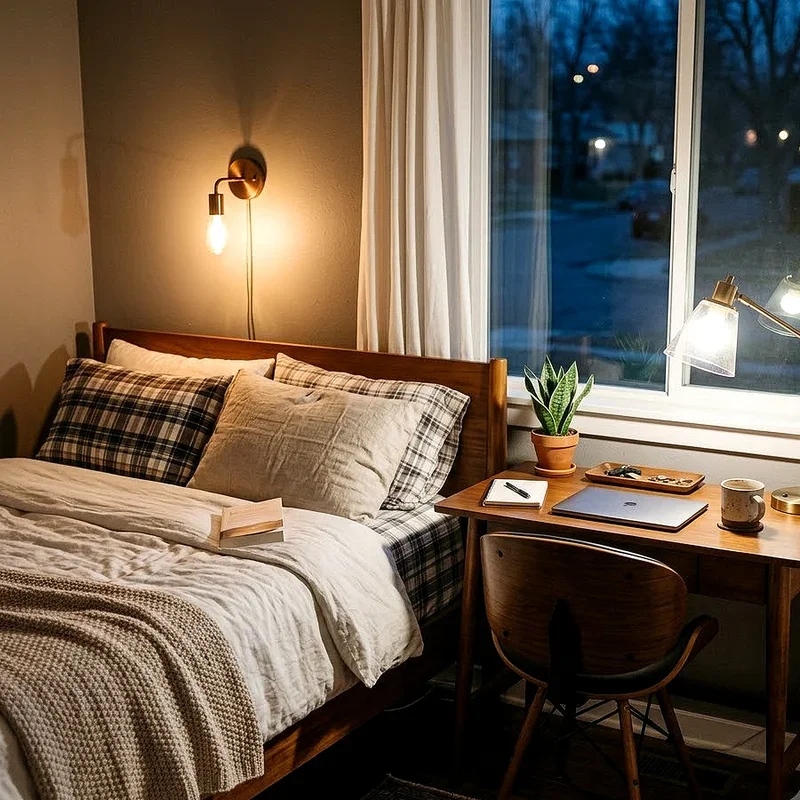
10. Pick Rounded Edges for Tight Walkways
Shins remember everything. When your desk sits inches from the bed, sharp corners turn a midnight bathroom trip into a small crime scene. Rounded or chamfered edges fix that instantly, and they soften the room's visual rhythm too, since curves read as calm while right angles read as busy. Look for oval, kidney, or racetrack shaped tops if you can find them, or simply choose a rectangle with generously radiused corners. Aim to keep at least twenty four inches of clear walking space between the desk edge and the bed frame, thirty if you can spare it. Do you really need that much? Yes, because comfort in a small room comes from movement, not square footage. A path you can walk without flinching makes the whole setup feel bigger than it is.
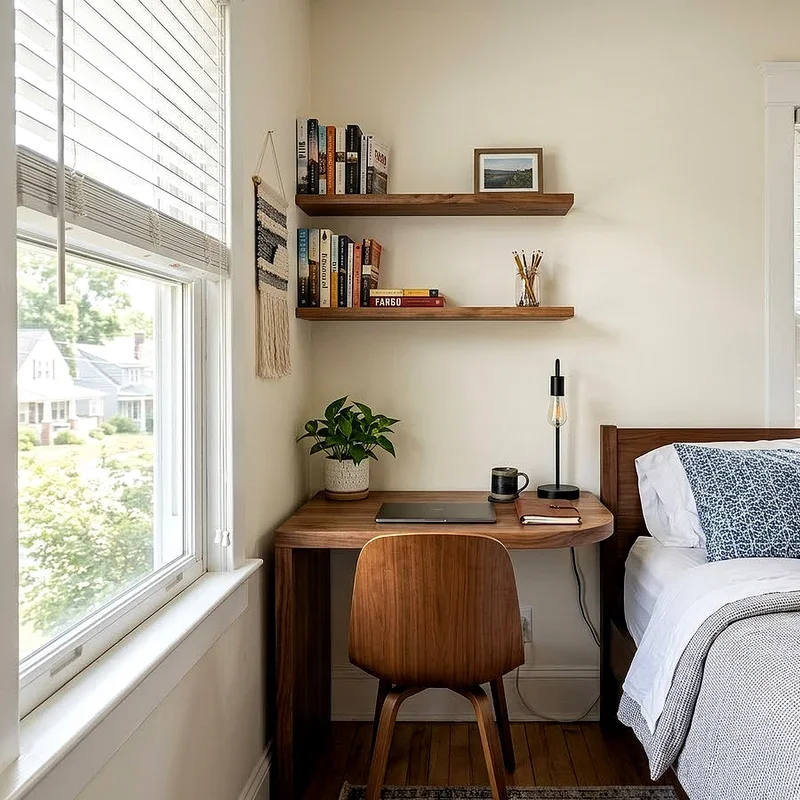
11. Tame the Cables Before They Take Over
Nothing ruins a beautiful bedroom faster than a nest of black cords spilling toward your pillow. Start by mounting a power strip underneath the desk with adhesive brackets, then run everything to that single point. Velcro ties cost almost nothing and tame the rest in about ten minutes. I also love a felt or fabric cable sleeve for the one thick bundle that has to reach the wall outlet, since it turns spaghetti into a single clean line. Wireless charging pads help too, cutting two cables down to zero on your surface. Ask yourself what you actually plug in daily, then hide everything else in a drawer. Cords are the socks on the floor of interior design: nobody notices when they are gone, and everybody notices when they are not.
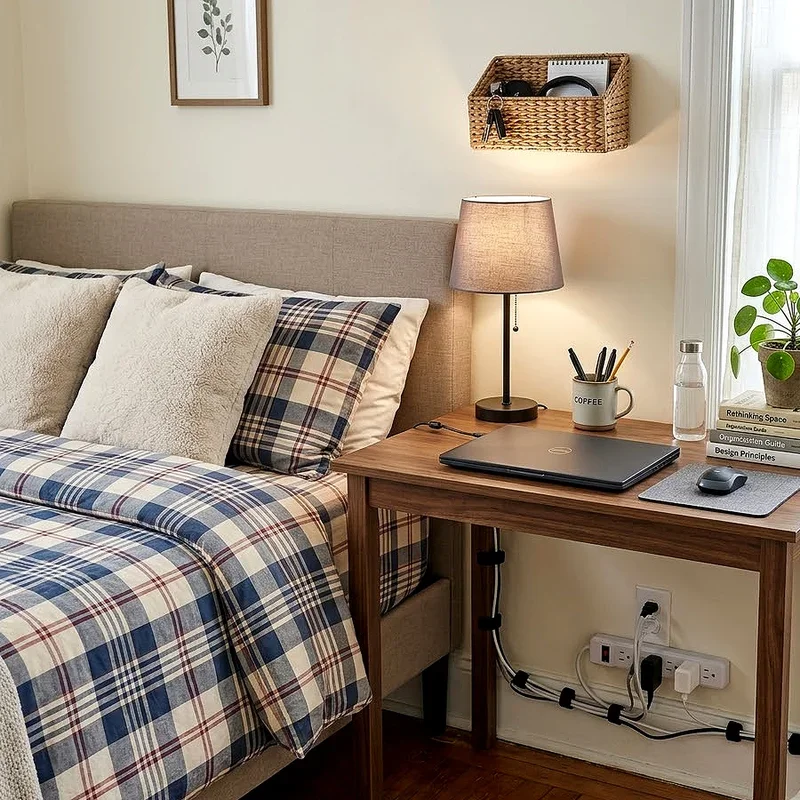
12. Choose a Chair That Does Not Scream Office
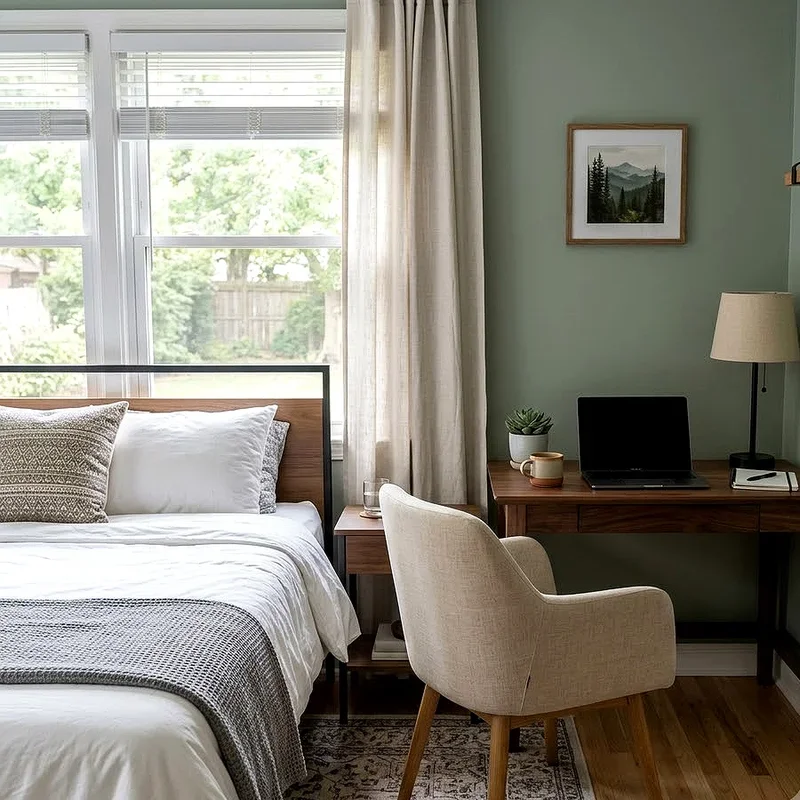
That mesh office chair might support your spine, but parked beside a bed it looks like a rental car in a garden. Choose something with softer language instead: a wood chair with a cushioned seat, an upholstered slipper chair, or a modern task chair in a warm fabric and a walnut base. Comfort still matters, so check seat height against your desk and aim for roughly ten inches of clearance between the two. If you work long hours, compromise with a low back ergonomic model in a neutral tone. Wheels are optional, and honestly they scuff floors. Ask whether the chair could stand alone in your living room without looking strange. If the answer is yes, you have found the right one for a bedroom.
13. Add a Rug to Zone Your Workspace
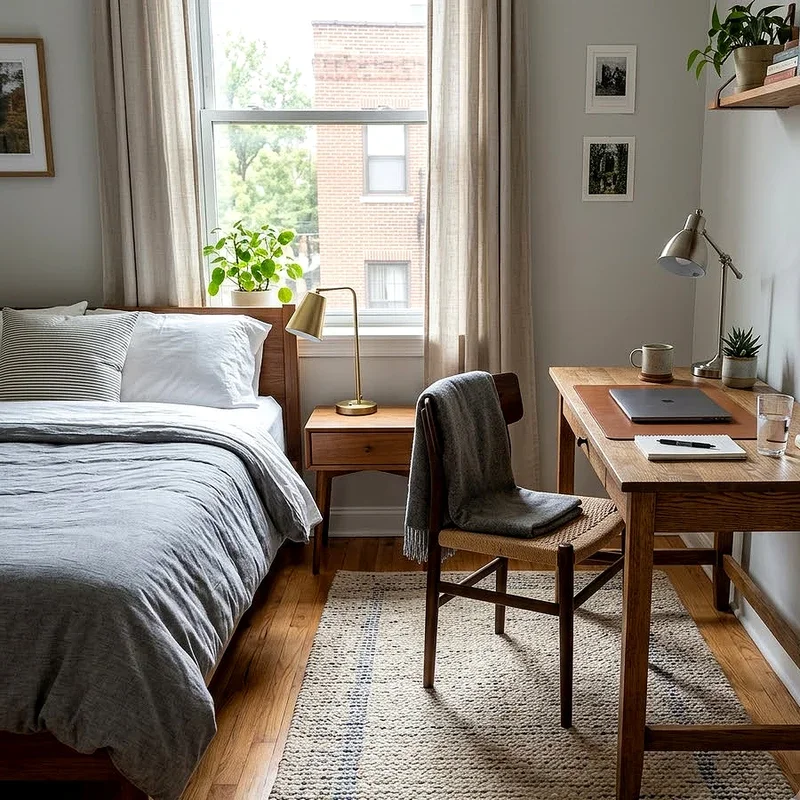
A rug under the desk acts like a spotlight on a stage, telling everyone this small patch is where work happens. Pick something flat woven and low pile so your chair glides instead of catching, and size it so the front legs of the chair land on it when you sit. Around three by five feet usually does the job beside a bed. Choose a pattern or texture different from your main bedroom rug, because contrast is what creates the boundary in the first place. Too matchy and the zoning vanishes. I like jute or a tight wool weave in a color pulled from your bedding, which keeps the palette connected while the shape does the dividing. Small move, surprisingly loud result, and you can roll it up whenever you change your mind.
14. Use a Screen or Curtain as a Soft Divider
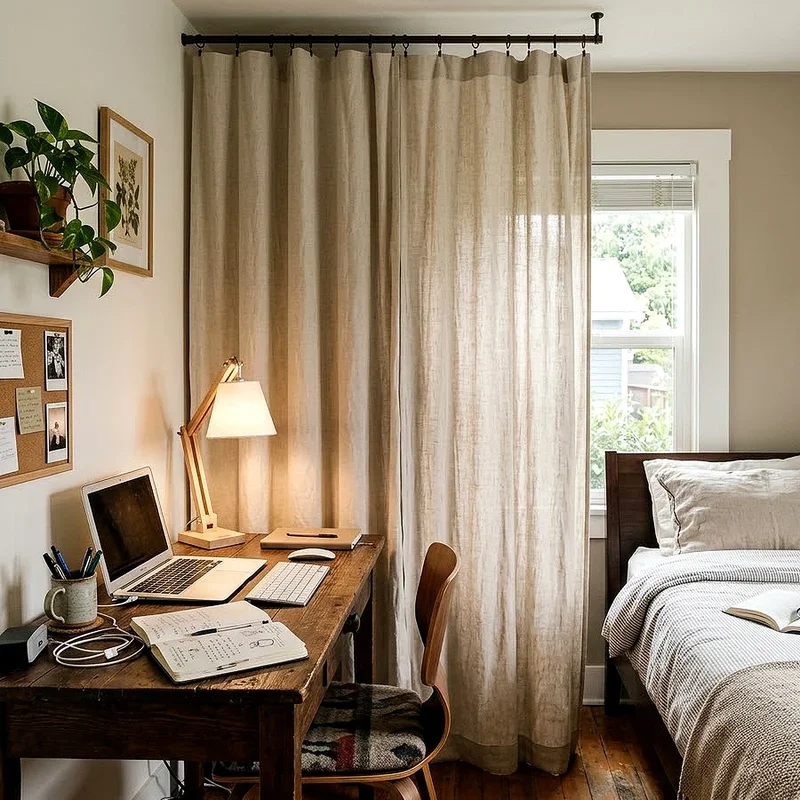
When your laptop sits three feet from your pillow, your brain needs help forgetting it at night. A soft divider gives you that help. Hang a ceiling track curtain in linen and pull it closed after you log off, or lean a folding screen between the two zones for something you can move on a whim. Curtains cost less and take up almost no space when open, while screens add texture and a bit of drama. Either way, you are building a wall your mind respects even though your body could walk right through it. Does it look like a bedroom or an office? Yes to both, depending on the hour. That flexibility is the entire reason this trick keeps showing up in small apartments everywhere.
15. Style the Desktop So It Looks Intentional
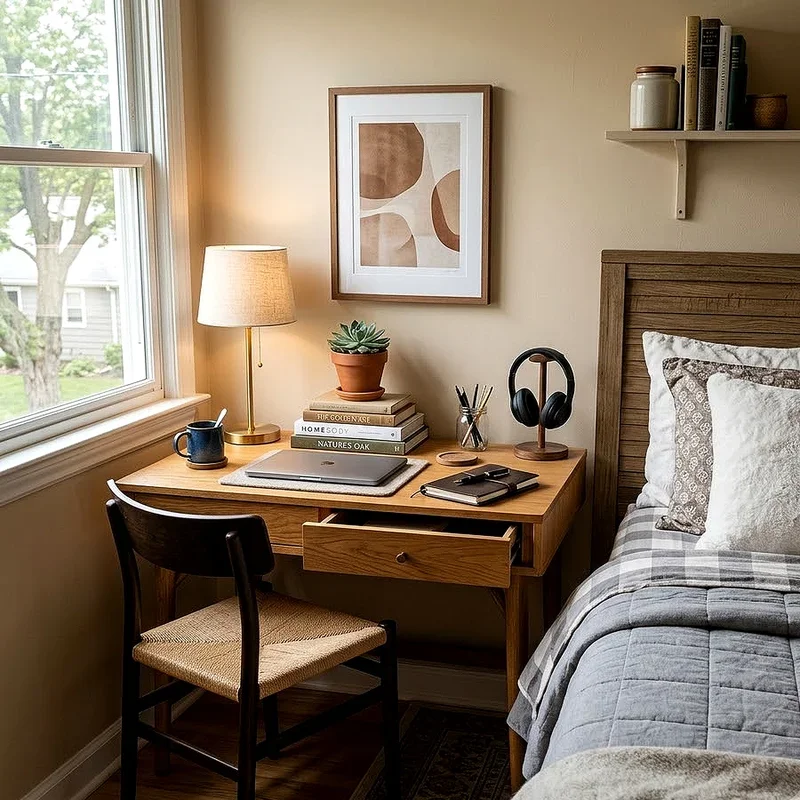
Your desk sits in your line of sight the second you open your eyes, so what lives on it matters more than usual. Follow a simple rule of three: one tall thing, one soft thing, one useful thing. A small plant, a ceramic dish, a lamp. Everything else goes in a drawer or a lidded box by the end of each day. I treat this like making the bed, a two minute ritual that resets the room. Choose materials that echo your bedding, maybe linen, light wood, and a hint of brass, so the desk feels like a family member rather than a guest. Ever notice how a styled surface makes you want to sit down and start? That pull is the whole payoff of doing this well.
Conclusion
Putting a desk next to your bed is not a compromise, it is a design decision you get to make on purpose. Match your heights, respect your walkways, split your lighting, and give the surface a job it can do without shouting. Every idea here works alone, though the magic usually shows up when you stack two or three together. Start with the one that solves your biggest daily annoyance, live with it for a week, then adjust. Your bedroom should serve both your work and your rest, not pick a favorite.
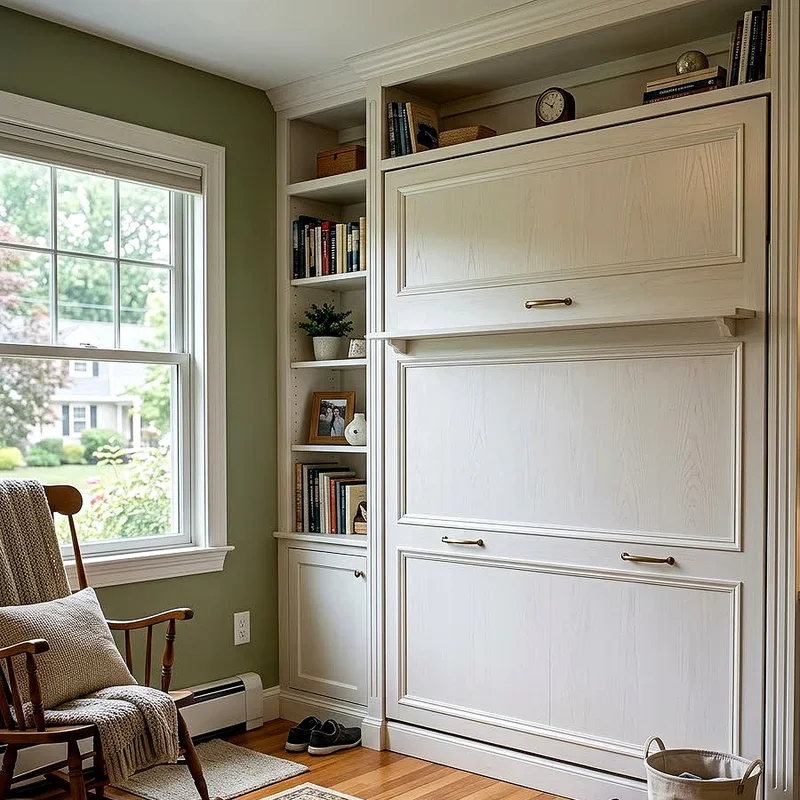
Read next: 15 Office with Murphy Bed Ideas to Maximize Your Room
Frequently Asked Questions
Q1: Is it bad for sleep to put a desk next to my bed?
A: Only if you leave work visible; a curtain, cover, or tidy surface solves that easily.
Q2: How much space should I leave between the desk and the bed?
A: Aim for twenty four to thirty inches so you can walk past comfortably.
Q3: Can a nightstand really work as a desk?
A: Yes, if it measures at least thirty inches wide and offers enough legroom underneath.
Q4: What desk color works best beside a bed?
A: Pick warm woods or soft neutrals that echo your bedding rather than stark office finishes.
Q5: Do I need a separate lamp for the desk?
A: Yes, task lighting keeps your work bright while your bedside lamp stays warm and dim.
Stay up to date with our latest ideas!