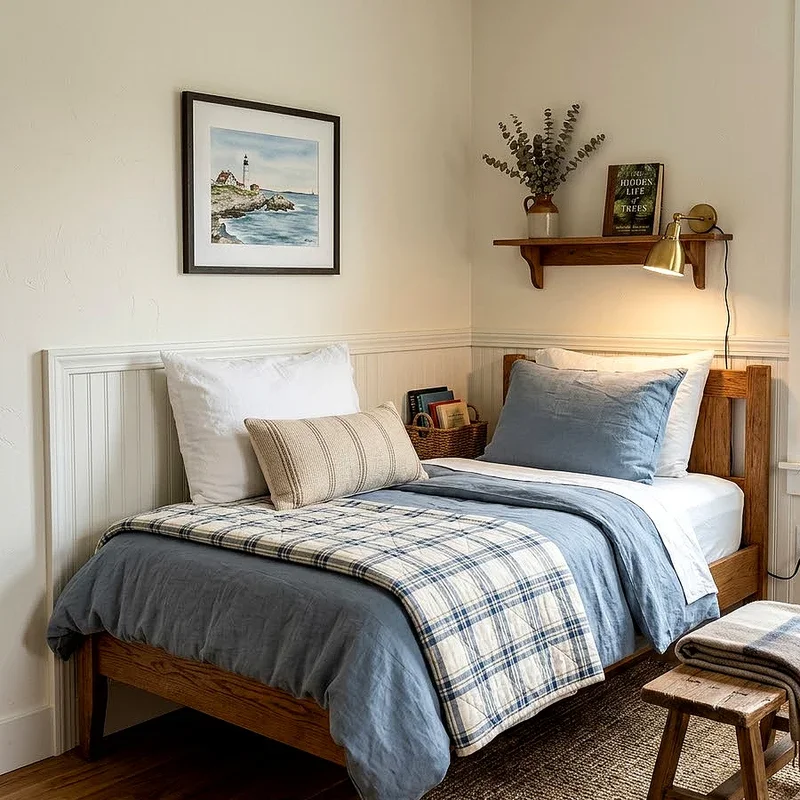
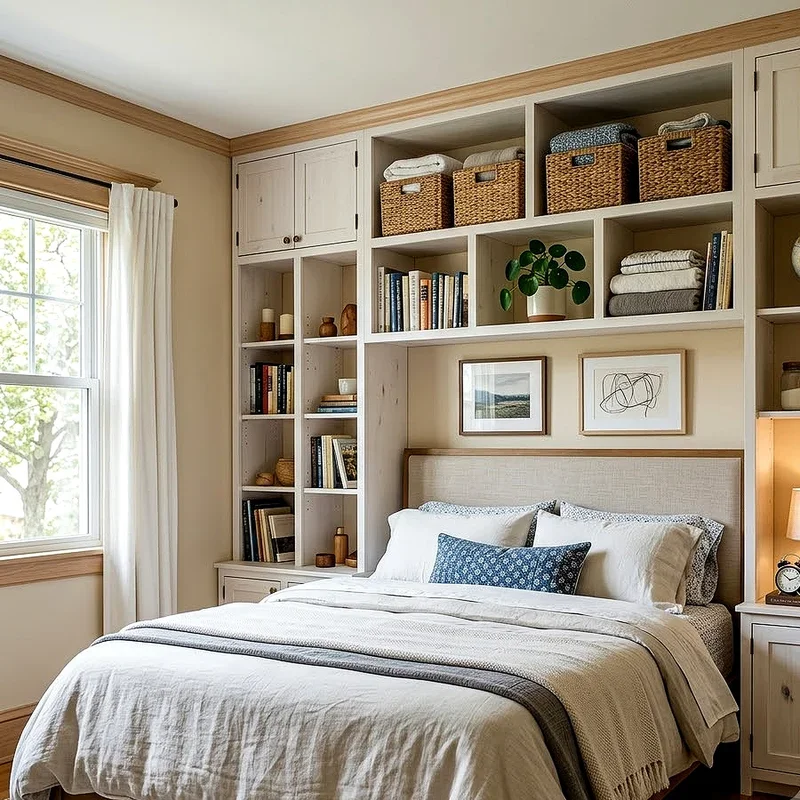
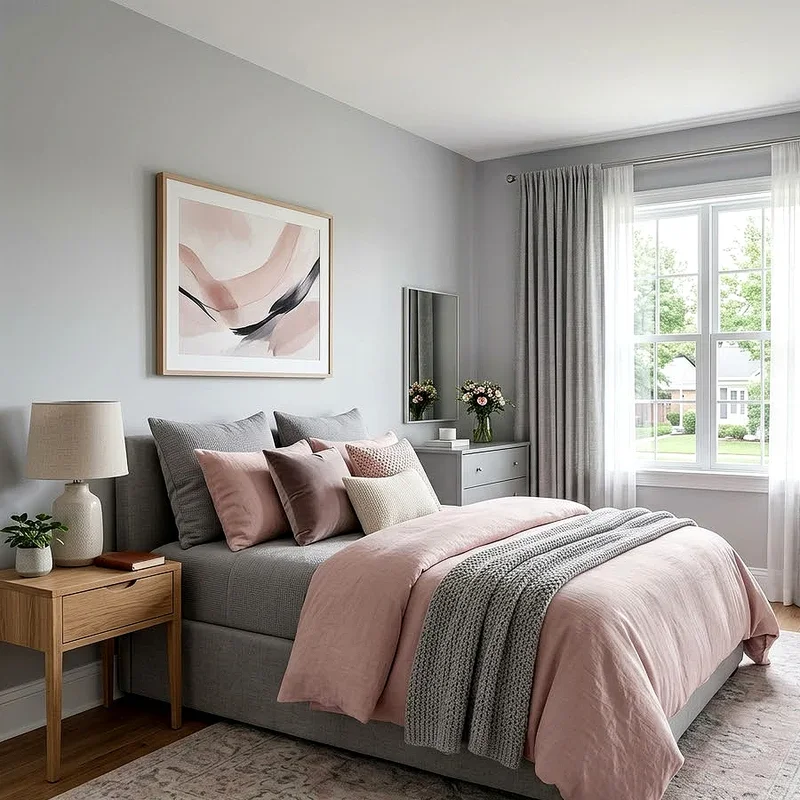
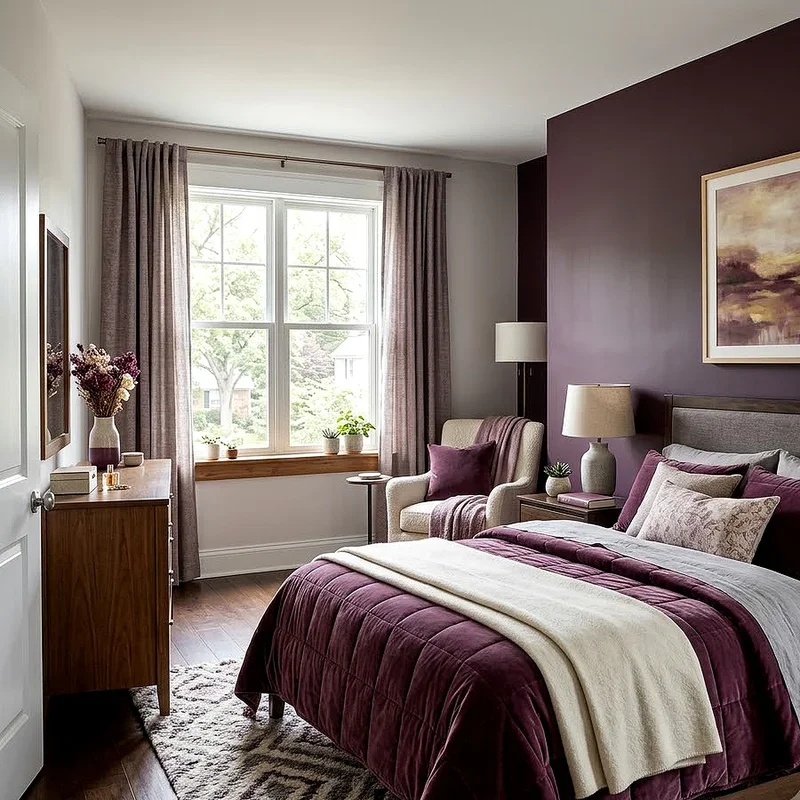
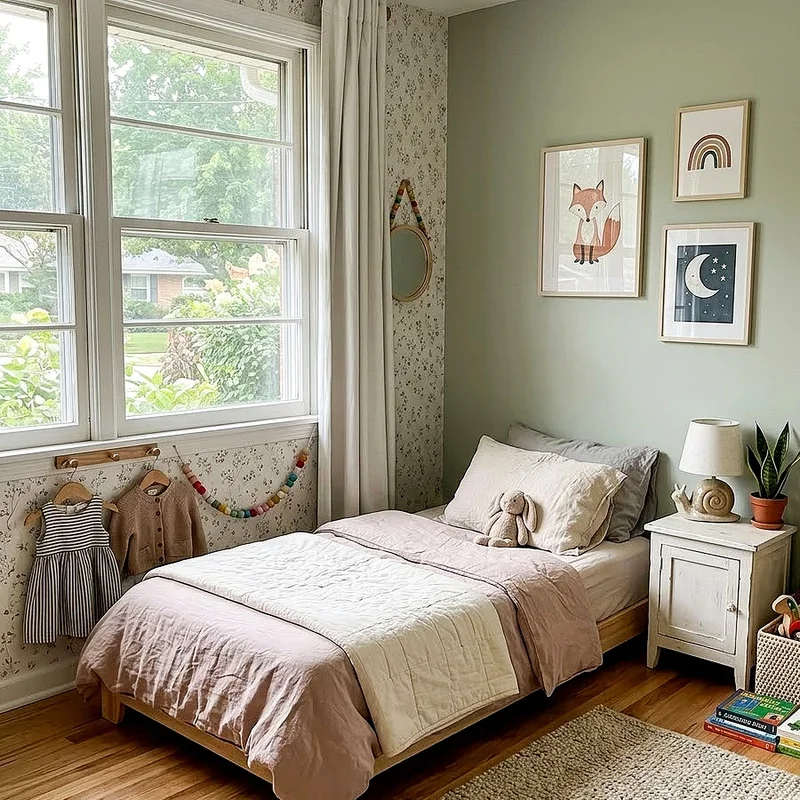
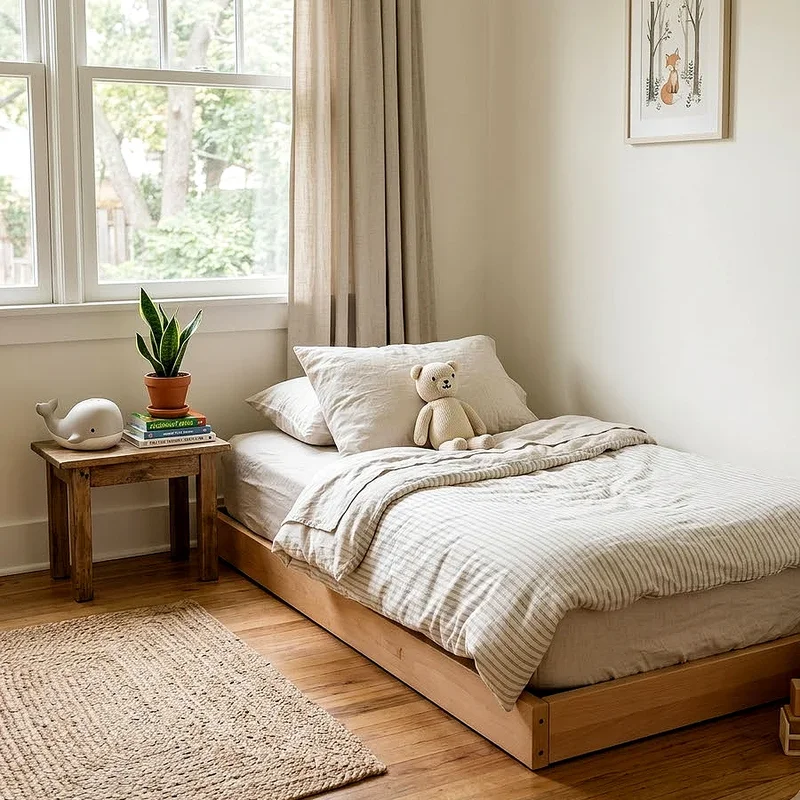
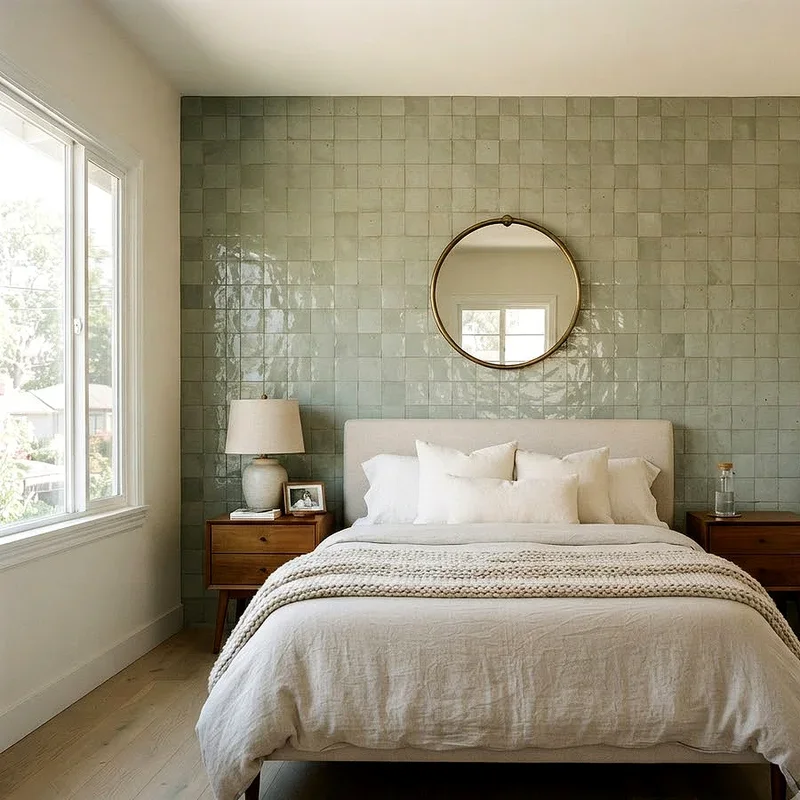
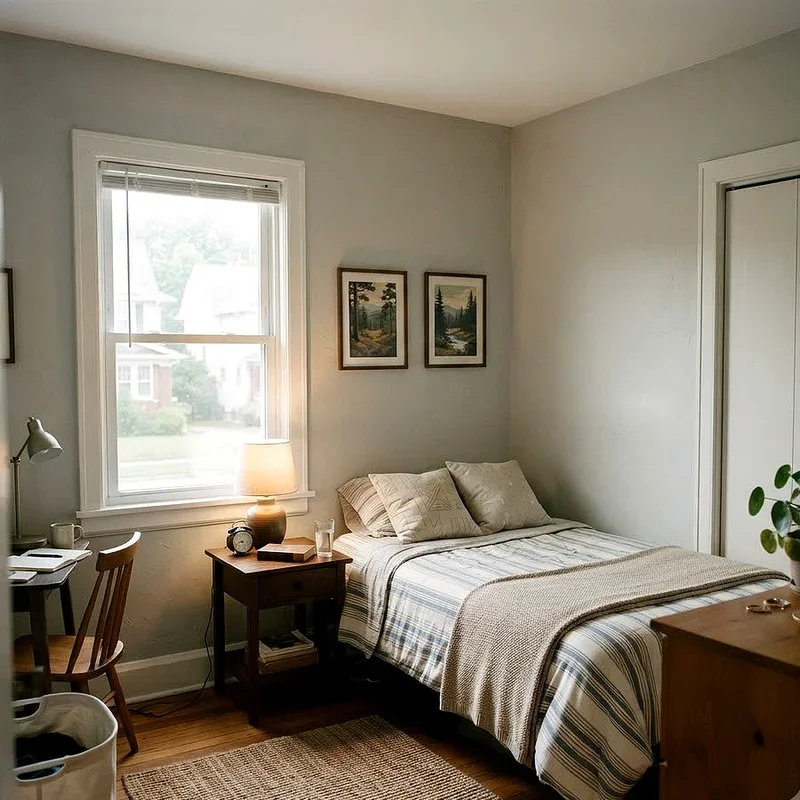
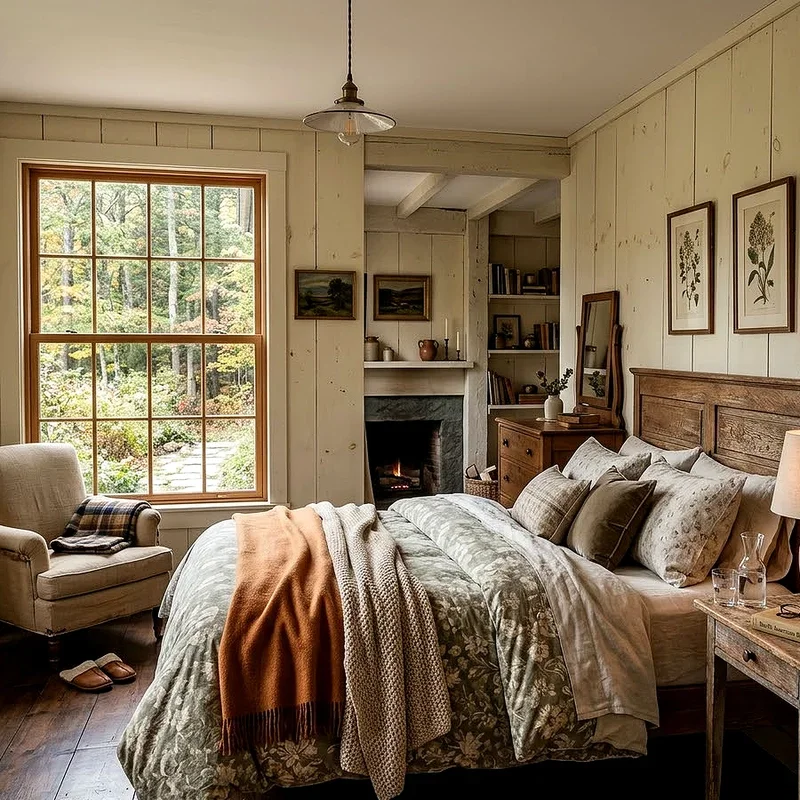
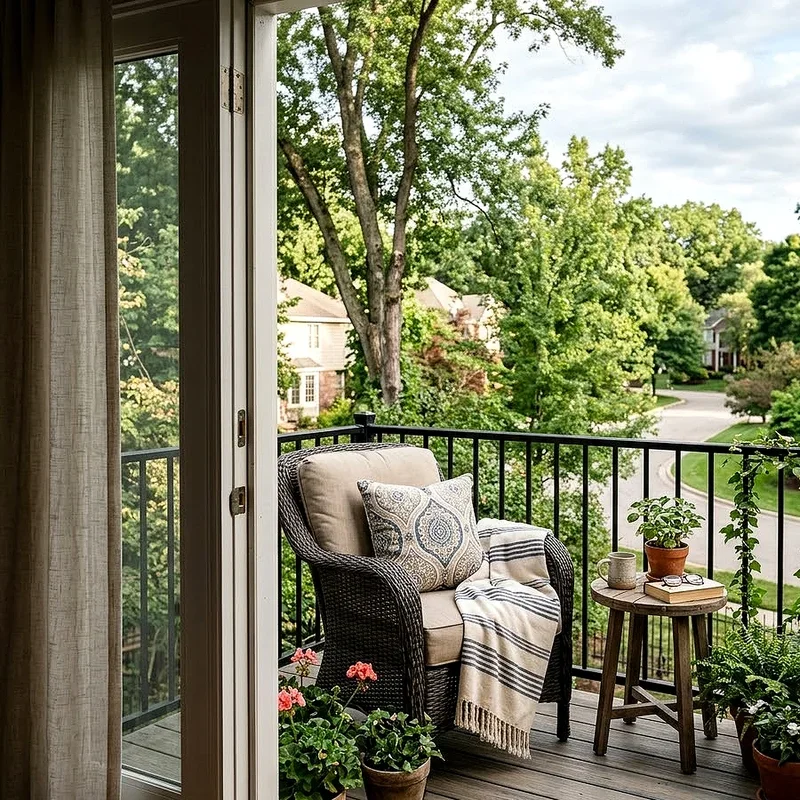
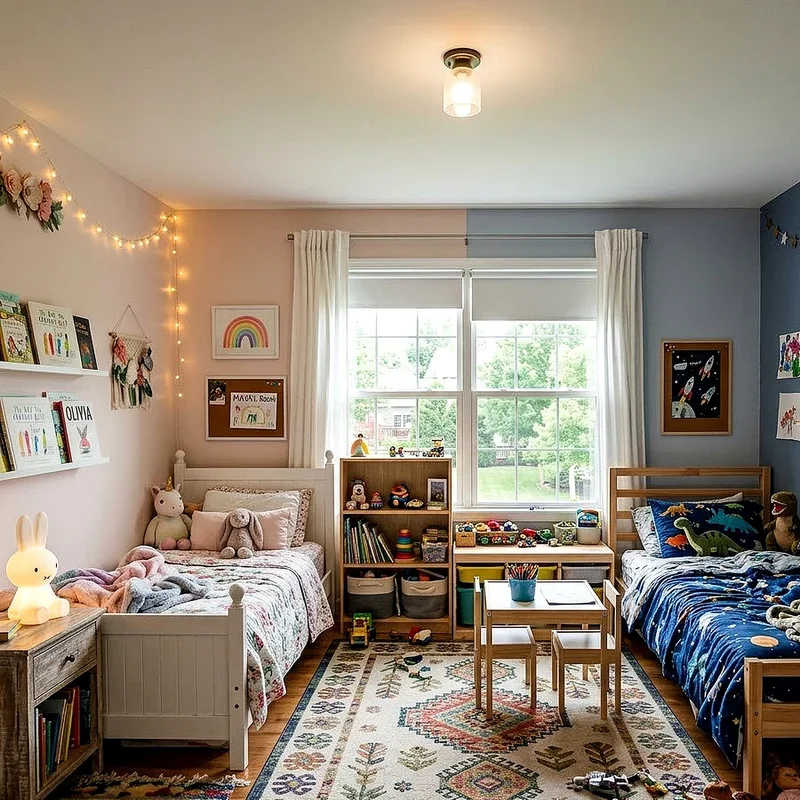
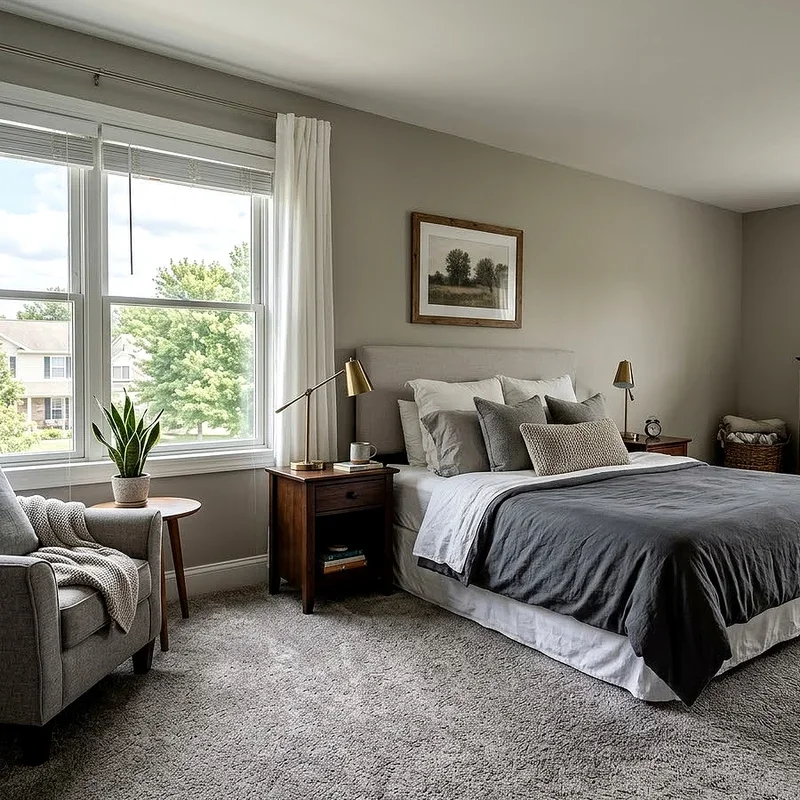
Turn your bedroom into a calm green escape with 15 garden bedroom ideas that bring plants, soft light, and fresh air to your sleep space.
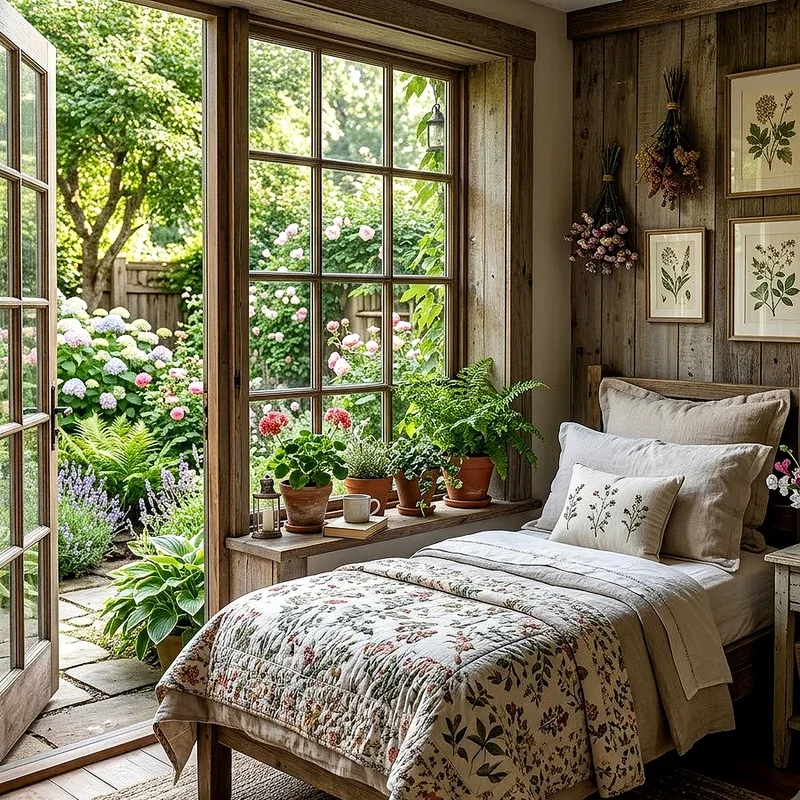
Your bedroom should feel like the last soft place at the end of a loud day. Instead, most of ours feel like storage units with a mattress dropped in the middle. So what if we borrowed something from outside? Not the mud, not the mosquitoes, just the calm. Our brains read leaves, filtered light, and organic shapes as signals that we are safe and can finally stop bracing. A garden bedroom parks that feeling right where you sleep. You do not need a conservatory, a green thumb, or a big budget to pull it off. You need a few smart choices and the patience to let a room grow into itself. Here are fifteen ideas you can steal, mix, and adjust to whatever space you already have.
1. Start With One Statement Plant
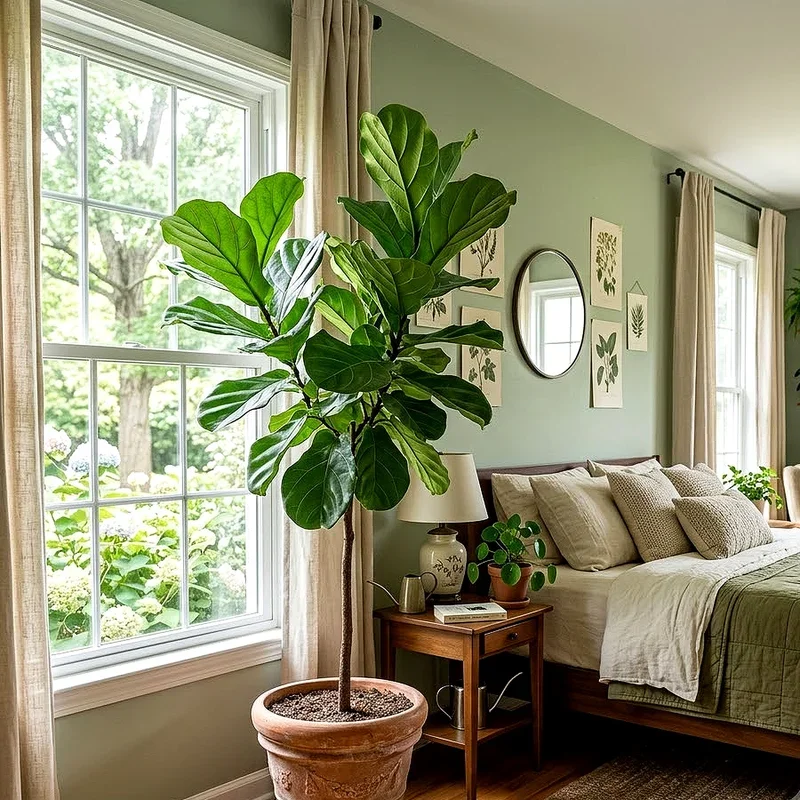
Resist the urge to buy nine plants on day one. Pick one big personality instead and let it anchor the whole room. A fiddle leaf fig, a bird of paradise, or a tall rubber plant does more for a bedroom than a dozen tiny succulents scattered around like confetti. Why? Because scale reads as intention. A large plant creates a real silhouette, casts moving shadows, and gives your eye somewhere to land the moment you walk through the door. Place it near your brightest window, ideally at an angle from the bed so you can see it while lying down. Give it a heavy ceramic pot or a woven basket, never a flimsy plastic container. One good plant, well placed and well cared for, beats a crowded windowsill every single time.
2. Layer Your Greenery at Different Heights
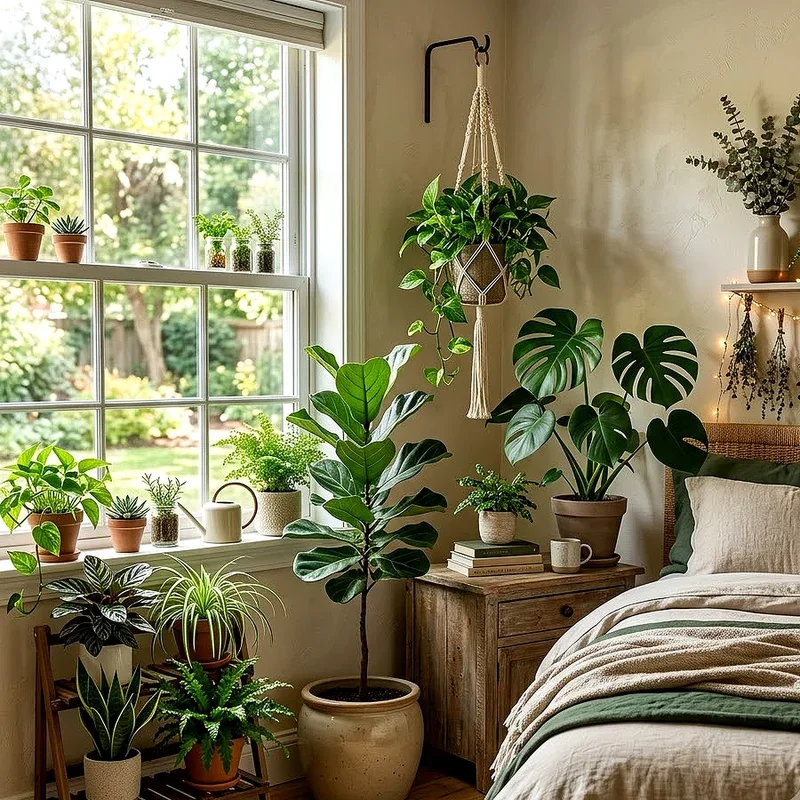
A real garden never grows on one flat plane, so your bedroom should not either. Think in three layers: canopy, mid-story, and ground cover. Your tall statement plant becomes the canopy. Add a mid-level with a plant stand, a stack of books topped with a pothos, or a floating shelf holding something trailing. Then finish low with a snake plant beside the dresser or a shallow bowl of moss on the floor. This vertical rhythm is exactly what tricks the eye into reading a room as lush rather than merely decorated. It is the difference between a hedge and a forest. Vary the leaf shapes too, pairing broad glossy leaves with something feathery or spiky, so the greenery never blurs into one shapeless green mass.
3. Hang a Living Curtain by the Window
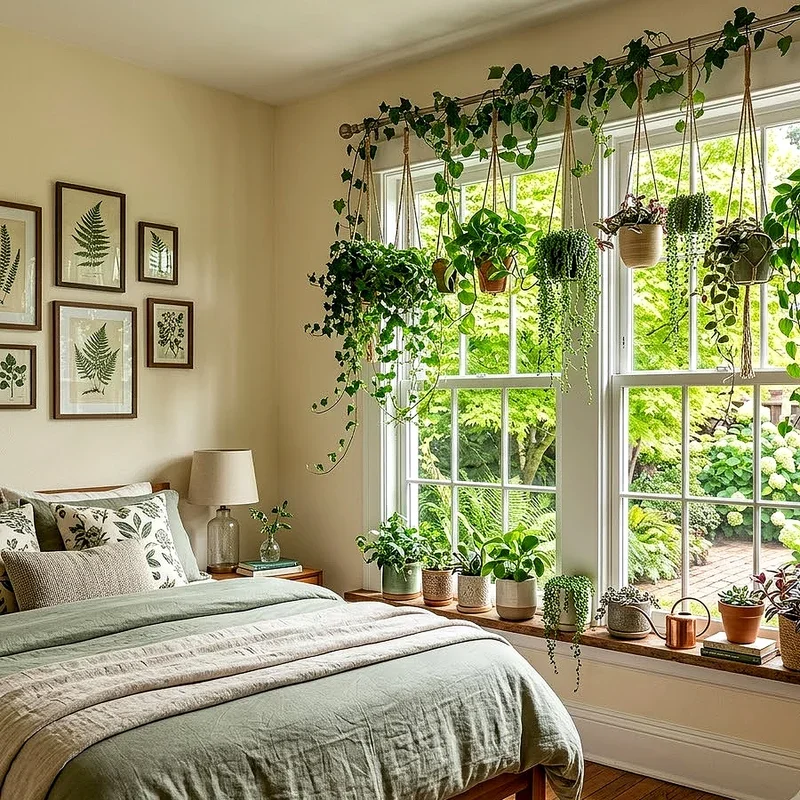
Here is a move most people never think of. Instead of hanging fabric alone at your window, hang plants. Mount a tension rod or a row of ceiling hooks and let trailing greenery cascade straight down the glass. String of pearls, heartleaf philodendron, and English ivy all drape beautifully and soften harsh afternoon light without blocking it entirely. The effect feels like waking up under a leafy arbor. Morning sun filters through the leaves and scatters across your sheets in little moving patterns, which honestly beats any alarm clock you own. Keep the pots lightweight and use a drip tray or a self-watering insert so you are not mopping the floor twice a week. Pair the whole thing with sheer linen panels for a layered, dreamy finish.
4. Build a Headboard Wall of Vines
Your headboard wall is prime real estate, and a flat painted rectangle is a wasted opportunity. Train climbing plants up a simple trellis mounted behind your bed and let them slowly fill the space over a season. Pothos and philodendron are forgiving choices because they tolerate lower light and grow fast enough to feel genuinely rewarding. Anchor the vines with small clear hooks and guide them sideways as much as upward, so the growth spreads into a soft green canopy above your pillows. If living vines feel like too much maintenance overhead, a preserved moss panel or a dried eucalyptus garland delivers similar texture with zero watering. Either way, you wake up under something organic instead of a blank wall staring back at you.
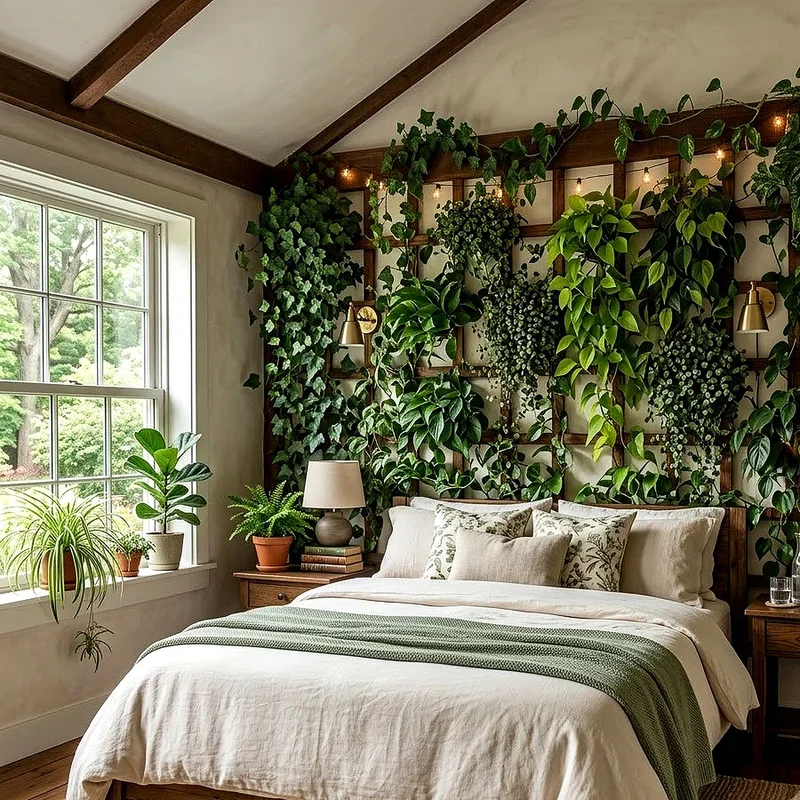
5. Choose a Palette Borrowed From the Soil
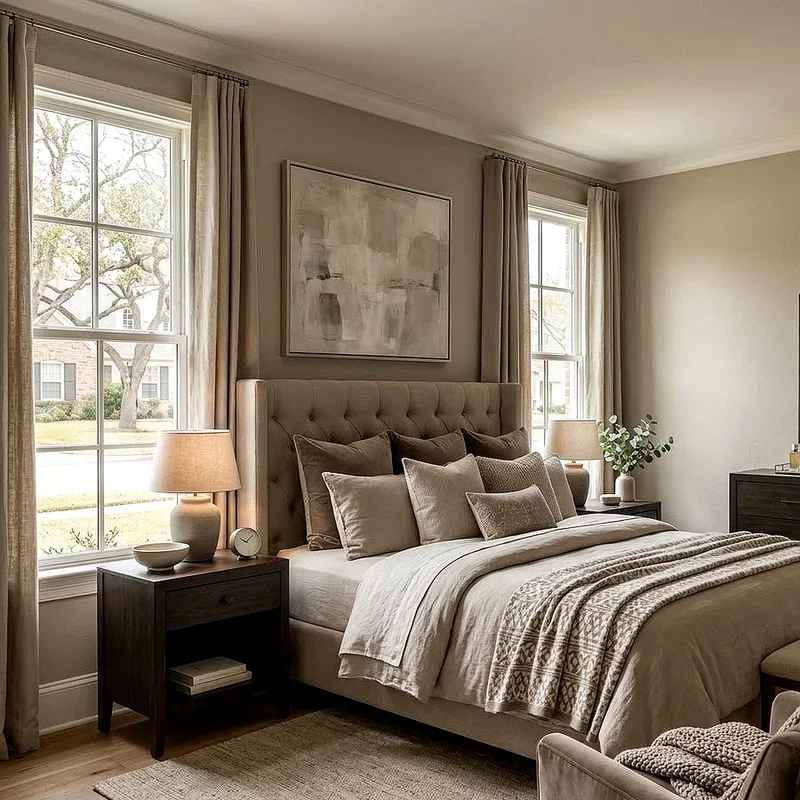
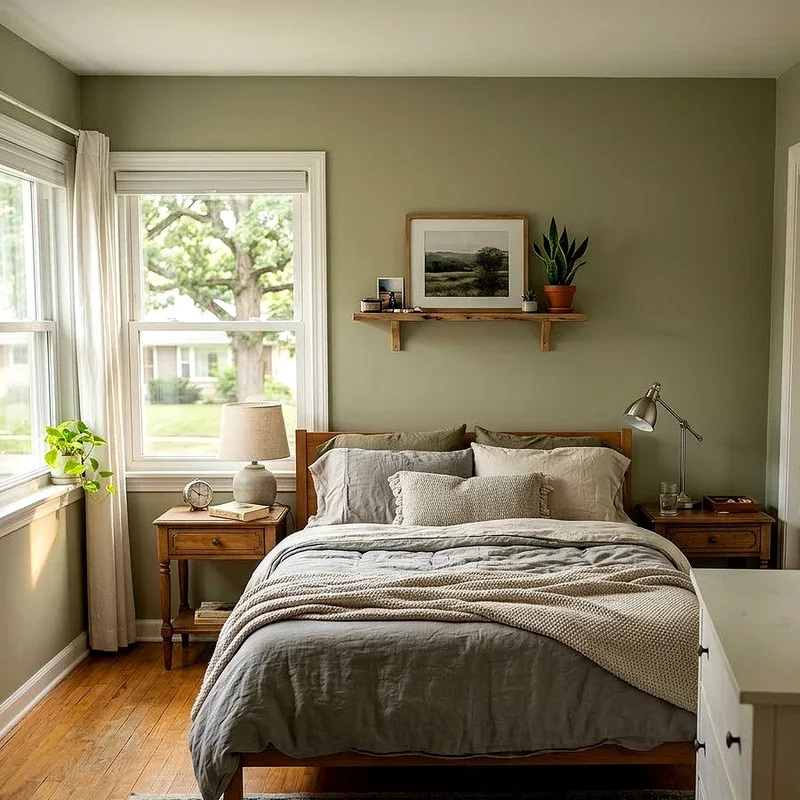
Colors matter more than most of us admit. Look at any garden you love and you will notice it rarely screams. It murmurs in earth tones: mushroom, clay, moss, oat, weathered stone, and a hundred different greens that never quite match each other. Pull your bedroom palette straight from that ground. Paint the walls a warm off-white or a soft sage instead of a cold, flat gray. Choose bedding in oatmeal, terracotta, or muted olive. Let your wood tones stay honest rather than painted over. The trick is keeping everything slightly desaturated so nothing competes with your actual plants, which should stay the brightest green in the room. When the walls whisper, your greenery gets to sing without anybody raising their voice.
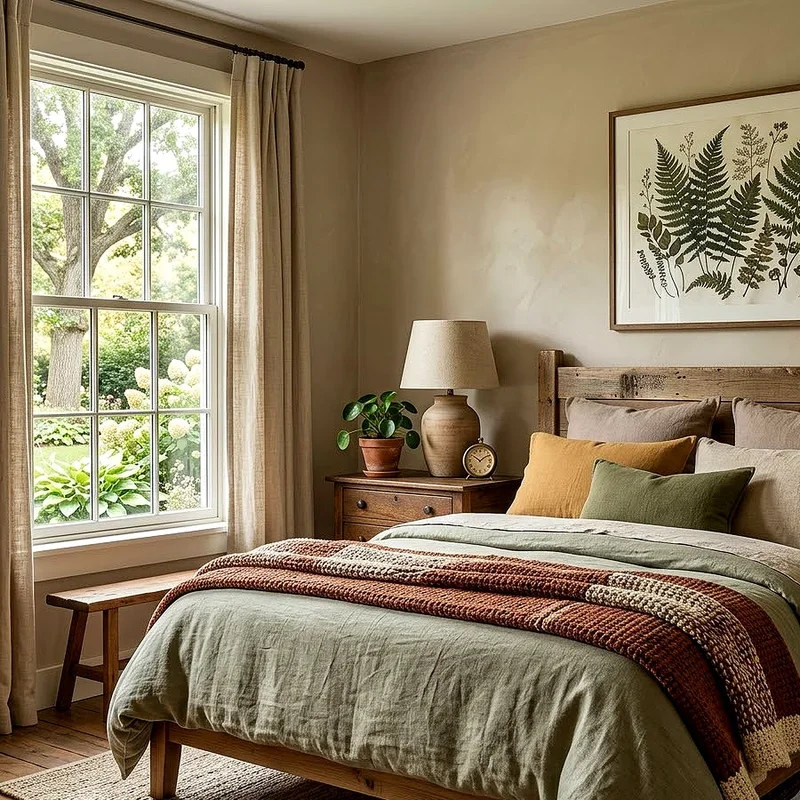
6. Swap Synthetic Fabrics for Natural Weaves
Polyester bedding is the aesthetic equivalent of plastic grass. It looks fine in photos and feels wrong the second you touch it. Natural fibers change everything in a garden bedroom because they behave like living things. They wrinkle, they breathe, and they age into something better than they started. Washed linen sheets crumple in a way that reads relaxed instead of messy. Cotton gauze throws drape softly over the foot of the bed. A jute or wool rug adds a grounded, slightly rough texture underfoot that mimics a garden path. These materials also regulate temperature far better, which means fewer sweaty three in the morning wake ups. Your room will look calmer, feel cooler, and smell less like a factory floor.
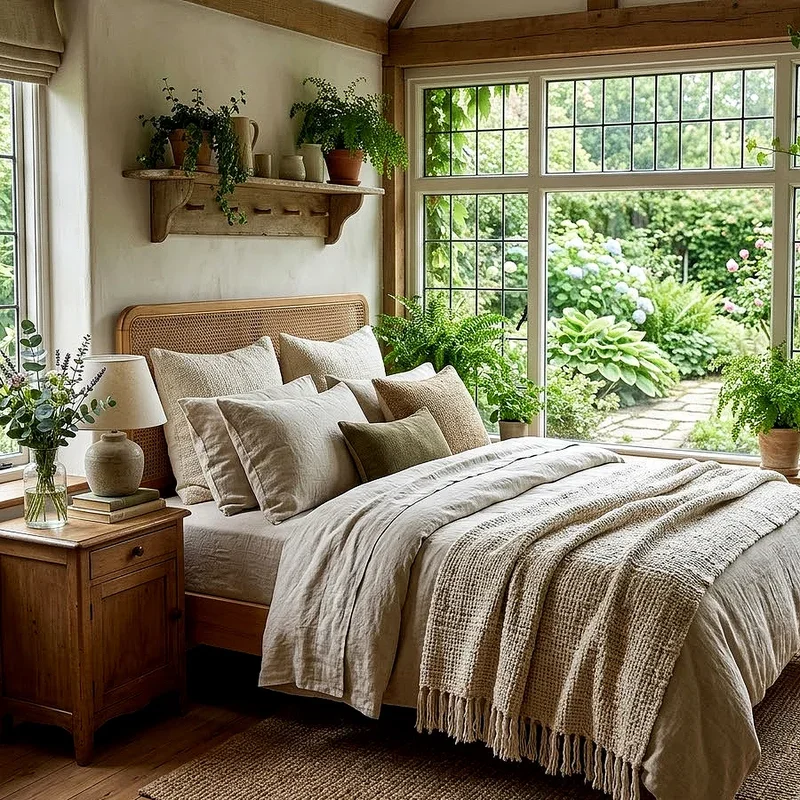
7. Let Light Do the Heavy Lifting
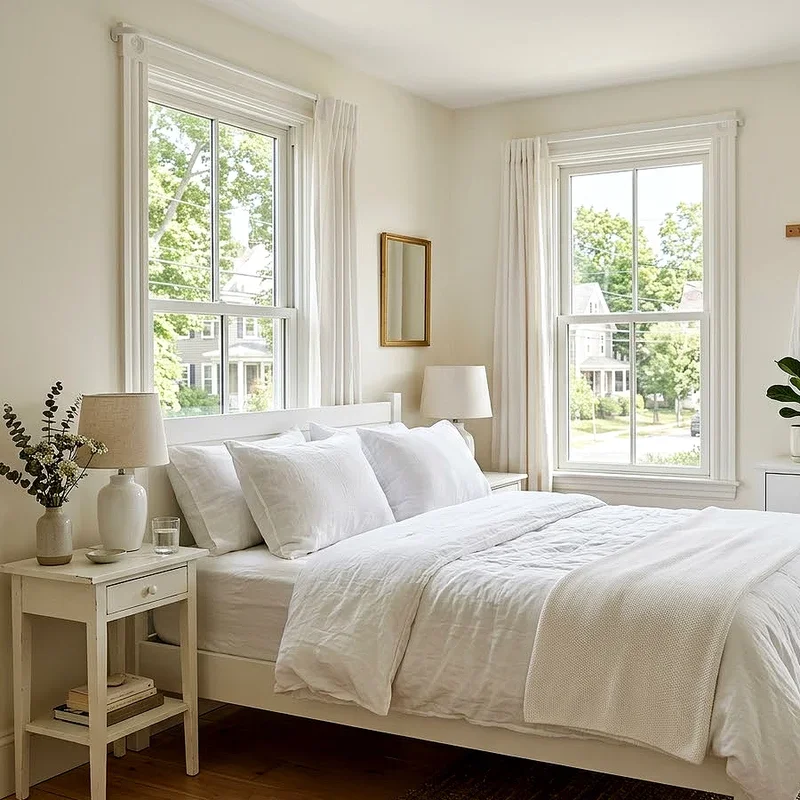
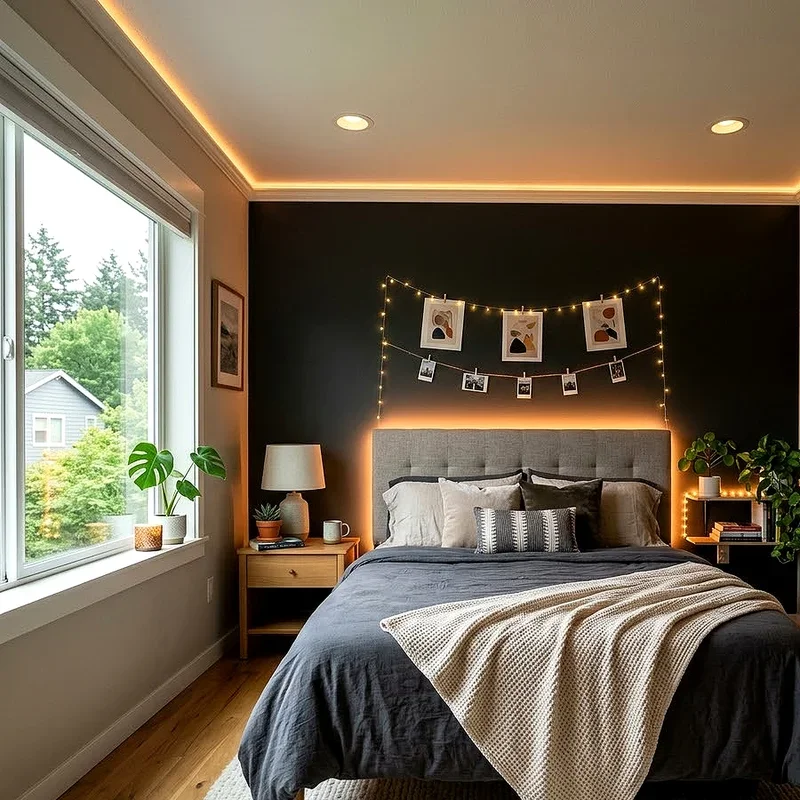
Light is the cheapest decorating tool you own, and most of us waste it completely. Start by pulling back heavy blackout curtains during the day and replacing them with sheer linen or bamboo shades that filter rather than block. Dappled light does something close to magical in a room full of plants, throwing leaf shadows across your walls that shift and stretch hour by hour. At night, ditch the harsh overhead fixture entirely. Use two or three warm, low lamps at different heights, plus a string of tiny bulbs woven through a shelf of greenery. Aim for bulbs around 2700K so everything glows amber instead of blue. Would you rather sleep under a floodlight or under a sunset? Your body already knows.
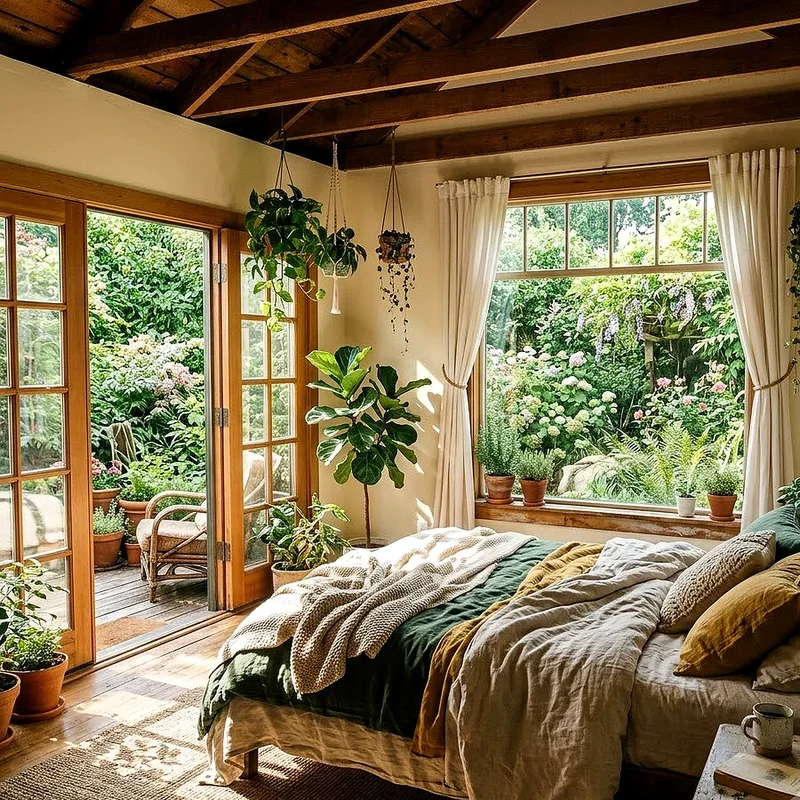
8. Add a Small Water Feature
Nothing signals garden faster than the sound of moving water. A small tabletop fountain on a dresser or a low stone basin tucked in a corner introduces a gentle, continuous trickle that masks traffic, neighbors, and that one pipe that clanks at midnight. Our nervous systems treat running water as a safety cue, which is exactly why so many people fall asleep to recordings of it on their phones. Why settle for a recording when you can have the real thing? Keep it modest, because a loud fountain becomes an annoying fountain fast. Look for models with adjustable flow and a genuinely quiet pump. Refill weekly, clean monthly, and keep it well away from electronics. The added humidity is a bonus your plants will quietly appreciate.
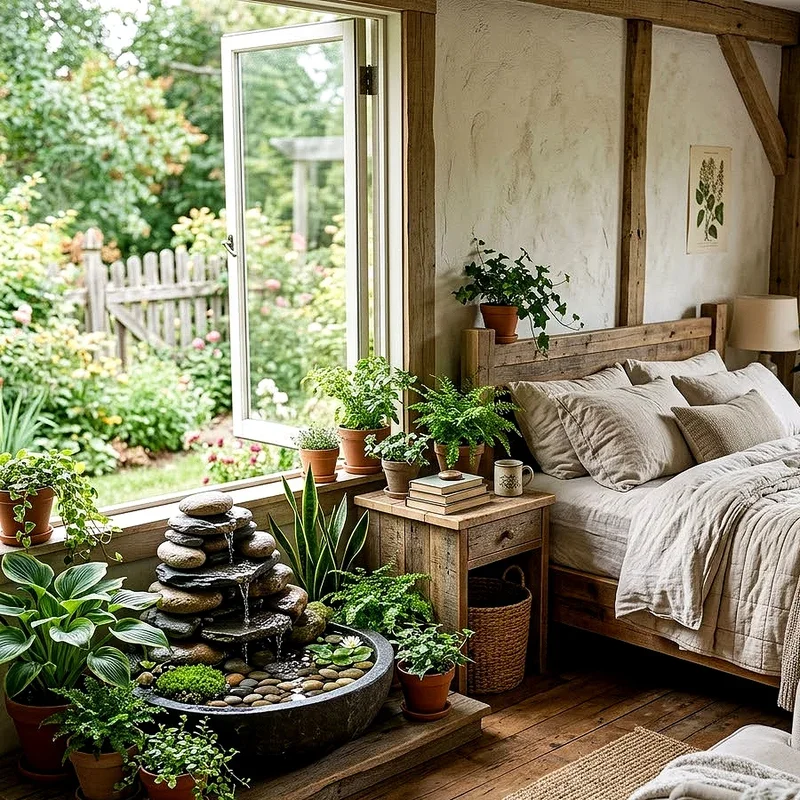
9. Turn a Corner Into a Reading Nook
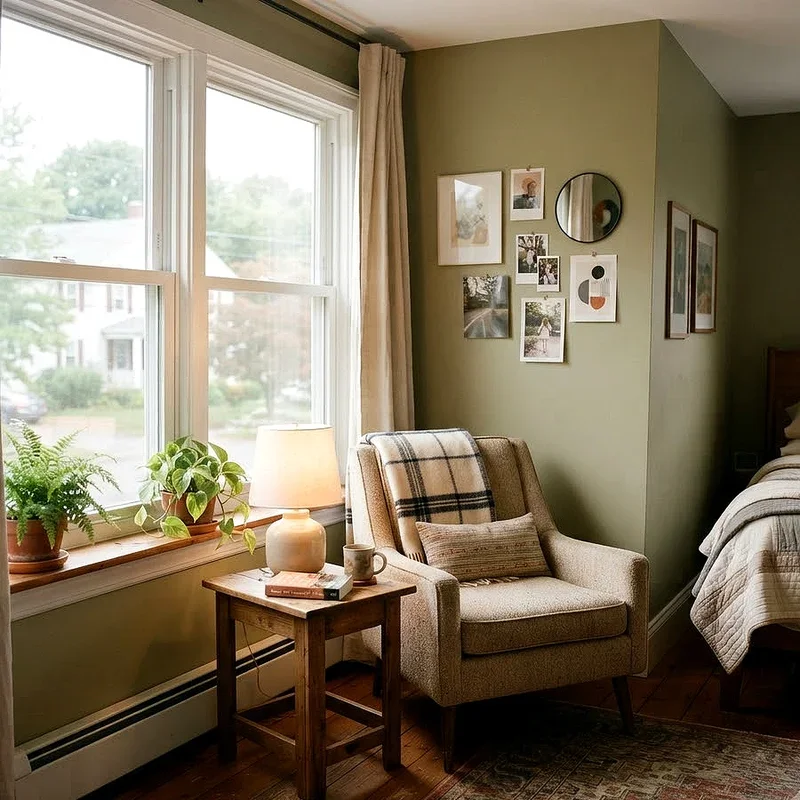
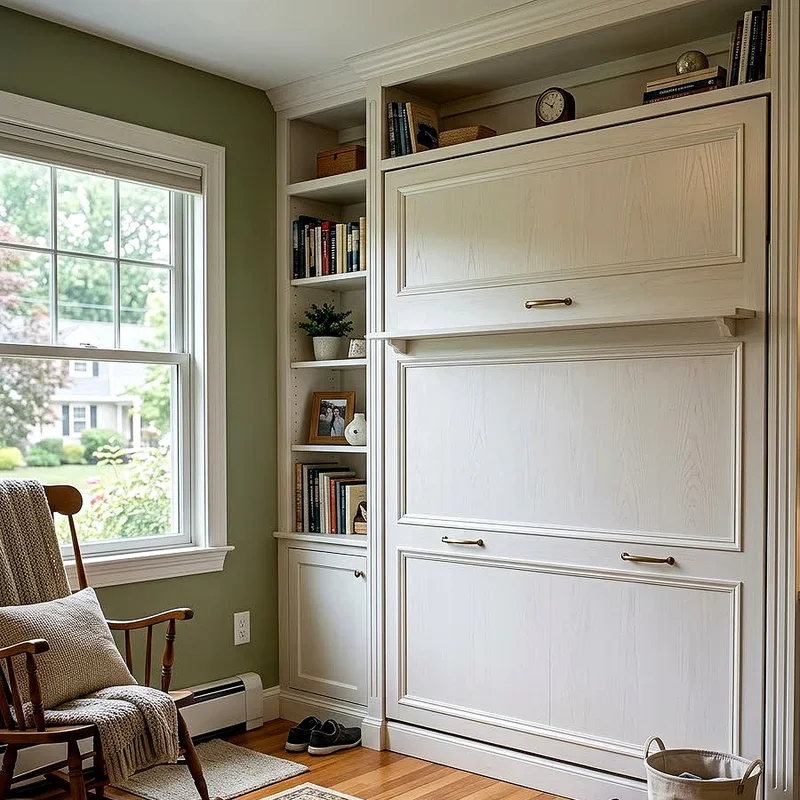
Every good garden has a bench tucked somewhere out of the way, and your bedroom deserves exactly the same thing. Claim an underused corner, ideally near a window, and build a small retreat there. A comfortable armchair or a floor cushion, a slim side table, a warm reading lamp, and one leafy plant leaning in from behind is genuinely all it takes. Add a soft throw and a stack of books you actually intend to finish. The point here is separation. When the bed is only for sleeping and the corner handles winding down, your brain stops confusing the two and sleep arrives faster. Think of it as a garden bench brought indoors, a place to sit quietly for twenty minutes before lights out.
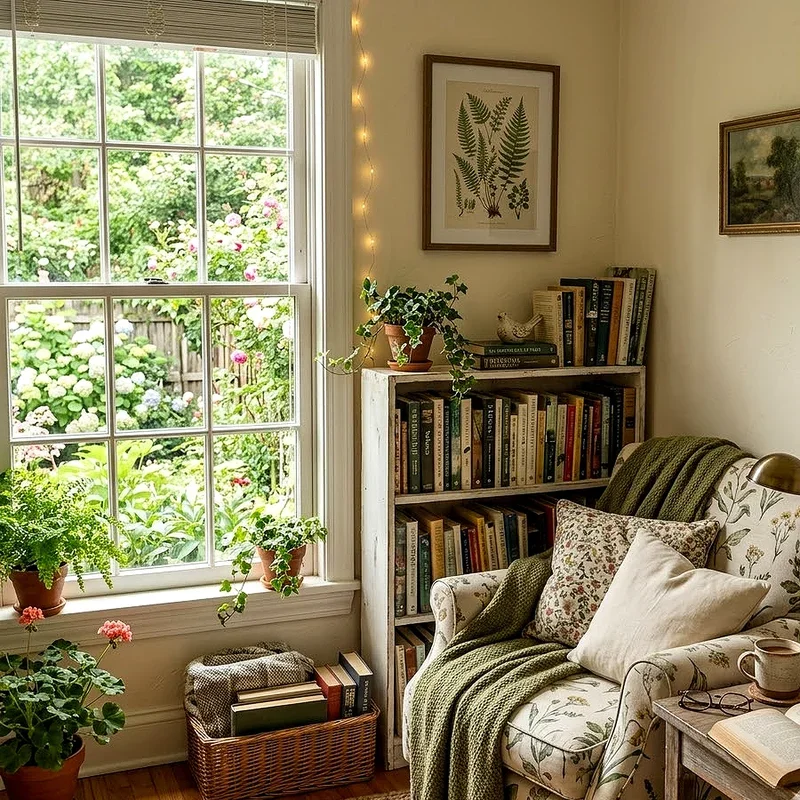
10. Bring In Rattan, Cane, and Raw Wood
Furniture is where a garden bedroom either works or quietly falls apart. Glossy lacquer and cold chrome fight the whole mood, while natural materials lean straight into it. A cane headboard filters light through its weave and adds instant texture behind your pillows. Rattan pendant shades throw beautiful basket shadows across the ceiling after dark. An unfinished oak nightstand with visible grain feels like something a person made rather than something a machine printed. You do not need to replace everything at once, either. Start with one piece, maybe a woven bench at the foot of the bed or a bamboo laundry basket, then build slowly. These materials age gracefully, gathering warmth over years instead of simply looking tired.
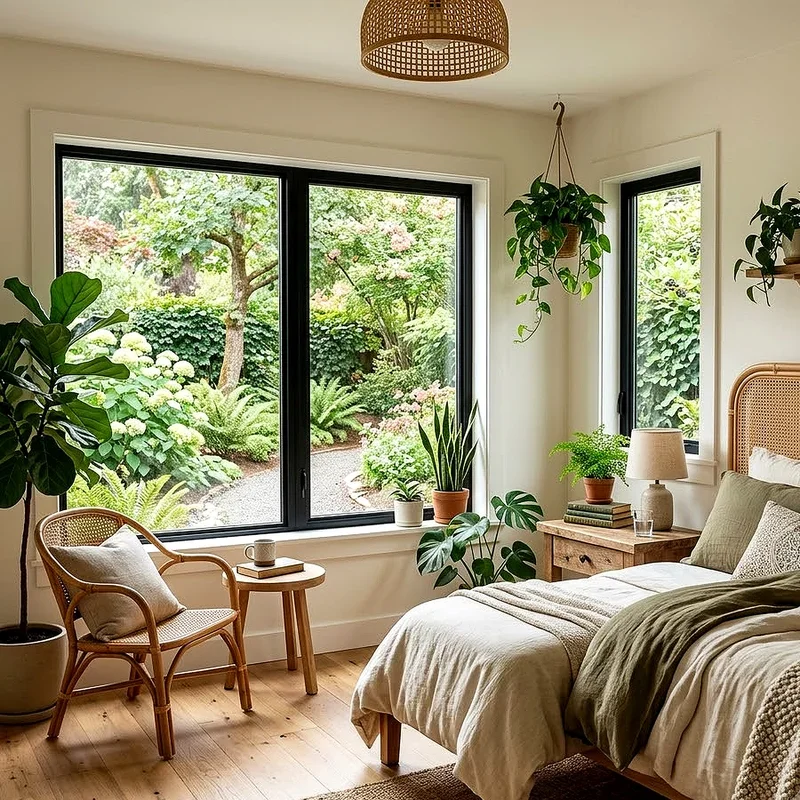
11. Grow a Herb Shelf You Actually Use
There is something quietly satisfying about greenery that earns its keep. Mount a narrow shelf near your sunniest window and line it with small pots of mint, basil, rosemary, and thyme. Brush past them and the whole room fills with scent for a few seconds, which is a far nicer wake up call than reaching for your phone. Rosemary and lavender in particular carry calming associations that suit a bedroom perfectly. Use matching terracotta pots for a tidy look, or mismatched vintage tins if you want charm over polish. Water lightly and give them the brightest spot you have, since herbs sulk badly in shade. Then actually snip them for your tea or dinner. A garden bedroom that feeds you tends to stick around.
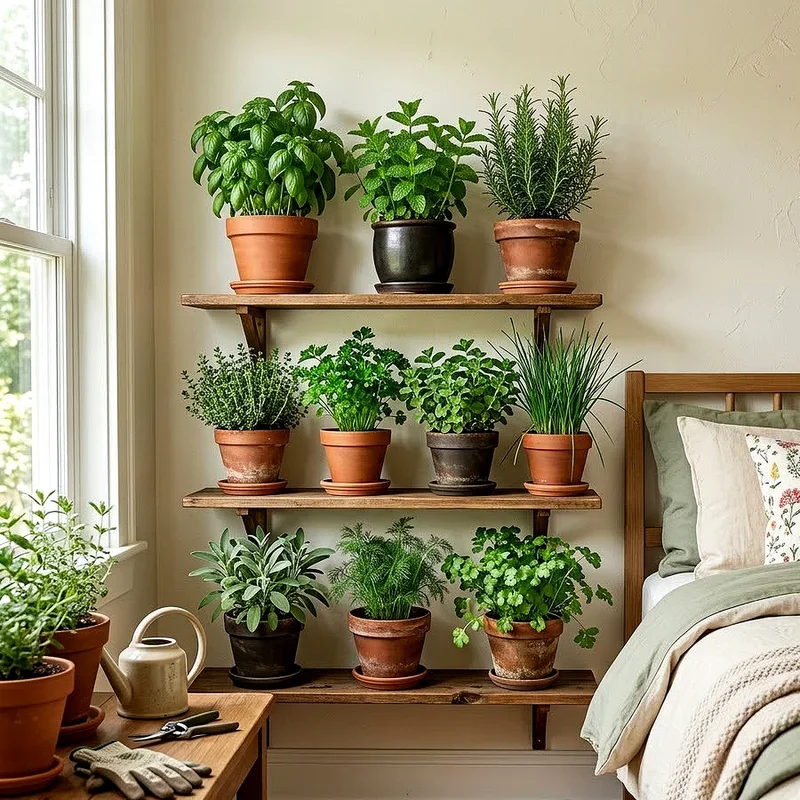
12. Use Botanical Prints Without Overdoing It
Botanical art is the seasoning of a garden bedroom, not the main course. A few well chosen pieces reinforce the theme, while a wall plastered in leaf illustrations starts to feel like a doctor's waiting room. Pick one focal artwork, maybe a large vintage botanical study in a simple wood frame, and hang it where it has room to breathe. Or choose a single accent wall with a soft, hand painted floral wallpaper and keep everything else plain. Textiles count toward the total too, so one patterned cushion or a single leafy throw is plenty. The rule I stick to is simple. If a guest could count more than four botanical patterns in the room, something needs to come down.
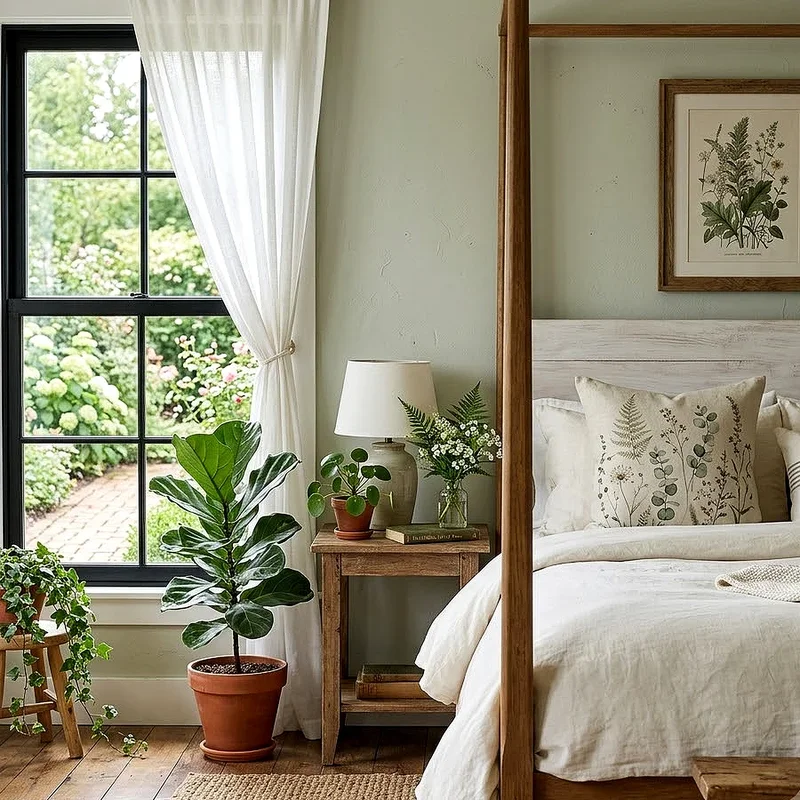
13. Install a Window Seat With a Garden View
If you are lucky enough to have a window with any kind of outdoor view, build toward it instead of away from it. A window seat, even a simple padded bench with storage tucked underneath, turns a plain piece of glass into an actual destination. Add a cushion in natural linen, two or three pillows, and let a plant or two flank the sides. Suddenly your morning coffee has a proper home, and the outdoors becomes part of your interior scheme for free. No garden outside? Cheat kindly. Place a window box on the sill or arrange tall plants just beyond the glass on a balcony rail. Your eye reads layered green through a window as depth, and depth feels restful.
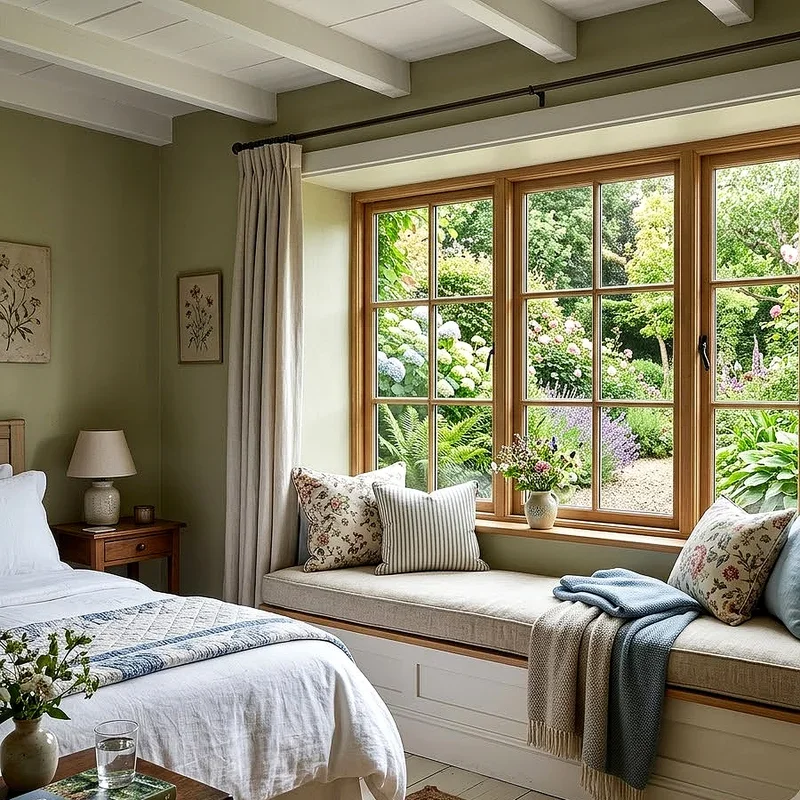
14. Scent the Room the Natural Way
Half of what makes a garden feel like a garden never shows up in photographs. It is the smell of damp earth, crushed leaves, and something flowering just out of sight. Synthetic air fresheners get this spectacularly wrong, landing somewhere between candy and cleaning product. Go natural instead. Keep a bundle of dried lavender or eucalyptus hanging near the bed, where steam from a warm shower will occasionally reactivate it. Use a ceramic diffuser with a drop or two of cedarwood, bergamot, or vetiver rather than anything sugary. Even a small bowl of dried rose petals and orange peel on the dresser does honest work. Keep the intensity low, because a bedroom should hint at something, never announce it.
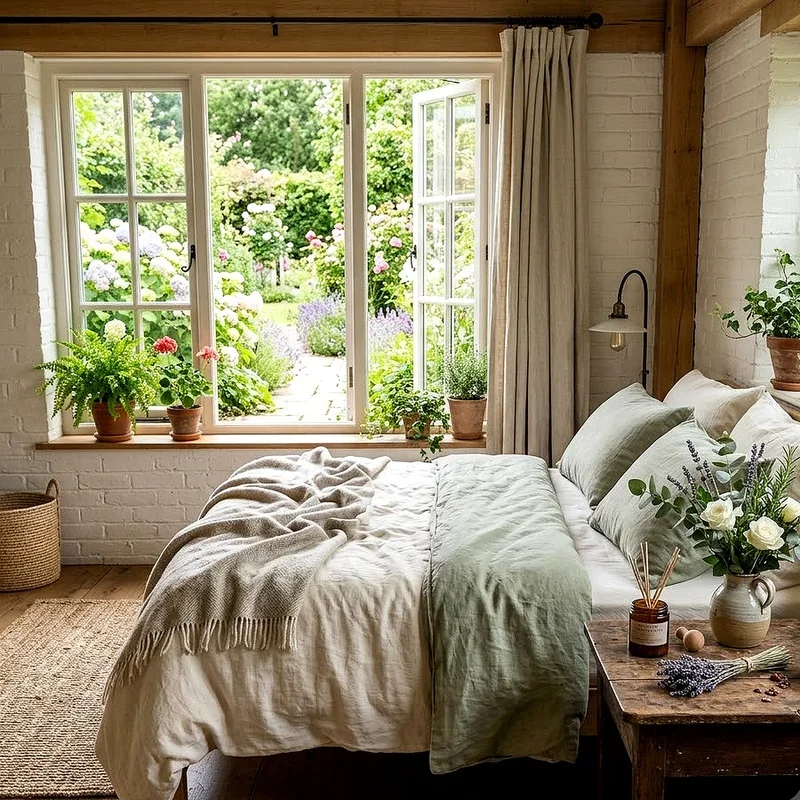
15. Keep a Terrarium on the Nightstand
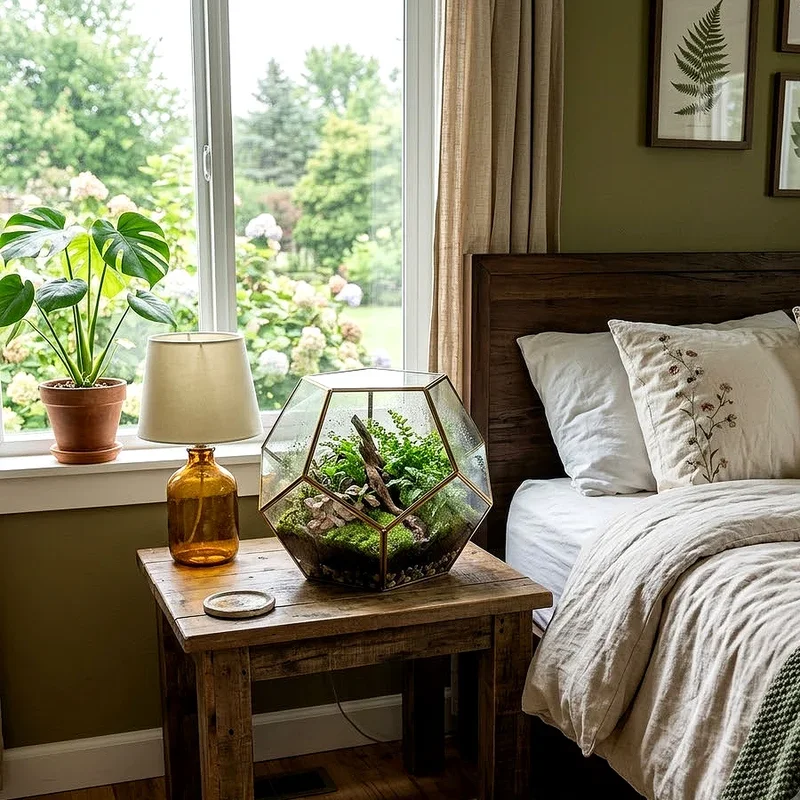
Sometimes the smallest thing in a room does the most emotional work. A little glass terrarium on your nightstand is an entire ecosystem sitting an arm's length from your pillow: moss, tiny ferns, a scatter of pebbles, maybe a curl of driftwood. It is a garden you can hold in two hands. Closed terrariums are nearly self sustaining, recycling their own moisture so you only crack the lid open every month or so. Open ones planted with succulents need slightly more attention but tolerate neglect surprisingly well. Either way, glancing at that miniature green world last thing at night gives your mind something gentle to land on. Add a small lamp beside it and the glass catches light beautifully after dark.
Conclusion
A garden bedroom is not a weekend project you finish and forget. It is a slow conversation between you, a few plants, and the light that moves across your walls. Start with one pot, one linen pillowcase, one open window. Notice what shifts in your mood after a week. Then add another layer. The room will tell you what it wants if you pay attention. Sleep is easier when the space around you feels alive, unhurried, and gently on your side. Your quiet retreat is closer than you think.
Read next: 15 Bedroom Balcony Ideas to Create a Cozy Outdoor Retreat
Frequently Asked Questions
Q1. Which plants work best in a bedroom with low light?
A: Snake plants, pothos, ZZ plants, and cast iron plants thrive with very little natural light indoors.
Q2. Do bedroom plants really improve the air quality?
A: Slightly, though the calming psychological effect on sleep quality matters far more than measurable air purification.
Q3. How many plants should a small bedroom have?
A: Three to five well placed plants usually feel lush without crowding a small bedroom or blocking movement.
Q4. Will plants near my bed attract insects?
A: Rarely, if you avoid overwatering, use clean potting mix, and empty standing water from saucers weekly.
Q5. Can renters create a garden bedroom without permanent changes?
A: Absolutely, since tension rods, freestanding shelves, potted plants, and textiles require no drilling or paint.
Stay up to date with our latest ideas!