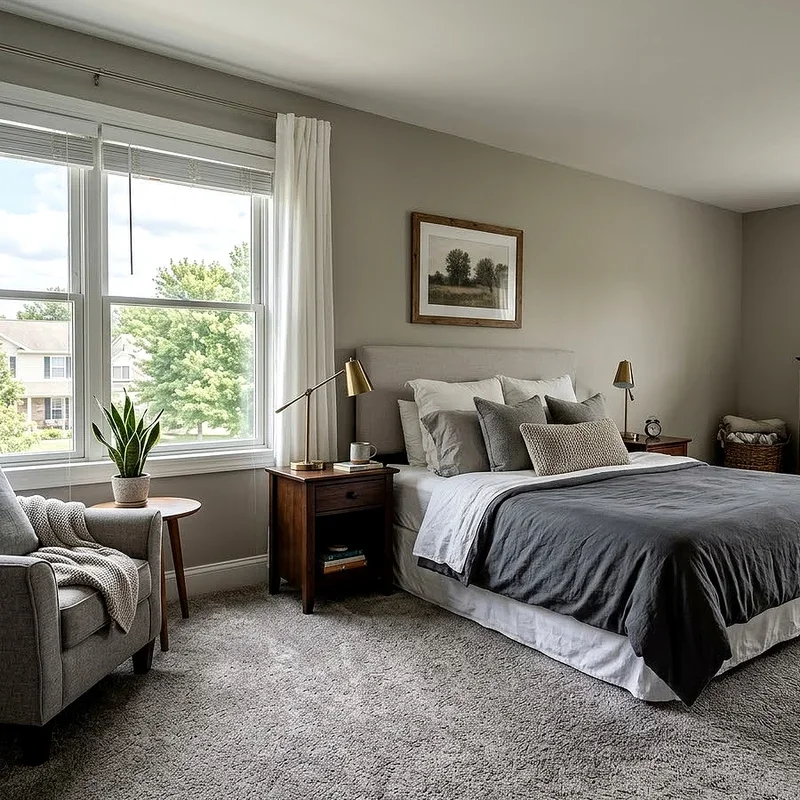
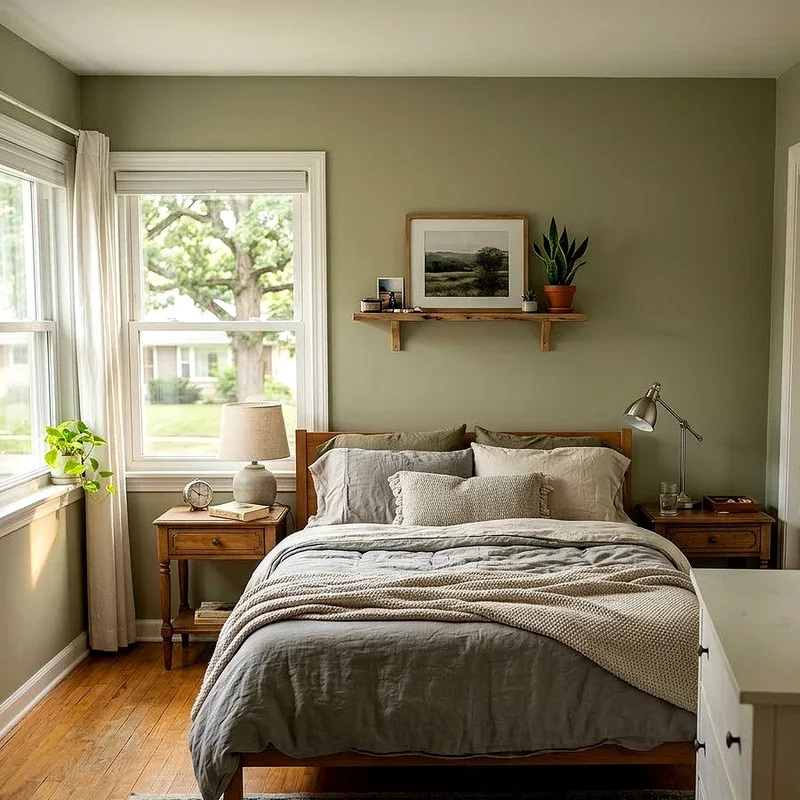
Discover 15 bedroom window curtain ideas for every decor style, from breezy linen to velvet drama, with practical tips for light and privacy.
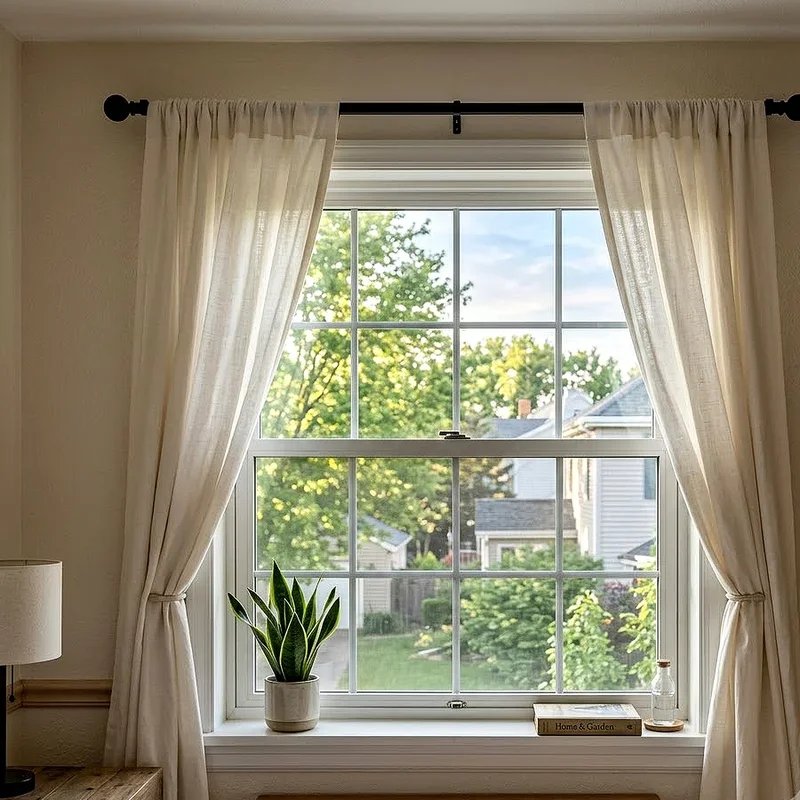
Your bedroom curtains do far more heavy lifting than you probably give them credit for. They control your sleep, your mood, and the whole personality of the room, all before you have poured your first cup of coffee. Swap a tired panel for the right fabric and the space transforms like someone turned up the volume on it. So what actually works? Below you will find fifteen curtain ideas covering every decor style, from breezy coastal linen to velvet drama worthy of an old film set. Grab a tape measure, keep an open mind, and let us find the window treatment your bedroom has been quietly begging for.
1. Breezy Linen Panels for Relaxed Modern Bedrooms
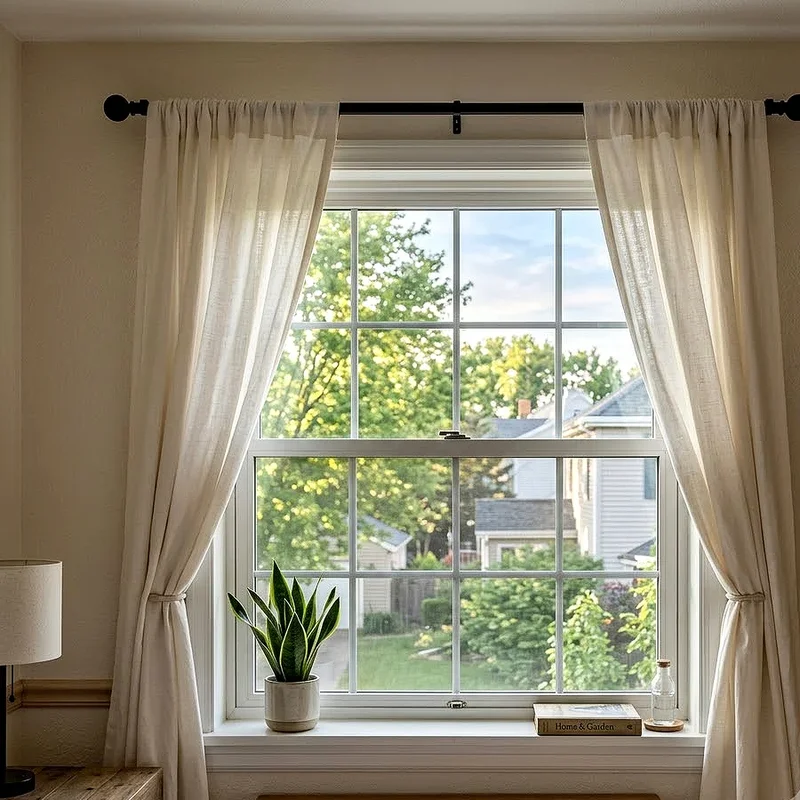
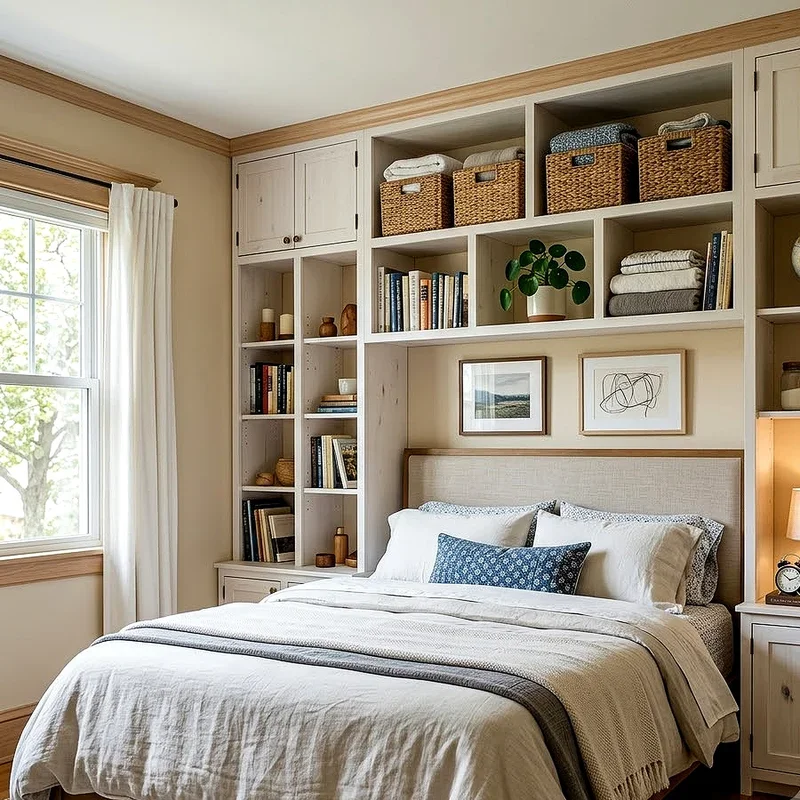
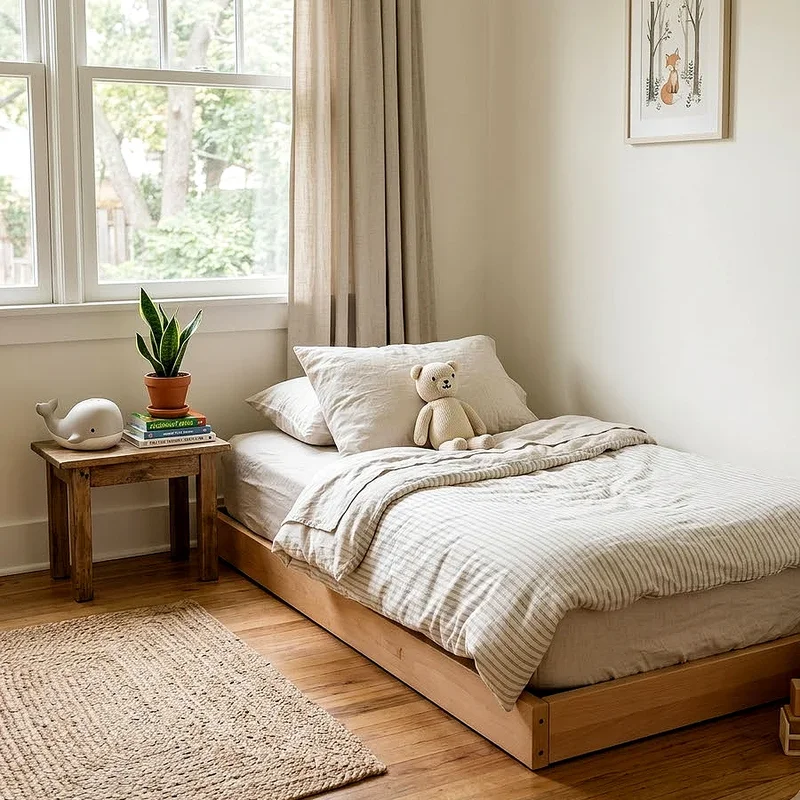
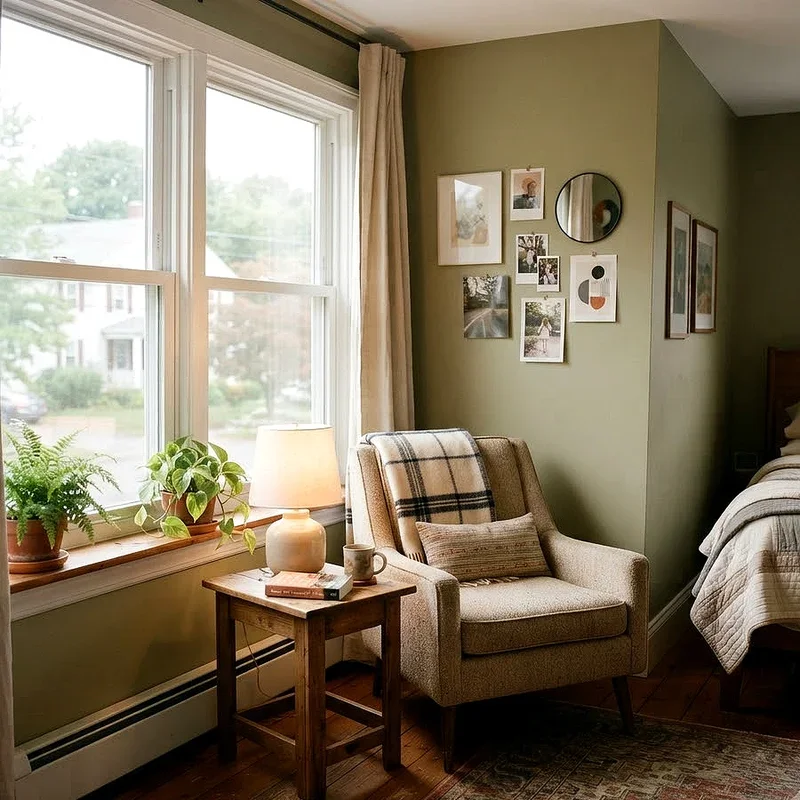
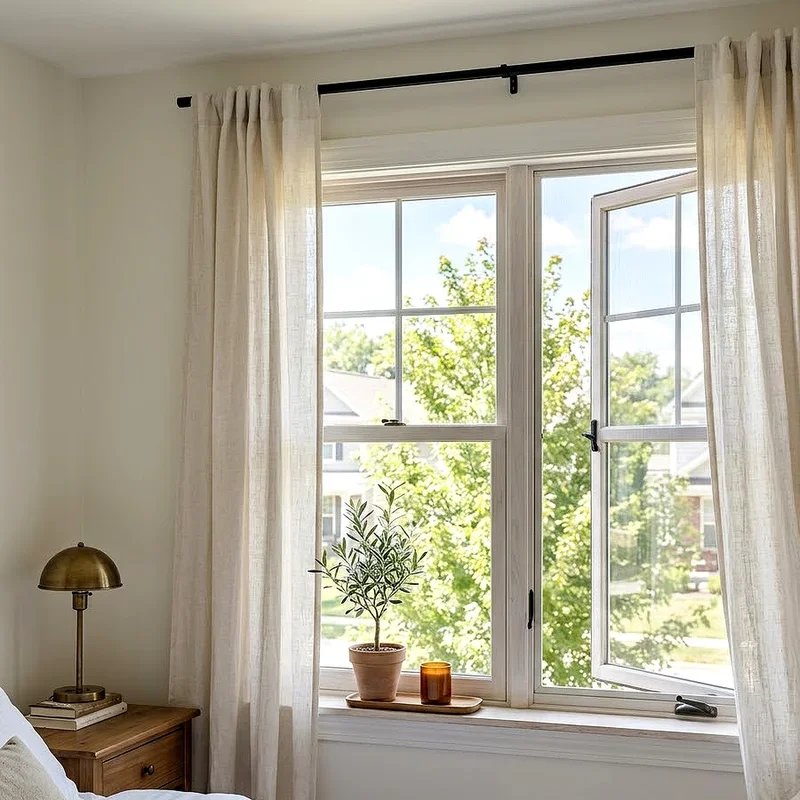
Linen behaves like a good friend who never overdresses for the occasion. It hangs loose, wrinkles a little, and somehow looks better for it. I love hanging unlined linen panels in a bedroom because they soften harsh afternoon glare without turning the room into a cave. Think of them as sunglasses rather than blackout goggles. Stick with oatmeal, bone, or pale putty if you want the walls to breathe, and hang the rod several inches above the window frame so the fabric falls in one long, uninterrupted line. Why does that matter? Because a short curtain chops the wall in half and makes the ceiling feel lower. Wash them, hang them damp, and let gravity do the ironing while you make breakfast. Layer a woven blind behind them for nights when you need real darkness.
2. Blackout Velvet Drapes for Deep Sleepers
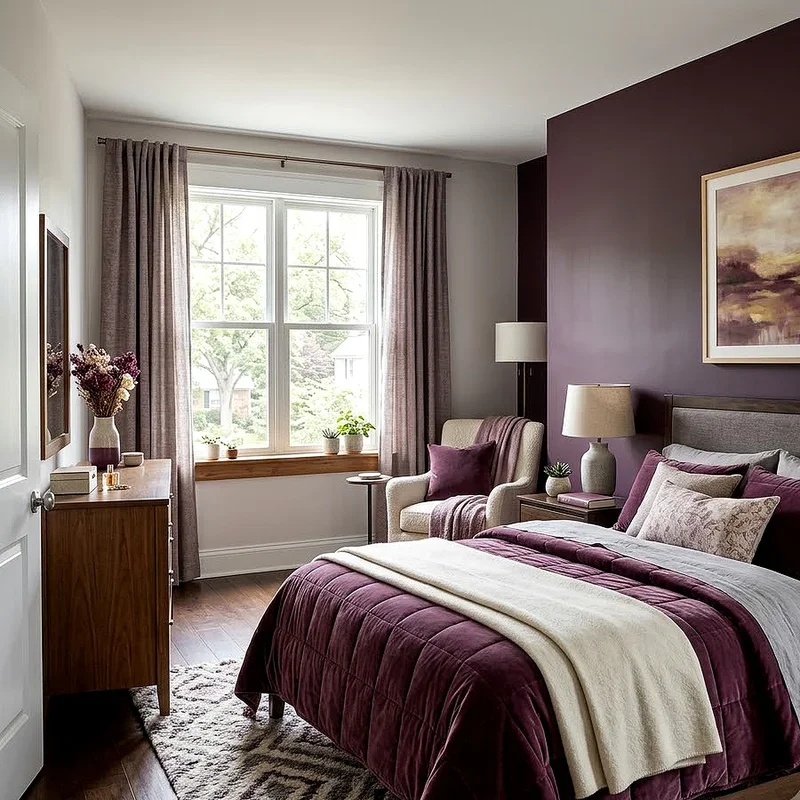
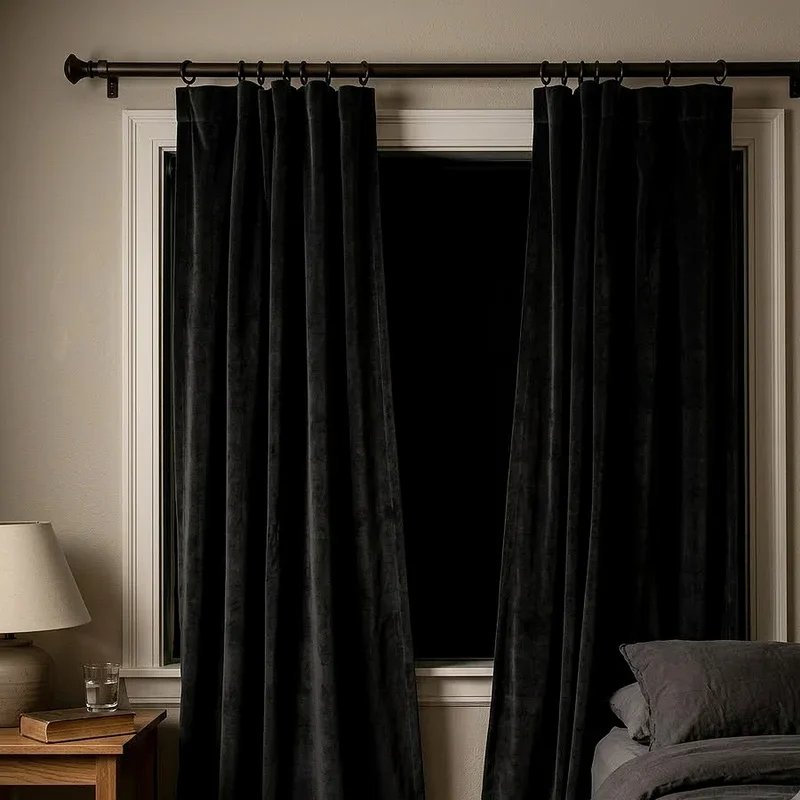
Velvet is the heavyweight champion of curtain fabric, and your bedroom is exactly where that muscle belongs. When I want a room that treats sunrise like an unwanted guest, I reach for lined velvet in navy, forest, or charcoal. The pile catches light and shifts shade as you walk past, so a single color reads like three. Velvet also swallows sound, which matters if you live near a busy street or share a wall with a neighbor who loves bass. Choose a blackout lining, hang the rod wide enough that the panels clear the glass when open, and let them puddle an inch on the floor for that hotel suite weight. Does it feel indulgent? Absolutely. Velvet does hold dust, so run a brush vacuum over it monthly.
3. Sheer White Voile for Soft Morning Light
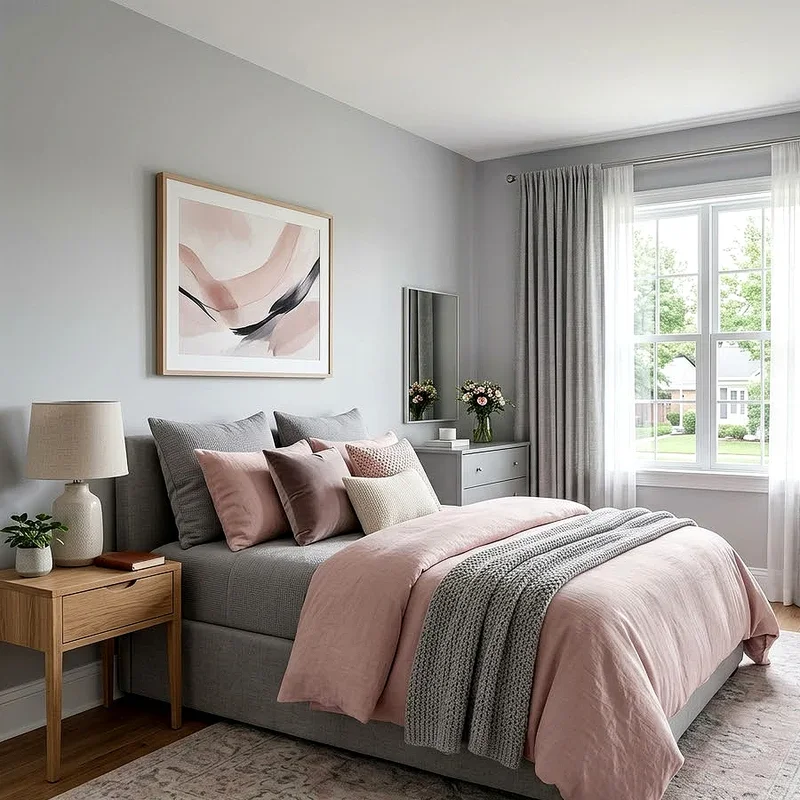
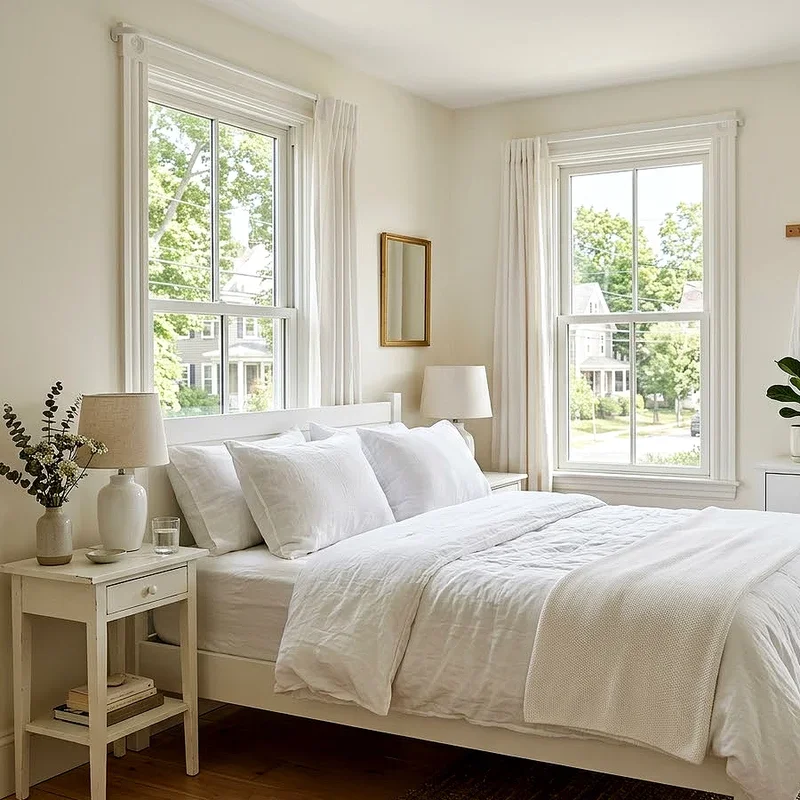
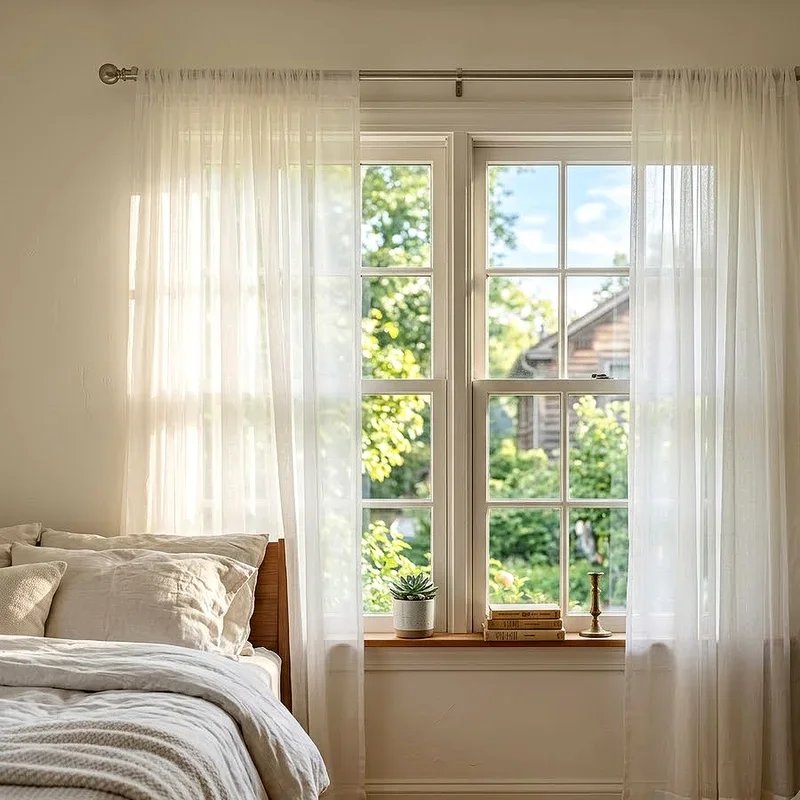
Some mornings deserve to arrive slowly, and sheer voile handles that job beautifully. Picture a thin veil of mist sitting between you and the sun. Light still pours in, but it arrives diffused, warm, and flattering, the way a photographer softens a portrait. I recommend white or ivory voile for bedrooms that face east, since it takes the sting out of early glare without stealing the brightness you actually want. Hang two generous panels per window, using at least double the window width in fabric so the folds look full rather than stingy. Privacy is the obvious trade off, so pair voile with a roller shade you can drop at night. On breezy evenings, open the window and watch the fabric move like a slow tide.
4. Layered Sheers and Heavy Drapes for Full Control
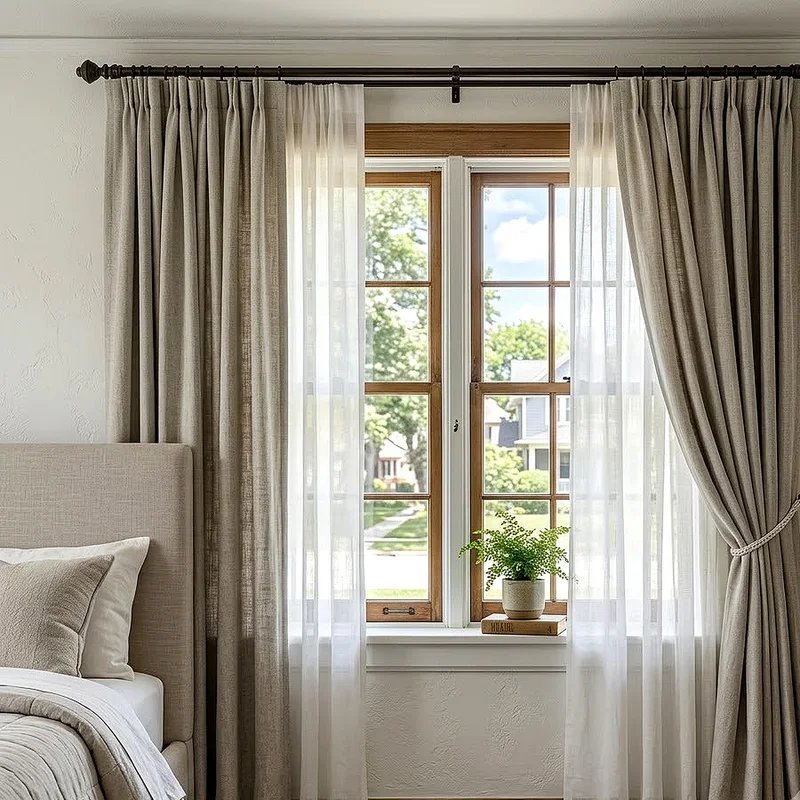
Layering curtains works the same way layering clothes does. You add and remove as the day demands. I hang a sheer panel on the inner rod and a heavier drape on the outer one, then switch between them depending on whether I want soft light, total darkness, or something in between. Come Sunday morning, the sheers stay closed and the room glows. Come Sunday nap, the heavy panels slide shut and the room goes quiet and dim. Double rods make this simple, and most brackets install with four screws and fifteen minutes of patience. Match the sheer to your wall color and let the outer drape carry the pattern or the punch. Is it more fabric to buy? Yes, but you gain a room that adapts instead of arguing with you.
5. Ditsy Floral Curtains for Farmhouse and Cottage Charm
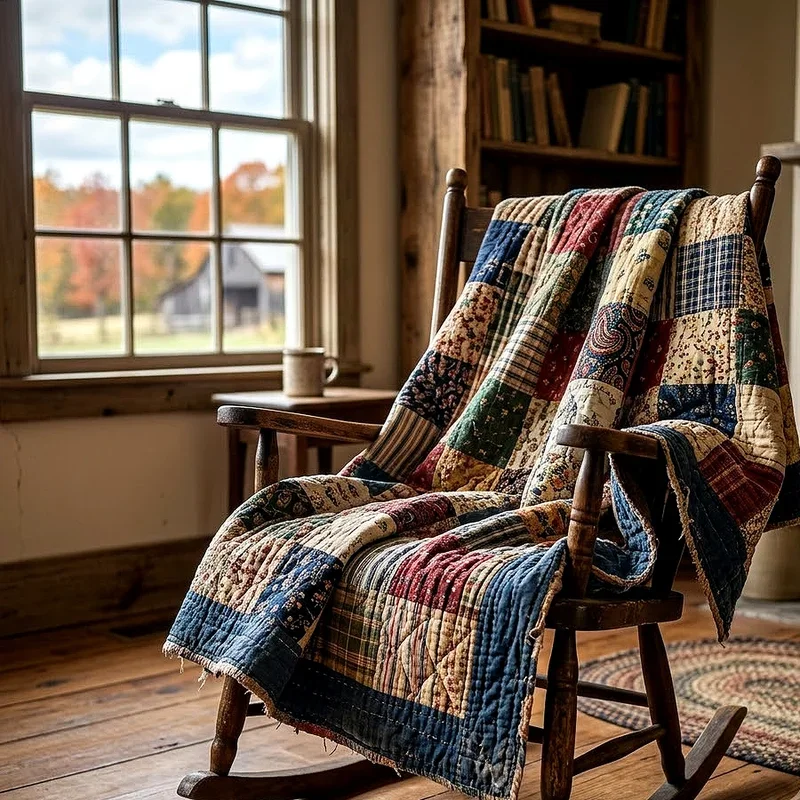
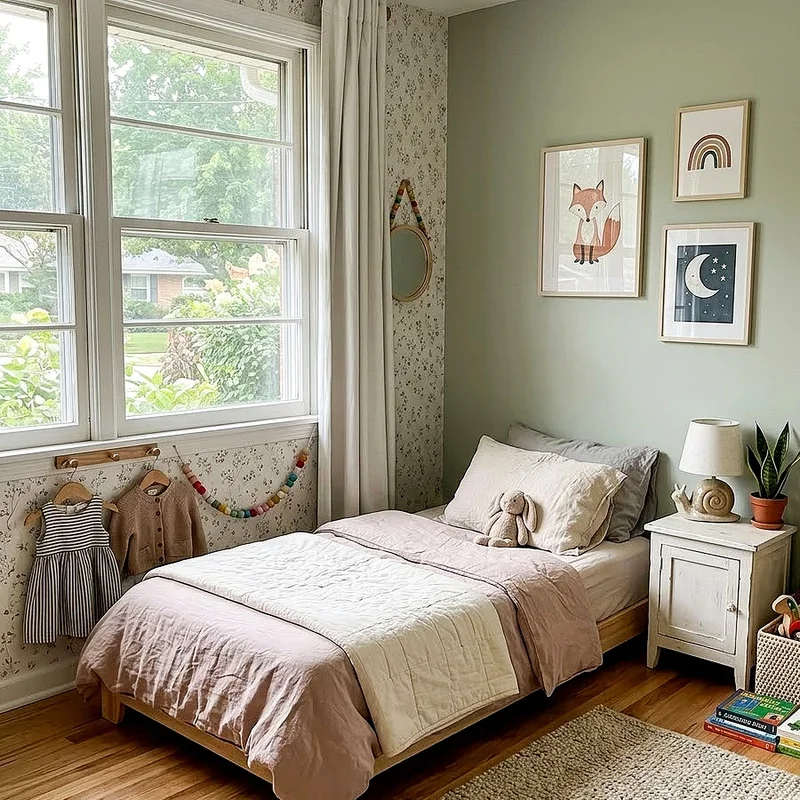
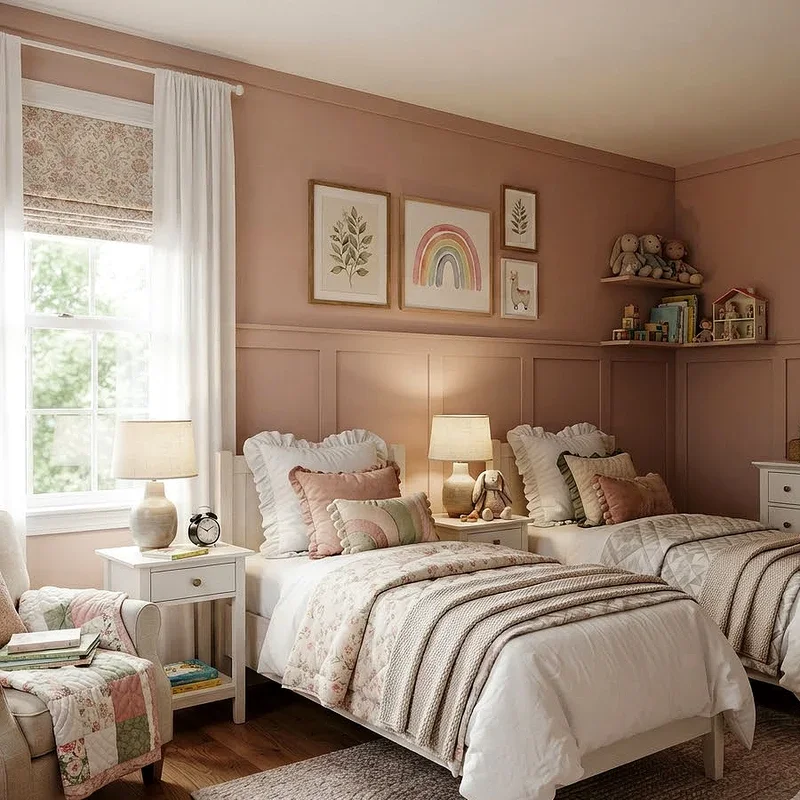
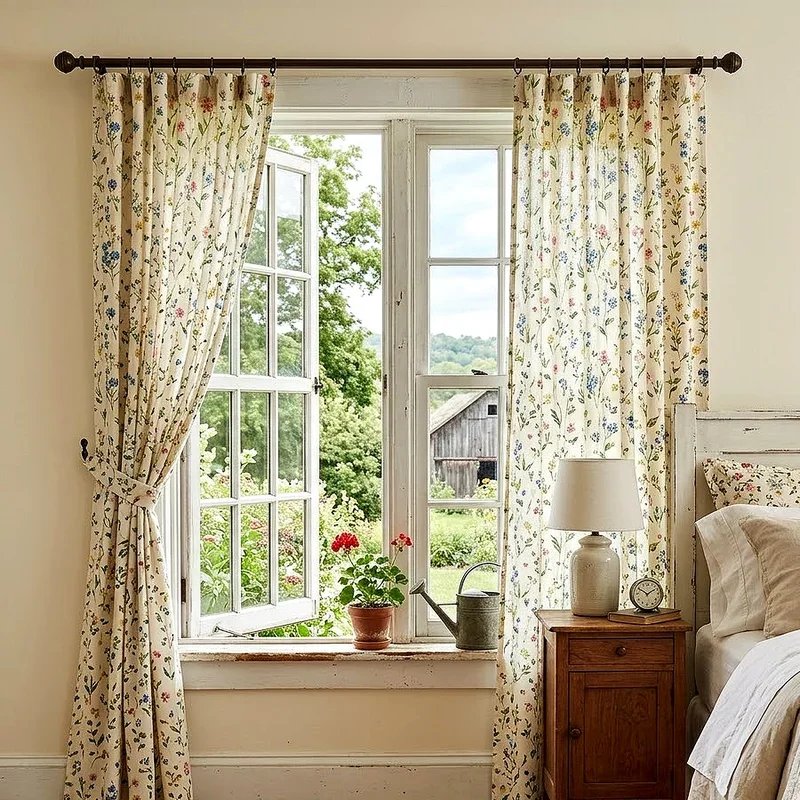
Floral curtains get unfairly labeled as old fashioned, yet the right print feels like fresh air rather than a dusty attic. Farmhouse and cottage bedrooms come alive with small scale ditsy florals in faded rose, sage, or butter yellow on a cream ground. Think of the print as a garden pressed flat and hung on your wall. I keep the rest of the room quiet when the curtains speak this loudly, so white bedding and a simple wooden nightstand do the balancing work. Cotton and cotton linen blends suit the look better than anything shiny, because gloss ruins the lived in charm instantly. Add a ruffled top or simple tie tabs for softness. Want more character? Hunt vintage shops for old fabric and sew panels yourself over a weekend.
6. Bold Geometric Prints for Mid Century Bedrooms
Mid century bedrooms love a graphic moment, and curtains give you one without repainting anything. Bold geometry, whether it is a repeating starburst, a clean grid, or one of those wobbly organic shapes that looks straight out of 1962, turns a plain window into a focal point. I treat the print like jewelry for the room. One strong piece, then nothing else competing. Pull two colors from the fabric and echo them in a throw pillow or a lamp base so the scheme feels intentional rather than accidental. Mustard, teal, walnut brown, and burnt orange all sing in this style. Keep the hardware slim and metallic, since chunky wooden rods drag the look toward rustic. Hang the panels flat with a simple pleat so the pattern reads clearly instead of disappearing into folds.
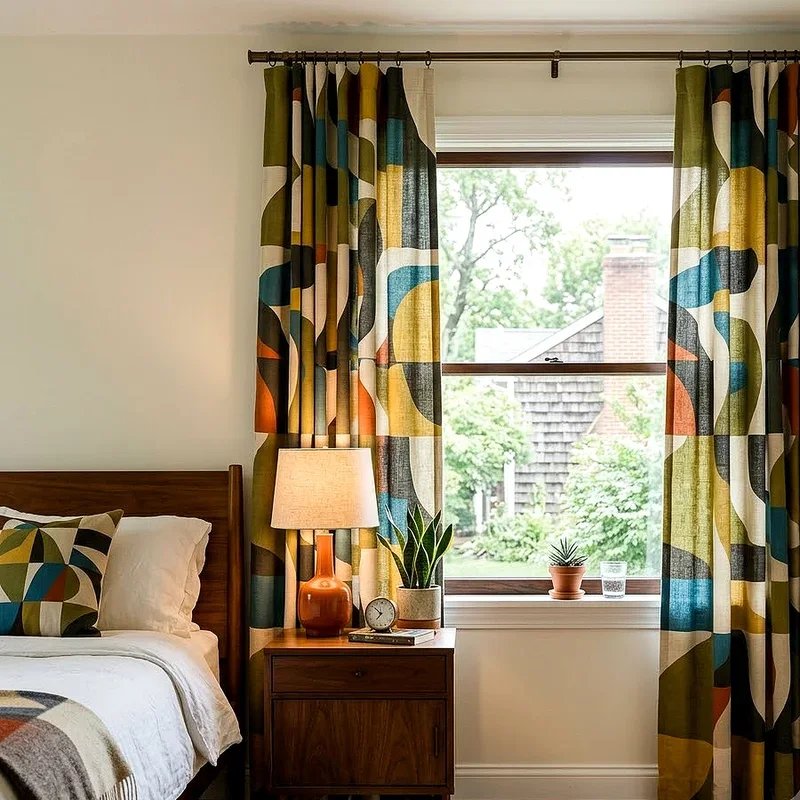
7. Floor to Ceiling Drapes That Stretch Your Walls
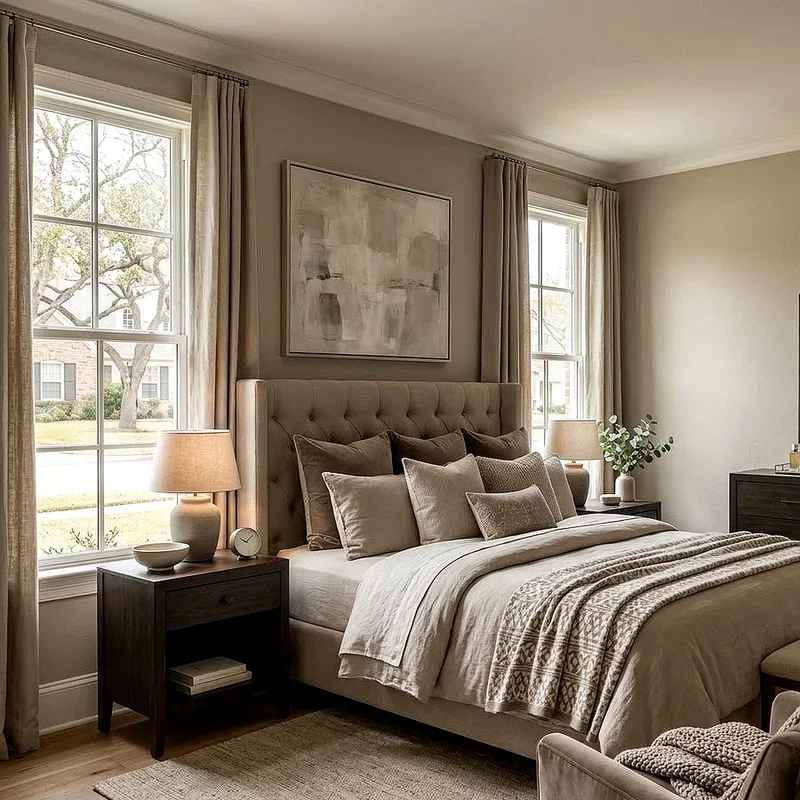
Here is the trick decorators use constantly, and it costs almost nothing extra. Mount your curtain rod just below the ceiling line rather than directly above the window, then let the panels fall all the way to the floor. Suddenly the window looks enormous and the walls look taller, even though nothing structural changed. It is optical sleight of hand, pure and simple. I aim for panels that either kiss the floor or break against it by half an inch, because floating curtains that stop mid shin look like trousers that shrank in the wash. Measure from the rod to the floor before ordering, and always buy long rather than short since hemming is easy. Extend the rod eight inches past each side so daylight is never blocked.
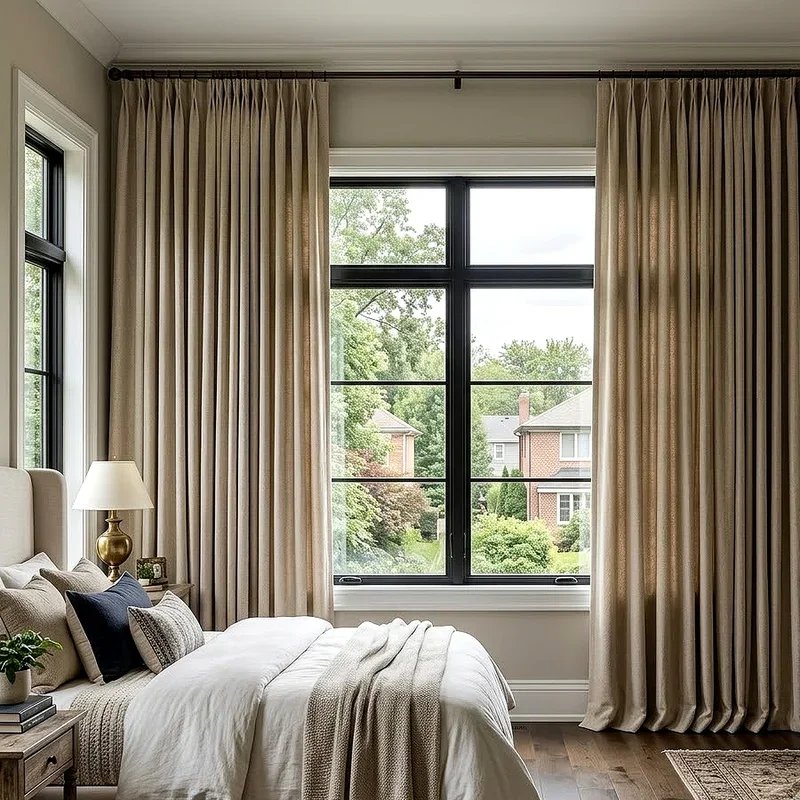
8. Cafe Curtains for Small and Attic Bedrooms
Small bedrooms, attic rooms, and awkward dormer windows call for a lighter touch. Cafe curtains cover only the bottom half of the glass, so they guard your privacy while leaving the top open for daylight. Imagine a low garden fence rather than a locked gate. I love them in cottage bedrooms, kids rooms, and any space where full length drapes would eat the floor and swallow the walls. Hang them on a slim tension rod at the midpoint of the window, choose cotton in gingham, stripe, or plain white, and keep the length just past the sill. Because they use so little fabric, they cost a fraction of full drapes. Feeling ambitious? Add a matching valance up top for a finished, slightly retro frame.
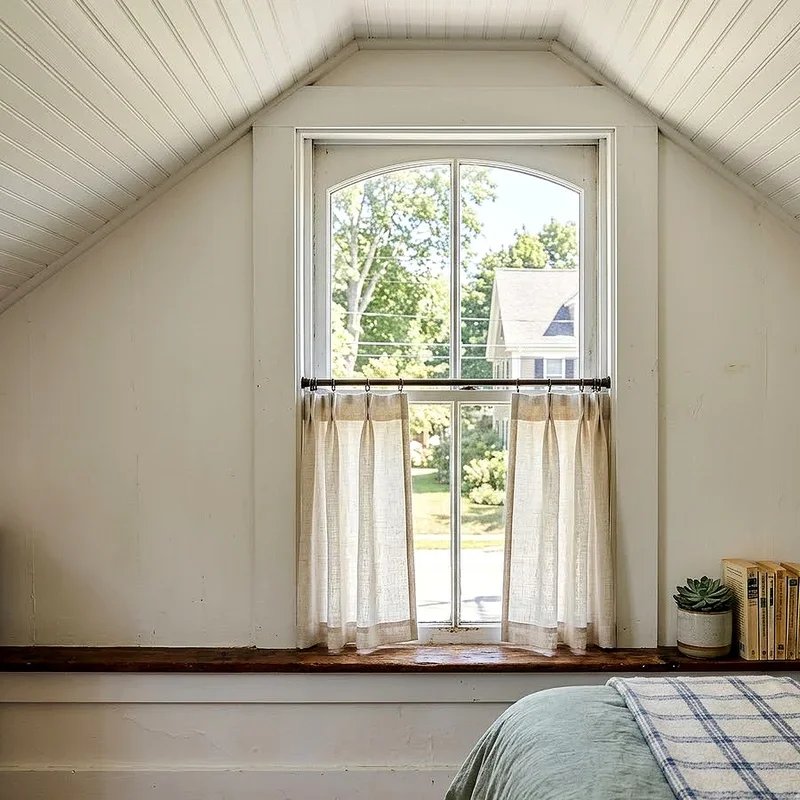
9. Moody Jewel Tones for Maximalist Drama
Maximalist bedrooms deserve curtains with an actual personality, not beige apologies. Jewel tones deliver exactly that. Emerald, sapphire, plum, and ruby wrap a room in color the way a great coat wraps a person, and the effect at night under lamplight is genuinely cinematic. I like pairing a saturated drape with patterned wallpaper, because in maximalism restraint is the enemy rather than the goal. Choose a fabric with some sheen, like a cotton sateen or a shot silk look, so the color shifts as light moves across the surface. Trim the leading edge with a contrasting tape if you want that custom workroom finish for very little money. Worried it is too much? In a bedroom you close the door on, too much is often exactly right.
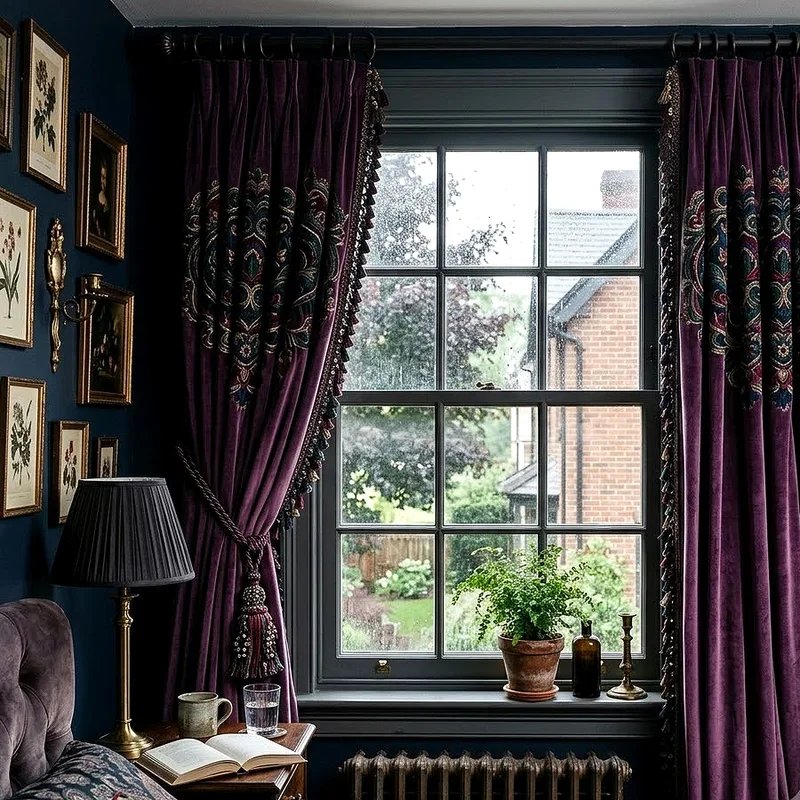
10. Woven Natural Shades Layered for Boho Texture
Boho bedrooms live and die by texture, and curtains are your easiest source of it. I layer natural woven shades made of bamboo, jute, or reed underneath simple cotton or gauze panels, which gives you two completely different surfaces working together. The shade brings warmth, shadow, and that lovely irregular weave. The soft panel brings movement. Together they feel collected rather than bought in one trip. Keep the palette earthy with sand, rust, clay, and cream, and skip anything that gleams. Add macrame trim or a hand knotted tieback if you want the handmade note pushed further. Woven shades also filter light into stripes across the floor, which changes hour by hour and gives the room a quiet, shifting kind of theater.
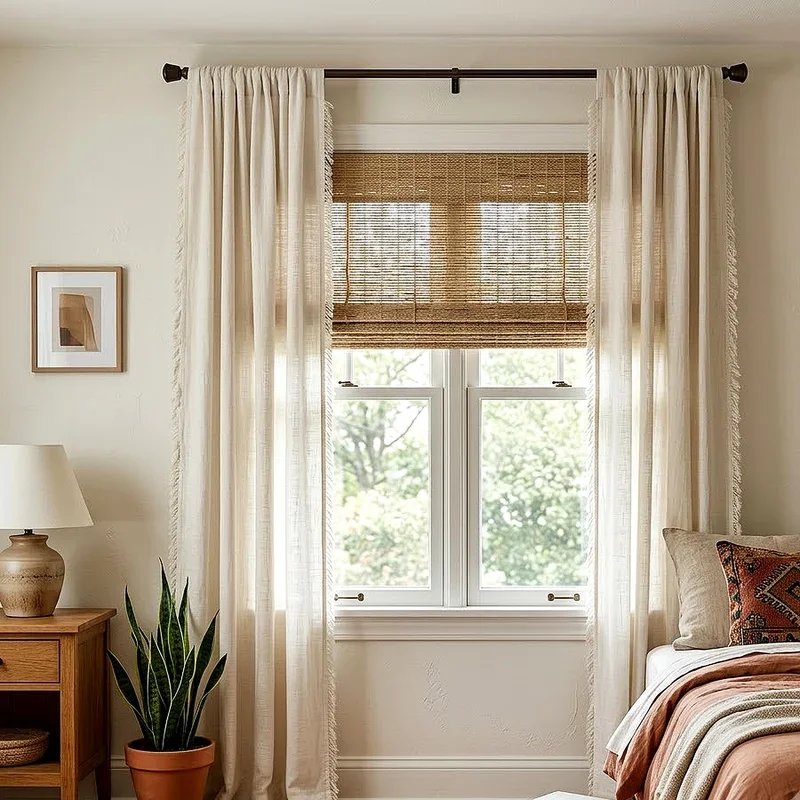
11. Pinch Pleat Drapes for Traditional Elegance
Traditional bedrooms want structure, and nothing delivers structure like a proper pinch pleat. The tailored folds at the header hold their shape permanently, so the panels hang in even columns rather than flopping around like a bedsheet on a line. I think of pinch pleats as the tailored blazer of window treatments. They simply look finished. Choose a mid weight fabric such as damask, textured cotton, or a subtle stripe, and always add a lining so the drape hangs heavier and blocks more light. Traditional rooms also welcome details, so consider a decorative finial, a tasseled tieback, or a discreet valance across the top. Hang the panels with rings for smooth movement. Yes, they cost more than grommet panels, but the difference is visible from across the room.
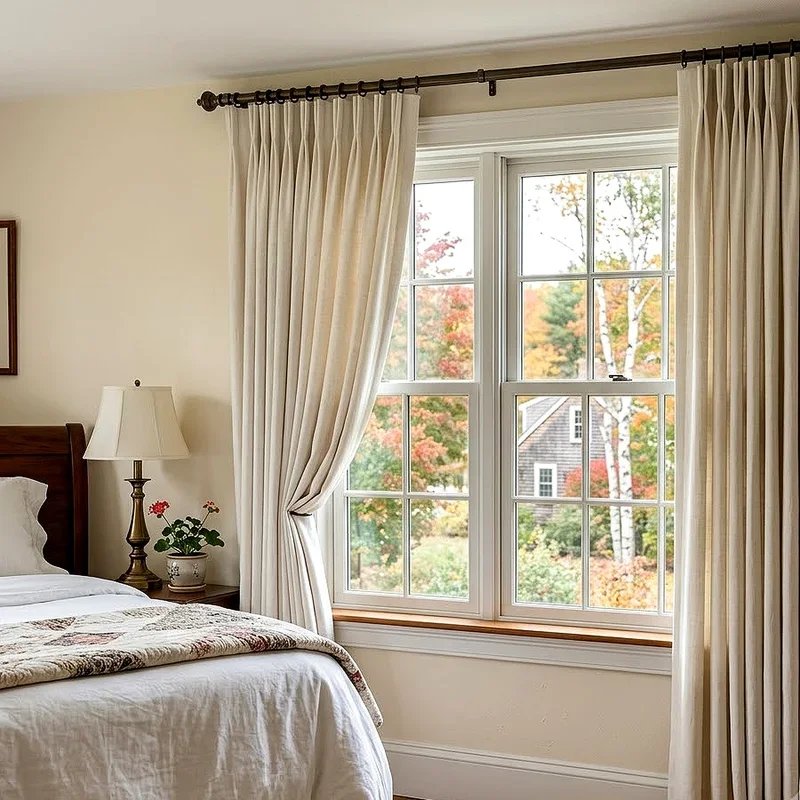
12. Ombre Panels for an Artistic Bedroom
Ombre panels turn a window into a slow gradient, and I find the effect strangely calming. The color melts from deep at the hem to nearly clear at the top, like water getting shallower as you wade toward shore. That single detail gives an otherwise plain bedroom something to look at without adding clutter or another piece of furniture. Blues and greens read serene, while blush into cream feels warm and modern. If you enjoy a project, dip dye white cotton panels yourself using fabric dye and a bucket, working in stages so the gradient stays smooth. Hang them tall and full so the transition has room to breathe. Pair them with plain bedding, because a gradient plus a busy quilt turns the room into visual noise fast.
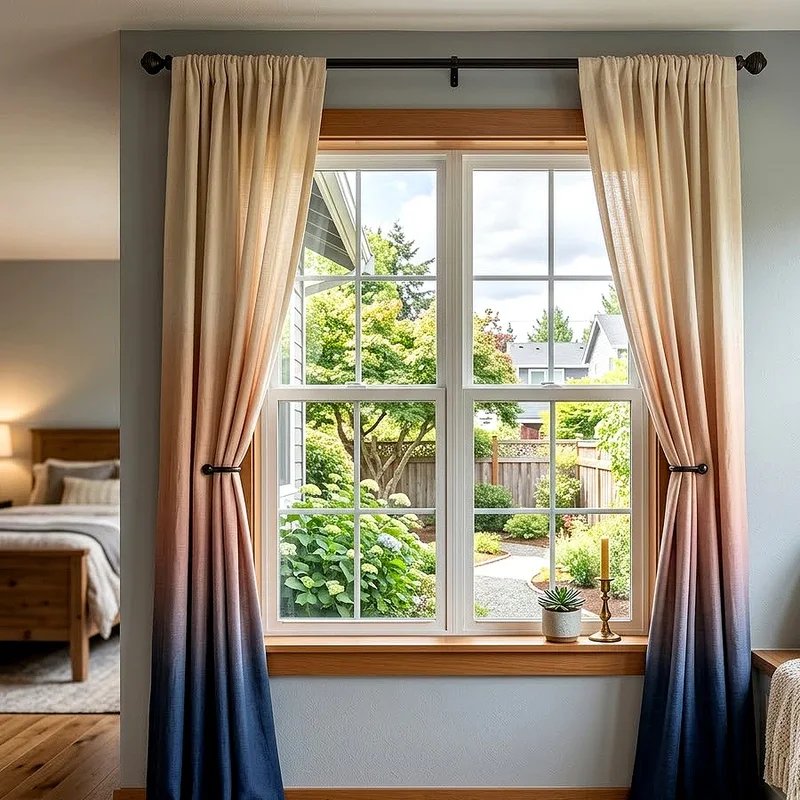
13. Canopy Bed Curtains for Romantic Rooms
Curtains do not have to live at the window. Hanging fabric around the bed itself turns an ordinary frame into a room within a room, and honestly it feels wonderful. A four poster bed makes this easy, but a ceiling mounted track or a simple hoop above the headboard works just as well. Picture climbing into a soft, private tent every night. I keep the fabric light, using gauze, muslin, or sheer cotton, because heavy drapery around a bed traps warmth and blocks airflow. Tie the panels back during the day so the room does not feel closed in. This idea suits romantic, bohemian, and even minimalist bedrooms if you keep the color quiet. Add a small string of warm lights along the frame for atmosphere.
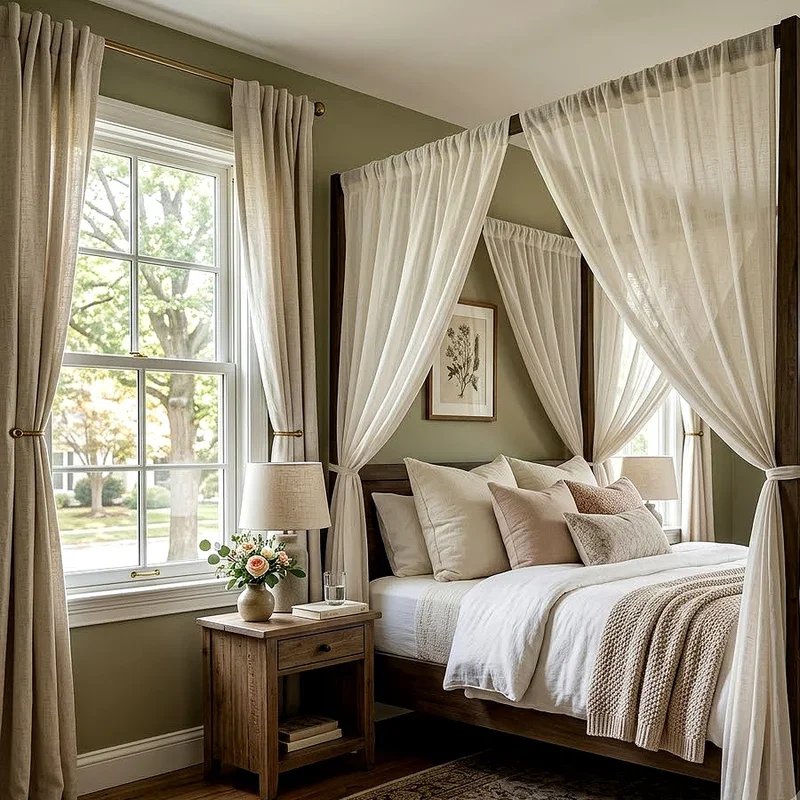
14. Motorized Smart Curtains for Tech Friendly Bedrooms
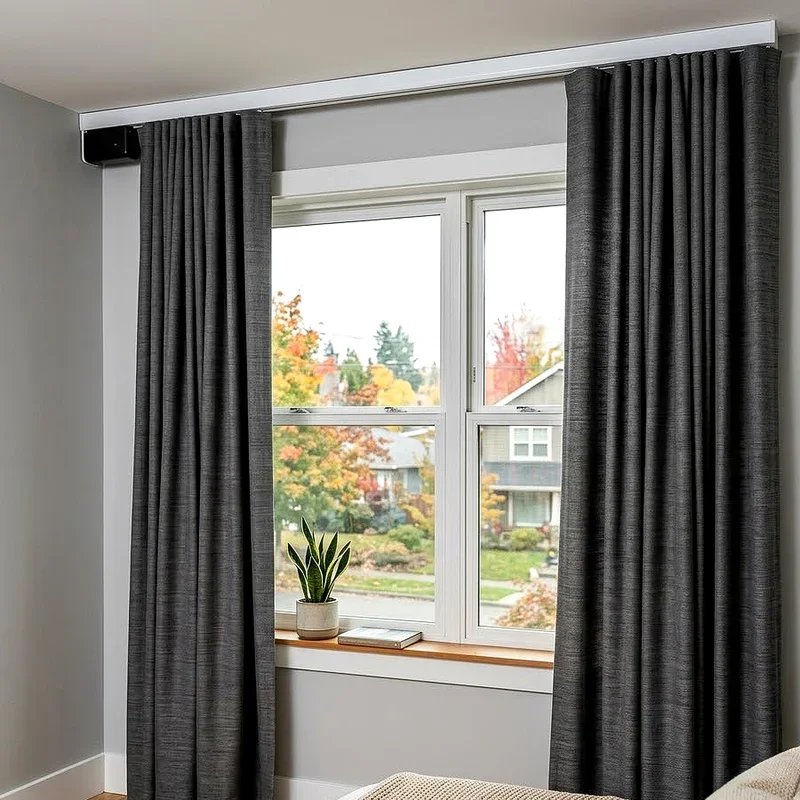
Waking up to curtains that open themselves feels like living slightly in the future, and the technology has finally become affordable. Motorized panels run on a track or a rod motor, and you control them with an app, a remote, or your voice. I set mine to open at sunrise, which eases you awake with natural light instead of a shrieking alarm. They also close automatically at dusk, which helps with privacy and quietly improves energy efficiency. Retrofit motors clip onto many existing rods, so you rarely need to replace the curtains you already own. Battery powered versions avoid new wiring entirely and recharge a few times a year. Is it a splurge? A little, but ask anyone who has stopped climbing over furniture to reach a window.
15. Textured Neutrals for Japandi Calm
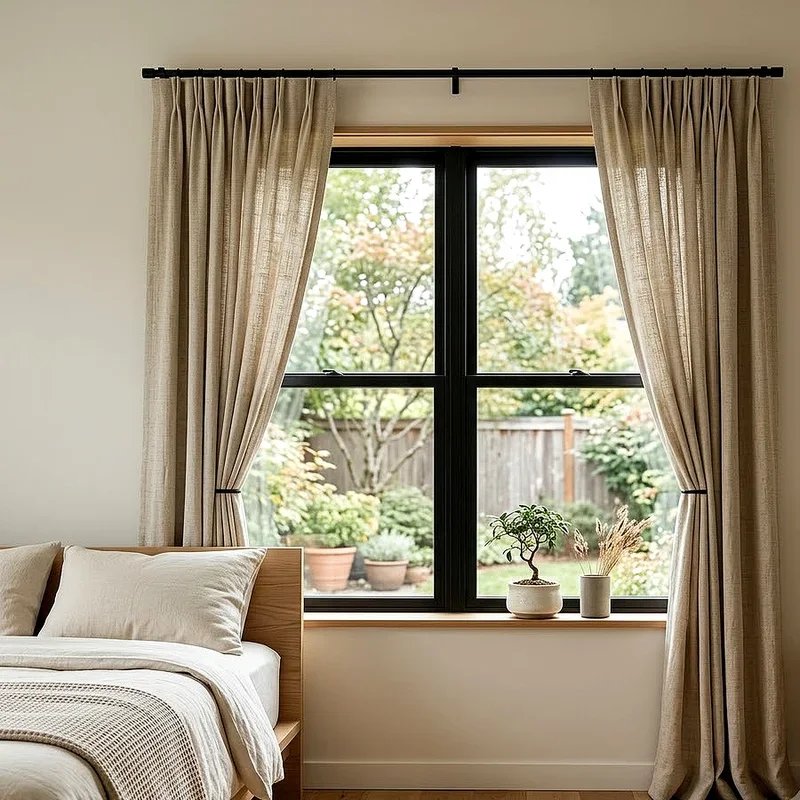
Japandi blends Japanese restraint with Scandinavian warmth, and the curtains have to whisper rather than shout. I choose textured neutrals here, things like slubby raw silk, washed cotton, heavy linen, or a loose open weave in oat, greige, chalk, and warm stone. Color stays quiet so texture does all the talking, the way a plain ceramic bowl earns attention through its surface rather than its pattern. Hang the panels flat and simple with no ruffles, no trim, and no elaborate hardware, just a slim black or natural wood rod. Let the hem hover a centimeter above the floor for that crisp, deliberate finish. Does minimal mean boring? Not when the fabric has real character. Restraint is a design choice, and here it does the heavy lifting beautifully.
Conclusion
Curtains are the quiet workhorse of bedroom design. They shape your light, guard your privacy, and set the emotional temperature of the room every single day. Whether you land on breezy linen, dramatic velvet, cheerful florals, or something smart enough to open itself, choose the option that matches how you actually live and sleep. Hang them high, hang them wide, and buy more fabric than feels reasonable. Your window will thank you, and so will every groggy morning version of you that stumbles past it. Small change, surprisingly big payoff.
Read next: 15 Beach Theme Bedroom Decor Ideas to Create Seaside Vibes
Frequently Asked Questions
Q1: What curtain length looks best in a bedroom?
A: Floor length almost always wins, either kissing the floor or breaking half an inch below.
Q2: How much fabric width do I actually need?
A: Aim for panels totaling roughly two to two and a half times your window width.
Q3: Do blackout curtains really improve sleep quality?
A: Yes, blocking light helps melatonin production, so most people fall asleep faster and stay asleep.
Q4: Should curtains match my wall color or bedding?
A: Either option works, though matching walls makes small bedrooms feel calmer and noticeably more spacious.
Q5: How often should I clean bedroom curtains?
A: Vacuum monthly, then wash or dry clean roughly twice a year depending on the fabric.
Stay up to date with our latest ideas!